Showing posts with label Ánemos. Show all posts

Monday, February 15, 2021

Review: Beyond the Wall

I recently re-discovered this lovely post about the 1937 Hobbit book as a RPG setting, luckily for us the author has continued to write about this Wilderlands setting and mentions that they use the Beyond the Wall system to run their games. Their impression of it seemed good, so I picked up the books and played two sessions using the rule set for my group. Here is a review.


The Pitch

Beyond the Wall styles itself as a "pick up and play" style RPG, many of its design elements are aimed at streamlining play and unburdening the planning required to run a game. It is also a retro-clone, a game heavily inspired by the first editions of Dungeons and Dragons, throwing it's hat in the ring against other OSR gaming systems like Lamentations of the Flame Princess, Swords and Wizardry, Basic Fantasy, etc. Lastly, and what most caught my eye is the specific flavor of fantasy the system (and therefore the implied setting) works to create, fantasy after the style of Ursula K. LeGuin's Earthsea books. The materials provided are predicated on the premise that the adventuring party all comes from the same village and grew up together, just the sort of homey folksy aesthetic I enjoy.

Game Mechanics and Design

To demonstrate how light weight the rules are, of the 100 odd pages of the core rule book it only takes 30 pages to cover the core rules. Anyone familiar with D&D should be able to pick this up, skim those 30 pages and be ready to play. My group plays primarily D&D 5e and they picked everything up quickly, something I cannot say for other retro-clone rulesets I have encountered.

All of the "crunch" of other systems (huge equipment tables, 12 different base classes, a gaggle of fantasy races, lists and lists of skills, etc) are extremely and elegantly condensed. There are only three classes: the warrior, the rogue, and the mage. Every character concept can be expressed through those classes and different ways of mixing and matching of class features for multiclass characters. If you want to play a barbarian you can customize the warrior to be a barbarian. This is how different races are handled as well, the example in the book is the Elven Highborn, a mish mash of the warrior and mage class.

When a party is sitting down to play their first adventure in the system character creation can optionally be done cooperatively as the first phase of play. This cooperative character design intertwines the character's with each other and the village they all come from, nicely answering the question most adventuring groups struggle with when forming "Why the heck do we all decide to go risk life and limb with each other?" The character creation is handled as a series of tables, called a playbook, each is titled after the character trope they are aiming for. For example the two playbooks provided for the warrior class are the "Village Hero" and the "Would-be-Knight", and each playbook builds a distinctly flavored character in that theme.  This also handles ability scores, skills, spells known, special equipment, and established relationships with NPCs. While all of this is optional, I think it is one of the best innovations the system provides.

The DM is also given a similar worksheet of tables to run the adventures, called scenario packs, that are provided with the base rule book. As character creation occurs the DM makes notes of specific NPCs and locations relevant to the party and intertwines them with the adventure elements. A series of tables also generate a whole adventure, but puts a lot of burden on the DM to create encounters on the fly.

There is a more to say about a few other quirks of the system, but suffice to say that I am pretty pleased with the ruleset and like the structure of character creation and adventure generation. 

Playtesting

Using the provided character playbooks my group built characters and we played through the "Angered Fae" scenario pack over two sessions. Before play I simply copied all of the tables and tweaked some of the results to be more fitting to my Ánemos setting. This was pretty straight forward and totally optional, I think I could have run the session as written in the scenario pack without too many issues.

Character creation was a blast. There were a lot of funny coincidences, three of the characters rolled the same "You are about to marry into the Miller’s family" result and we agreed that they were all competing for the hand of the same person. Part of the scenario pack is to describe pairs of players handling some fey chaos together in the days immediately before play begins, doing an excellent job of setting up some interpersonal mechanics for the outset.

While the adventure design is quite literally formulaic, a skilled DM should be able to throw some content together based off of the results from the tables to make a satisfying adventure. There are enough moving parts to make it seem like a lot of planning has gone in to it, a hard effect to simulate.

At the end of the adventure the consensus was that it was a pretty fun game.

Beware the Mountain King!

Conclusion

8/10, a serviceable lightweight OSR RPG system with some innovative design tools that make it a real gem. I plan on writing some content in this format for my own settings (because I can't seem to sit down and write a whole adventure in a more traditional sense and a series of tables seems much more attainable for expressing my ideas).

Check it out here!
Sunday, May 27, 2018

Limáni, the City of Wharves

City of Wharves

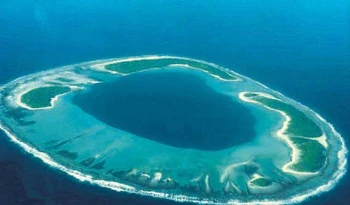
Limáni was once a small crescent shaped atoll, barely sand bars at low tide but with sturdy (and treacherous breakers) keep the worst of the surf off. Located just to the southwest of the patrolled waters of Minoan Republic, these sand bars were used as a way for traders to exchange goods and avoid Minoan taxes before entering the Republic's domain.

It started small, a few boards lain in the sand and a few crude moorings. Through time docks were built in the shallow water, and pilings were driven into the sand. Not through careful engineering but sheer weight of  convenience and shortcuts a lattice of gangplanks and derelict vessels formed the bones of the floating town.

An atoll
Source unknown

In the modern era hardly anything is built on the shifting sands of the atolls, they are used more like a unstable foundation upon which the rest of the city is tethered. There are no great structures in the City of Wharves, nothing is taller than decks of the ships that make up her body and the masts swaying above. The bulk of living and business actually occurs below the waterline in the hulls of ships, where psári oil lamps burn in damp claustrophobic cargo bays never built to be used as a tavern in the sticky humidity.

Few people call Limáni home permanently, most of the stable population is of descendants of merchant exiles from the Republic and pirates. Most are just passing through, though they may stay for a night or a year they are all trying to get their ships free and sail to less rank waters. 

Hazards in the City

Limáni'sBreath

As the tide rises and falls, so does the City of Wharves. You may go out to dinner in the central part of town, and find you have to hike up to the rim and down the other side to return to your ship. The city is only roughly level at hightide, and with three moons the tide in Ánemos are erratic at best and extreme and deadly at worst.

Because of the extremely flexible topography of the city navigation can be difficult, the path you took out will look very different if it is there at all when coming back the same way. The decks of ships moored in the city are considered open to the public, there would be no other way to get around if everyone kept each other off their decks.

Think of the city as a large net, at every node a wooden block of variable size and buoyancy floats, and there are little people trying to get their little block out of the net all the time while other little people try and shore up sagging parts of the net. Its chaos.

Medieval Venice was much too organized
Source

Use the below table for generating random events when chasing across the decks of the city:
2d6:
2: Rapid low tide! As you jump from deck to deck the sea seems to drain like a bathtub, and a great rip sunders this part of the city. A successful Dex/Reflex save will get you on the far side of the rip away from your pursuers, a failure will trap you on with no where to run from your pursuers.

3: Falling mast! +6 to hit, 2d8+4 bludgeoning damage to the (1d3): Pursing party, the pursued party, or the deck (it may smash open!) between the parties (this makes the pursuers loose a turn to clamber over it)

4: Dead end! Either dive into the water of face your pursuers.

5: A crane is lifting cargo crates, if you jump you might be able to grab on and get swung far ahead of your pursuer. This is an Str/athletics check, on a failure you 1d3: get thrown into the water, get thrown right into your pursuers, or you miss to no adverse effect.

6: Popup market! Roll on the goods table a few times and thats whats being sold. Make it effect the chase: resins means people might get stuck to the deck, silks can be hidden behind, pottery can be smashed, etc.

7: No chase event

8: You dash into a tent-tavern on the deck of a large ship. Its very dark compared with the glaring sun outside, giving you enough time to hide. The party all roll stealth checks, using the highest, against the pursuer's perception checks, again using the highest. Even if caught here a tavern brawl can be easily started.

9: Float Patrol gang sinking a ship directly in your way! You can try and dash over it as it sinks, a Dex/reflex check; or you can face your pursuers.

10: Rotten gangplank! A random party member of the either the pursing or pursued party must spend the next 2 chase turns struggling to get free, or 1 turn if their party helps them.

11: Rouge wave! You can see it coming, the decks a few ships away violently surge up and then down. Dex/relex save or be thrown into the drink.

12: Fire! As you run someone accidentally kicked over a lantern and the inferno is burning brightly behind! 2d6 fire damage, Dex/reflex save for half. Loose all pursuit but their is a 2 in 6 chance someone saw it and thinks it was you that started the fire, they will report you to the Float Patrol for justice, which in the case of arson means death. They will come looking for you in 1d4 days.

*Its very hazardous to swim in the middle of Limáni, you are always at risk of getting crushed between rocking ships. Smaller players have it a little easier. Everyone is vulnerable to drowning if they get tangled in the many nets/mooring lines in the murky water.

The Float Patrols

These roving bands of  "public servants" are half police force, half protectionist racket, half public works crew, half vigilante mob, and half fire brigade. They haphazardly patrol the city tightening lines between ships, adjusting gangplanks, maintaining pilings, condemning sinking vessels by cutting them loose, collecting "docking fees", and generally working twords keeping the city afloat.

Think of them like douchey lifeguards: they are doing something important for public safety, but you can't help but roll your eyes at them.

Saturday, March 10, 2018

The Inverted Ziggurat

(Follow up on the dungeon hinted at in the Mangrove post. This is meant as a sketch of the broad concept, not a keyed dungeon.)


The crazed ecologists who study the Flowing Forest have long posited that at the center of it must be some great mystery. Its well recorded that the forest will "swim" against prevailing currents and winds, and it takes a proper monsoon to alter its path. Theories gain and loose favor, but a few have remained popular:
  • Its on the back of a truly massive crab, crawling slowly on the shallow ocean floor, maybe hoping to scrape off the forest on an island
  • At the center is a slumbering Spirit of life, restlessly riding its vine-y cradle over the sea, making it wander as its dreams shift
  • Most of the mass of the forest is sub-aqueous and so the important variable is deep ocean current, which are poorly understood
None of these are the right theory of course. If you survive the journey to the center of the forest you will find a great terraced valley, its bottom is a few hundred feet bellow sea level. The terraces are paved with great stones and look more like ancient gardens than jungle, the root-filtered fresh water trickles slowly down to the bottom. At the bottom a great clear pool steams, and the very top of a structure can be seen...

The whole place feels like this, but in a few hundred years when a jungle is growing on it

The Terraces:

These where gardens. Remnants of greenhouses and fountains are every where, and amongst the lush ruins on the top terrace a few final warning/warding shrines from the local Automata tribes rest, invoking their most vile imagery.

Hazards on the terraces include: feral plants, decaying architecture, insta-rot fungi, leeches, half functioning gardener constructs that WILL POT YOU, large still pools of lily pads that probably aren't hiding water snakes in them, terraced edges to descent on vines, balloon plants that accumulate hydrogen and explode easily, and giant sloth breeding grounds.

But you may find: potions of grow plant, half functioning gardener constructs that you can manipulate, exotic and potent plants from all over the world. Indeed the gardens themselves are a treasure trove in themselves to a trained botanist, the diversity and rarity of the flora is enough to bring a life time of rich research.

The Ziggurat

At the bottom of the terraced valley is a large steaming pool of water, no plants grow near its edges but at its center is a large square structure. Through the startlingly clear water you can see that it is a many leveled ziggurat. The water is very hot, but not quite boiling and there is a sharp mineral odor to the mists coming off the pool. Upon investigation the water is not only hot, but caustic and will dissolve organic materials after a few moments of immersion.

Once the party figures a way across the pool (boat that wont dissolve, parachute with hydrogen balloon plants from higher terrace, cooling the water some how, divert the water from flowing into it till it all evaporates) the real dungeon can begin.

Some things you might find in the Zigguart

At its heart is a sun. The party will see glimpses of it occasionally through thick glass windows and deep water, giving eerie illumination. They will find hints of it else where: in rooms dedicated to its maintenance and control with panels of inscribed glyphs that hint at their utility, in the flooded chambers soaked in near boiling and caustic water that will start to make them sick with radiation poisoning after a few hours in the dungeon, in the strange slimes and fungi that seem to grow abundantly around these leaks, and the slow perversion of flesh they will experience through mutation.

Deep at the base of the ziggurat, far below sea level, they will find the Torch. If they are clever they might even figure out that the Torch is siphoning the massive heat generated by the sun to solder shut fissures and faults in the sea bed. Perhaps they will understand that this Sun-Engine is literally keeping the world together. To keep the Torch at a steady distance from the bottom of the sea the entire structure expands and contracts like an accordion. This introduces a crushing hazard as well as a changing dungeon layout that may shift every time the party returns to it.


The central command room is locked, the party will have to find a way to bust in or find the secret to unlocking it. There is heavy machinery all around, perhaps they can use it for demolition? Once inside they will have to solve some sort of puzzle to figure out how to manipulate the Sun-Engine. There will be illusions/holograms of the builders of the Ziggurat There are a few possible outcomes:
  • Meltdown: The Engine has been in slow motion melt down for a few centuries at least, and the party wittingly or unwittingly brings about a run away acceleration to this process. The delicate fields that suspend the sun will start to break down; the improvised fresh water coolant system was already malfunctioning, but now no new water is reaching the core and the containment walls are melting. Run! The world will likely tear itself apart without the Engine to keep it together and perhaps usher in a new Age...or the End of all Ages.
  • Fix It: Through careful experimentation or dumb luck the party may figure out how to fix it. They can find out that the outflow of coolant is leaking badly, that the vegetation surrounding the Ziggurat is gunking up the mechanisms. If they fix it the Sun-Engine will start operating at peak efficiency again, the Torch will actually make headway in keeping the world together instead of fighting a slowly loosing battle to decay, and the Flowing Forest will be shed as the Ziggurat once again rides just above the waves with water intake pipes trailing behind as in the Days of Old.
  • No change: Through caution or awareness of their hubris the party can walk away and allow the Sun-Engine to continue to meltdown slowly. It will eventually fail, but at least the world continue for a few hundred years more...

Thoughts on the Inverted Ziggurat

Its a metaphor for a nuclear reactor. Built by some anonymous precursor civilization and abondened long ago, then rediscovered and haphazardly repaired by a more recent society. The terraced valley and gardens where built by the second comers as a way to keep the Sun-Engine cooled but when they abandoned it the radiation allowed the Flowing Forest to take root on the Garden Terrace edge until that was all that people knew of it.

When considered with the rest of Ánemos setting this is the first demonstration that world is a few Ages past a technologically advanced civilization and implies that its a post apocalyptic world, or at least a world fallen into decay and forgetfulness where the glories of the past are misunderstood and clouded (like the implied setting in the wonderful Ghibli film Castle in the Sky). I like this. It adds a dimension and depth to an otherwise gonzo-Greek-fantasy setting. I love fantasy that is secretly sci-fi. I also love romantic fantasy (the type that +Joseph Manola writes about here, and he makes some great points on ruins here) where the characters have the chance to have a meaningful effect on the world.

In this dungeon they are presented with a machine that literally keeps the world together and the three outcomes all are meaningful. They can play with fire and get burned with the world at stake. They can fix an ancient construct and perhaps start an age of re-disovery and healing. Or they can make the decision to find a way to love a more and more broken and shattered world. 

Saturday, November 18, 2017

Voyage of the Void Seeker: The Set Up

The whole idea for this came from seeing this piece at a street fair in my town. I met the artist, got this piece, and hung it on my wall. Its been staring at me, asking to be used...

In a recent post condensing all of my Ánemos writing into one place I had a dense little mess of the going-ons in the Scattered Sea. There was mention of "the long-thought-lost Magi Trophonious the Fool has risen out of the depths on the back of a Kētos and is looking for a crew to sail with him to the bottom of the Abyss". This is that adventure hook explored, and incidentally my first adventure to be published on this blog!

You can get it here, on this blog, as I write it. When it is all done, I will compile everything into a PDF for easy download.

(I'm relatively new to this. There are some bad-ass writers out in the DIY/OSR blog-o-sphere that I admire greatly and get a lot of inspiration from (you can see their blogs on the right panel of this page). This adventure was written as my entry into the published adventures of the DIY RPG scene, but this is the effort of one person that is doubtless in need of editing. If you have comments and edits I'd love to read and incorporate them.)

Bon voyage!

Source unknown

The Set Up

The party is going to start in the City of Twins, Diopolis, the largest Island State in the Chalcis Chain, seat of the Chalcis Alliance of Protection (CAP).

The city spans two islands, Euboea and Boeotia. The story goes that the islands where once one, but the Goddess of the island had a mental break and two personailites and two islands formed, creating the Euripus Strait over which the longest bridge in the world spans. It is home to the Counsel of Magi and a number of famous wizards and enchanters, and one of the only places in Ánemos that the secret techniques of making Wyrships are known and practiced.

While not as militaristic as their main international competition the Republic of Minoa or the Comitia Tributa of Arsuf, Chalcis is full of her own dangers. Magi are cunning folk, and work in slow and subtle ways to ruin each other and turn the world to suit their needs. Intrigue lurks in the steamy halls of every bath and rumors rip through the City of Twins like the breath of a zephyr.

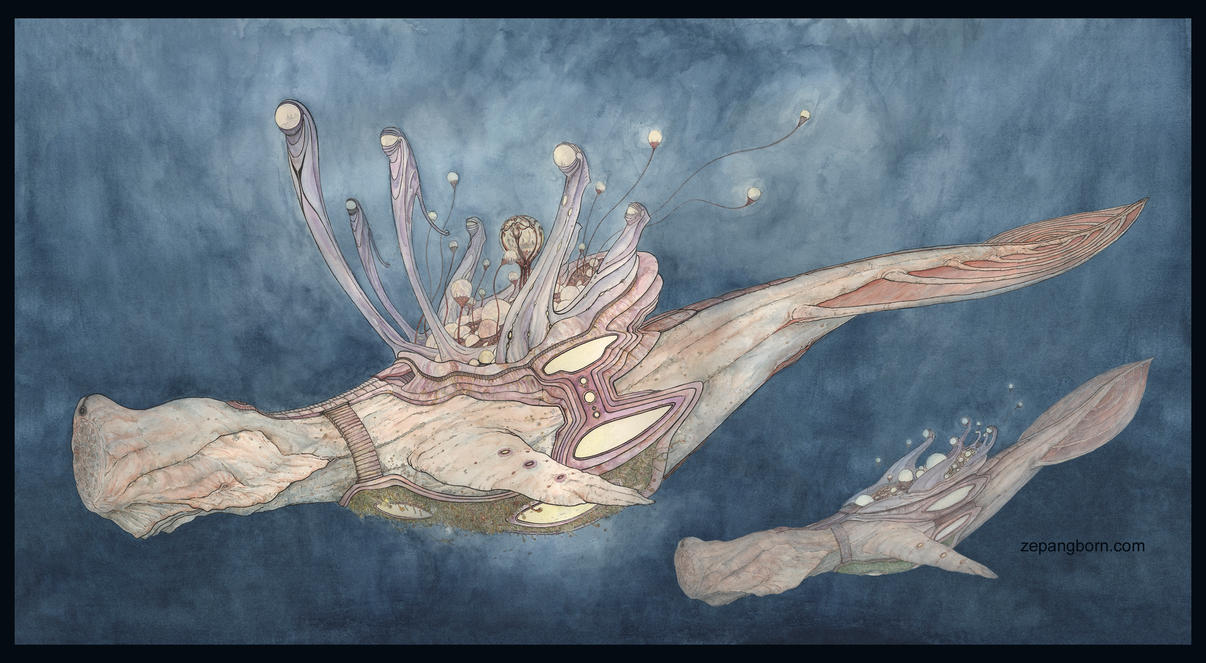
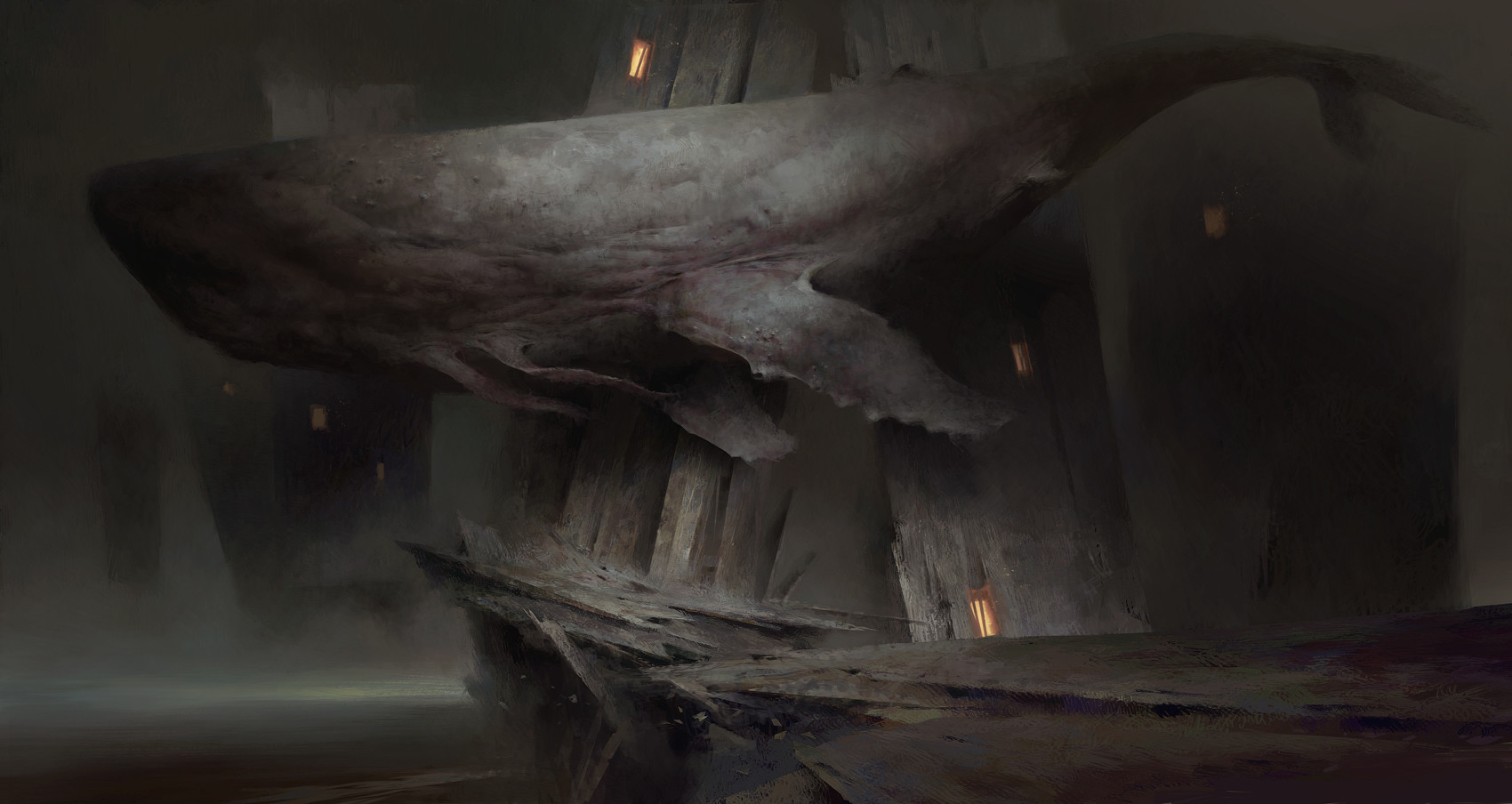
Trophonius arrived in the Euripus Strait that bisects City of Twins strapped to the back of a Ketos, a massive whale like creature. The Ketos has strange structures of seaglass and clamleather affixed to it, apparently enabling Trophonius to live comfortably upon the beast. The event has the city's rumor mills working triple time, its a nice diversion from the news of titanic horrors ravaging the outer reaches of Chalcis, but also worrying because most of the CAP's war bands are out on their Wyrships fighting the monsters.

Trophonius calls his "vessel" the Void Seeker, what nickname have the citizens of Euboea given it as it rests in the shallows waiting for its master's call?

1d10 Nicknames of the Void Seeker:
  1. Hubris
  2. Catharsis
  3. Thalia
  4. Apotheosis
  5. Exodus
  6. Moira
  7. Ananke
  8. Halcyon
  9. Abyssinia
  10. Gravitas
Trophonius has made it clear that he does not plan to stay in the city for long, just long enough to find himself a crew and stock the vessel for a long trip.  What does he tell people that his mission is?

1d6, Trophonius's Stated Goal:
  1. To find the source of the titanic sea monsters terrorizing Chalcis and destroy them if he can, looking especially for heroes and madmen
  2. Uncover and mine Orichalcum nodules at the bottom of the Sea, looking especially for deep water miners and alchemists
  3. He seeks to find the corpse of a long sunk vessel with a belly full of treasure, looking especially for scavengers and demolishonists
  4. Wants to find and pass through the Gates of the Underworld to be reunited with the soul of a dead lover from his youth, looking especially for grave robbers and those that speak with deamons
  5. To kill a god by severing their connection to wellspring of divinity, looking especially for blasphemers and the morally bankrupt
  6. To reach the Bottom, looking especially for companions and thrill seekers
In addition he is hiring: Sea grass gardeners, artisans (bronze smiths, cordells, leather workers, glass blowers), cartographers, navigators, biographers, musicians, cooks, cabin boys, harpooners, quartermaster, boatswain, surgeons, and a few swabs.

Those that knew Trophonius recall his many bad habits, addictions, and general uncannyness. What are his flaws?

1d10 Bad Habits:
  1. Chews with his mouth open
  2. Doesn't cover his mouth when he sneezes
  3. Has bad body odor/terrible breath
  4. Bites his nails
  5. Refuses to make eye contact
  6. Mummbles
  7. Poor posture
  8. Fiddling with his beard and hair
  9. Always humming to himself
  10. Picks his nose/ear wax
1d10 Addictions:
  1. Alcohol (wine)
  2. Opiates (opium)
  3. Salty Snacks (smoked sardines)
  4. Sweets (candied dates)
  5. Tea (green)
  6. Hallucinogens (sea slugs on the eyes)
  7. Gambling (dice)
  8. Stimulants (carrow root)
  9. Inhalants (smelling salts)
  10. Chewing gum (sap of the drakon blood tree)
1d10 Weird Detail:
  1. Continuously has teeth falling out, never runs out
  2. Tattoos that dance and flow on his skin
  3. Eyes never look in the same direction
  4. Hair and beard are made of sea weed, he keeps them wet
  5. Robes change from slate grey to azure to match the character of the Sea
  6. Weird Pet (1d4: giant hermit crab, several goofy seagulls, an animate pile of sand, a very old sheep)
  7.  Voice echoes no matter his soroundings
  8. Seems to always have the hiccups, though he will deny it
  9. He can't hear rhymes
  10. Poorly hidden gills
Source

The movers and shakers in Diopolis don't believe a word Trophonius tells them, they are sure he is up to something more sinister. The party happens to be in right place at the right time, someone needs something done aboard the Void Seeker and they are asked to help. The following motivations can be for the whole party (especially easy if part of an ongoing game), or to make things interesting each party member could be given a motivation secretly as the game begins (easy if this is the first adventure a party is taking part in).

 1d10 Party Motivations:
  1. Spies of the Chalcis Alliance of Protection, defensive information and an assassination team if there is a threat to the region uncovered
  2. Lackeys of the Counsel of Magi, sabotage Trophonius' reputation and steal his arcane secrets
  3. Members of the Guild of Scalers, representing the Guild's trade interests in the virgin markets of the Deep Sea
  4. Agents of a society of theological scholars, learn more about the Mythic Underworld
  5. Hired by Trophonius from a mercenary company (1d3: Stellar's Jays, Stormking Mountain Battalion, Black Sails), hired muscle
  6. The party are Secret Merfolk, aboard to ensure the safety and secrecy of their underwater citadels
  7. Ascetics, seek yet uncontacted Spirits of the depths and ingratiate themselves with them
  8. Daemon Binders, CHAOS
  9. Vagabonds that lied their way in, murderhoboism
  10. Classic 20,000 Leugues Under the Sea start, hired to hunt a sea monster nearby and it turns out its the Void Seeker causing trouble. After sinking their ship Trophonius invites them in and the adventure begins...
And so, the crew is set, provisions are loaded, and the Void Seeker is bound for the depths!

Sunday, September 3, 2017

Ánemos Anthology

***This a formalized post that is to be used as a continuously updated resource for all of my writing on my current setting of fascination, Ánemos. The goal here is to have one page that links to all of the resources I have made and adding a little context to the links.

Its also a rewrite of this post that is meant to reorient, refocus and reaffirm my goals with the setting (a la this post by +Jack Shear) and to provide an evocative hook (a la this post by +Jeff Rients ) for fresh players.***

Setting Hook:

It is the end of an Age of Peace and Hope, across the Scattered Sea change is on the wind.

The Minoan Republic's grand democratic experiment is floundering in a sea of war and political strife quietly fanned by the  subversive poet-priests, the Vardini. Arsuf revolutionaries are working to shatter an Age old system of oppression with blood magic and ritual, while rumors of the rise of a new War-Leader spread. Monsters out of half remembered myth emerge from the sea foam in Chalcis to challenge the Council of Magi's dominion. Ramsay Stellar's company of hired killers, the Stellar Jays, have risen to prominence quickly and have proven to be an unstoppable tool in the hands of the highest bidder. The Obsidian Bank remain in the shadows brokering deals and lending captial, though they have begun to collect ancient debts and consolidating their power.

Dead things thought to be banished beyond the mortal veil have been seen on foggy moonlit nights proffering power in return for mysterious favors. The outcast Tribes of Arsuf wander the Sea with their patron Daemons lovingly feeding off of their binder's misery and causing a reign of horror on the high seas. The Spirits have sensed a change coming, and have redoubled their efforts to consume Civilization in feral fury. The slow machinations of the Hecatoncheires are coming to fruition, and the first sighting of one of the titans in generations is causing panic across the Windswept Isles.

The hunt for the Amphora of Dákrya is being called in Iolcus, whosoever returns with the Amphora will be granted any boon from the Lady of Iolcus. The siege of Gythium has finally been broken, the Orichalcum Citadel has been shattered, and the forces that were united under King Agathokles' Banner of Vengeance are scattered to the winds on their way home. The tombs of Sea Kings long buried are being rediscovered, and the brave and foolish are disturbing them in search of ancient relics. The Flowing Forest is descending on Oropus, and the Storm King Mountain Battalion has been hired to not only fend off the danger, but once and for all destroy the verdant scourge. The long-thought-lost Magi Trophonious the Fool has risen out of the depths on the back of a Kētos and is looking for a crew to sail with him to the bottom of the Abyss.

In the midst of all of this astronomers locked in their lonely towers are gleaning whispers from the stars about an Age of Blood and Thunder on the horizon...

Ánemos in Five Lines:

A Sea of Adventure: Your ship is your life blood, with it you have freedom to decide your own destiny. In the Season of the Sun you must travel across the seas to exotic lands where glory will be won, riches made, and ancient secrets uncovered.

For Home and Hearth: As a player you come from a small settlement in the vast Scattered Sea and your goal is to see your home grow and prosper in this time of upheaval and change. Every Season of Storms you return home to help mange the growing settlement and to bring back riches from across the sea. You must carve a place for your people in myth, or at least help them weather the coming storm.

Monsters of Myth: The people of Ánemos are plagued with beasts and monsters unleashed by spiteful Gods and Spirits. These mythic foes demand mythic heroes to rise to their challenge.

Of Gods and Spirits: In Ánemos metaphysical forces clash, the spiritual landscape is as important as the physical. Gods demand worship and the march of Civilization while Spirits necessitate placation to prevent Extinction. The immortals are petty and short sighted though, and each can be dealt with in their own time and manner.

War of Thoughts: There is a war of ideas being waged: Gods are the products of their follower's beliefs, Spirits are cast into opposition to the march of civilization, Daemons embody our darkest tenancies, the very geography of the Islands is mutable through belief. Who ever wins the war of thoughts may determine the fate of Ánemos.

Links:

Character Options and Information:

Monsters and Creatures:

Adventuring Content:

Races and Factions:


Gods and Spirits:

Thursday, August 17, 2017

The Disremembered Tribes and their Patron Daemons

(Just a fluff post continuing to flesh out my home setting Ánemos)

(I'm eventually going to re-write my Intro to Ánemos post, compiling all of the fluff and islands and monsters and ships and cultural ideas and generators and tables I have written for the setting so that someone can just open one page and play in the setting. Eventually.)

The Tribal Government of the Arsuf Islands:

The Tribes of Arsuf are more than just an ethnic group, they all participate in a regional government known as the Comitia Tributa (this form of governance is loosely based on the Roman "Tribal Assembly", the Comitia Curiata, that are defined by the 30 curiae that are in turned based of off three ancient tribal lineages in Rome (the early Republic was super interesting. There is a very very good RTS based in this time period)).

The Comitia solves inter-Tribal disputes of a very specific scope:
  • Economic; no selling goods dishonestly or monopolies, especially no price fixing or collusion with other Tribes for profit. The goods must flow.
  • Philosophic; no propaganda campaigns against other Tribes, the ruling Tribe of an island get full thought control. Minds must be kept compliant.
  • And most importantly, Militant; there is to be no use of resource destroying methods for the Sea is a barren enough place and the fertility of the few islands must be preserved. Conquest is encouraged, for the strong deserve to rule, but foolish squandering will be punished.
These disputes are heard and judged in an open court where every Tribe has equal voice, housed atop one of the great monoliths in the sacred island-city of Ierá Aktés. This mountainous Court is also the temple of the lion headed goddess of Law and Vengeance, the Judge Léaina. No Tribe lays claim to the holy shores of Ierá Aktés, but each of them builds and maintains a sovereign fortress within the city where their laws stand (these are especially useful after the Comitia has made a decision, more on that in a second). Léaina presides over the Comitia and drinks the blood of equivocators so that no lies are uttered in the Court.

Many of the decisions made at the Court are reflective of the crime. Economic slights are met economic sanctions for a year and a day. Philosophic attacks will be met with firm refutation of thought and reinforcement of preferred ideals. Military crimes are met with military actions, where identical violences against a Tribe are allowed to be repeated in order to teach the Law breaker.

Ierá Aktés (source)

Judge Léaina's Court (source)

The Disremembered Tribes

A Tribe that does not agree with the ruling of the Court has the option to go rouge, to spit on the conventions and traditions of the Comitia Tributa and stand defiant or flee Arsuf. There are legends of Tribes standing up to the fury of the collective Tribes, that stood firm in the face of opposition, and that eventually laid bare some conspiracy against them to show that their cause was righteous. And the righteous always win in the end...but these are legends.

In the modern Age a Tribe who has been condemned by the Court has a better chance of survival by taking to their Clancraft and leaving Arsuf. There they can decry their ill luck and damn their enemies. There they can lick their wounds and pray to Gods that they abandoned who will never hear their prayers. There, on the tumultuous Sea, they make pacts with Daemons.

Lost Tribe Daemon Binder (source)


Their Patron Daemons

You are a child born on a Big, Old, Boat. All of your siblings were born on this Boat. Your parents were born on this Boat. But your grandparents talk about when they lived on the land, when they ruled a whole island, when they were a real tribe. But the Boat is the only world you have ever known. You have been on land a few times, but there aren't enough enough fish there, it's too hot, and everyone looks at you funny. You like the Boat, the Boat is where your Daemon lives. The Daemon is scary, but it keeps everyone on the whole Boat safe. It's a small price to pay for safety...

You get the idea. To stay safe when the world has agreed that you and yours are dangerous scum means making allies where others wouldn't even look.

Daemons want offerings for their service. The Tribe's Binder will have formed some agreement with the entity, "You keep us safe, we'll give you the blood of our young every new moon and I will not share your truname with other Binders". Since Daemons are the manifestation of some dark part of a group's psyche the offerings they demand nurture that dark emotion.

In return for their favorite horrible emotion the Daemon will manifest however the Binder wishes and will fight their battles (you can treat this as some ambiguous large-huge monster with 4-10 HD and flavor specific abilities). The larger and more emotional the Tribe the more terrific their Daemon.

When a Tribe has a dispute with another Disrememebered Tribe tradition dictates that they will both summon their Daemons and have them engage in a clash of words, a debate. The winner of the debate consumes the form of the loser and that Tribe is victorious. Its a common trope in the Legends of the Isles to have the wandering hero come across two Clancraft tied together on the high seas while titanic Daemons bicker at and debate each other across the decks about the state of politics in Minoa, the price of mutton on Sheep's Head, or what it means to live a good life.

When Tribes clash with outsiders they do not lend them the courtesy of their words, instead the invoke their Daemon to empower them. If they are in high favor the Daemon may even manifest to join the combat themselves.

1d10 Patron Daemons:
  1. Asag the Dark Drinker: Asag hungers for the words that are whispered in the dark out of anxiety. She lurks in that darkness and groans with pleasure as the words are uttered. Asag's favored can cloak themselves in darkness and she will debate their foes with dark logic and nihilistic tendencies.
  2. Abyzou that Drinks Our Tears: Abyzou craves the tears of terror, not tears of grief or sorrow or happiness but pure terror. As often as not it is Abyzou themselves who strike this terror in the dead of night or the flames of battle. Those that appease Abyzou will find that they can resist their worst fears when needed and he will berate his debating opponents with an encyclopedic knowledge of human nature's shortcomings.
  3. Ronwe the Wizened: Ronwe thrives on the little complaints an aging body makes. When the back aches and the eyes darken the curses of the Elders strengthen his power. But when they need to Ronwe's supplicants can shrug off the yoke of age and fight as in their prime, all the while he explains in the patient tones that come with the wisdom of age why he is correct.
  4. Barbatos the Swollen: Stomache aches from rotten food are Barbatos's favorite misery. The Tribe who patronizes him feasts on fetid meats the night before conflict to empower their fearsome protector. Come the engagement the feasters can use battle emesis while he paints straw men out of his opponent's arguments to watch them crumble.
  5. Beleth the Smoldering: They lay out on deck all day, nurturing their puss filled burns and moaning at the pain of it. Their discomfort is the anguish that Beleth draws her form from. When the flames of combat are high her Tribe will not feel the lick of the flames while they burn their enemies and she will use her fiery rhetoric to argue for her side.
  6. Eligos the Cutting Gale: With dark clouds on the horizon fear of the storm wells in even the heartiest of sailors chests, and Eligos drinks up the terror of the strong like water. Come their time of need though the sailors in the Tribe stand firm to ride the gale into battle, while Eligos's keening voices and verbose arguments overwhelm her challengers.
  7. Agares who Sees: When ennui bogs down the heart and mind, when utter world weariness overwhelms, or when sheer dread of the unknown and unknowable seeps in Agares is there to soak it up and in so doing stoke it. In conflict his Tribe is unshakable in their belief while Agares's opponents are met with his razor insights and worldliness.
  8. Buer the Shifting: They stare into the mirror and see a torso too think or too thick, sagging flesh hangs off of bones, wrinkles appear and are loathed; the imperfections of their body and the frustration that breeds is Buer's favorite dish. But when needed they cast aside their doubt and turn it to their foes who waver with their advance, while Buer attacks the moral fiber of his opponents with cruel mockery.
  9. Paimon who Hungers: They are happy they claim. Their partner is the one they want, their soulmate. They settled down with them, had children with them. But still, they wonder, what if I had chosen another? Don't I still think of them sometimes? It is this doubt and insecurity that nourishes Paimon. When called upon he will cast visions of lost loves to distract enemies while he uses traditional logic that all recognize as truth.
  10. Aka Manah the Laughing: It is a rare thing on the Open Sea, the sight of a strangers misery. They know their shipmates intimately, and strangers are kept at shouting distance for the most part. But Aka Manah must be kept happy. So they lay traps in the rock shallows, false lighthouses are built. And when misfortune finds the faceless men in the dark of night the Tribe laughs and blesses their own luck that they do not share their fate. And Aka Manah is glad and will lend some of the misfortune gathered by the Tribe back to enemies, and in debate she will stand tall and relate heart wrenching tales to sway others to her side.
You could also pull things from this list from Swords and Stitchery.

(Much of the idea for these Daemons comes from David Edding's concept of demons from his sprawling fantasy series The Belgariad and The Malloreon, magicians bind demons to a form of their choosing and make them fight. Its like Pokemon kinda)

Paimon who Hungers (source)

Eligos the Cutting Gale (source)

Vanth who would Posses (source)

Asag the Dark Drinker (source)

How to Use the Disremembered Tribes and the Comitia Tributa

One of the main themes of my Ánemos setting is a war of thoughts. Philosophers and wise men litter the Isles bickering amongst themselves, Magi and Priests quarrel about the meanings hidden in the stars, and senators and the chiefs of tribes debate policy. So what better way to ingrain your PCs in this oratory culture than a courthouse drama type encounter. This can occur in an expected place (the high court of a ruling body) or an unexpected place (between titanic daemons perched on massive ships on the open sea).

This is a superb example of how you might run a courthouse drama type encounter, by the illustrious Patrick Stewart from False Machine.

Monday, July 24, 2017

Magic Tattoos

So this topic has been beaten to death with a stick, starting at 3.5E (feat and equipment, I guess?), creeping into D&D's wayward child Pathfinder (archetype and feat, I guess?), and of course finding a modern home in the homebrewing sphere of 5E.

I don't have any interest in writing more rules for if you get infected when you get tattooed, there are too many of those already. I already wrote about the tattoos barbarians and monks have, so lets use that as a jumping off point.

Acquiring a Magic Tattoo Design:

Magic tattoos are uncommon and unsightly things. You must inscribe in your flesh the arcane geometry in the appropriate materials to warp reality around the nexus of ley lines living on your skin. Finding a way to do this is a pretty rare occurrence, few Magi spend their valuable time researching ways for warriors to get stronger so they can kill more warriors (they are too busy staring at the stars). So when a new magic tattoo is designed it is often by accident or by madness.

Pirate captains and warlords have these special tattoos, not emperors and generals. These are relict knowledge of a savage Age and polite society tends to close their gates and turn their noses the tattooed heathens from beyond the waves who come to their white cities.

Rumor has it you can find magic tattoo designs here (1d6):
  1. On the corpse of a long dead Sea King, you have to go dig them up and cut off their skin and take it to a tattooist to be deciphered and transcribed. They are interned on the Ivory Island of course.
  2. In an ancient text deep in the archives of one of the Minoan Universities. You'll have to either enroll as a student or break in to gain access, But beware! Those musty old men are steeped in bureaucracy and have deep institutional power behind them, get caught stealing and you'll like never be allowed in the Republic again.
  3. Scratched into the dungeon walls of one of the Towers of the Moon by insane prisoners of the Nekros Archanis in their insights of eternal near death. If you ever find yourself in these dungeons it may be worth while to copy the scrawling, but good luck discerning arcane diagrams from the scrawls of a fevered and broken mind...
  4. The ruling line of the Wayward Clans of Arsuf often has a clan magic tattoo inscribed once they reach adulthood. Their detractors say that each clan's patron Daemon taught them their tattoo and that its actually a way for the Daemons to manipulate them. Maybe you can go hunting for one of them and kill one of the ruling line? Or perhaps you can bind a Daemon and ask for a magic tattoo yourself...
  5. That company officer tattoo of the Steller's Jays, the mercenary company led by the enigmatic Ramsay Steller, is supposed to actually be a magic tattoo. They just rarely have the appropriately skilled tattooist do the ink job, so not many of them actually work. Join up and maybe you can get a copy of the designs if you get promoted, or perhaps you can kill a few and take their hides to be studied.
  6. The guild of grandmaster tattooists known as the Seven Sages, are said to know a few powerful magic tattoo designs but they will only tattoo those they find worthy by passing their Seven Trials. (Think of them as like a mix between philosophers and master martial artists, they could probably also teach monks a thing or two about fighting)

Finding a Tattooist and Getting Inked:

This guy will tattoo you, if you're cool enough.

At least an expert tattooist must be employed to inscribe a magic tattoo, and depending on the complexity of the tattoo more talented tattooists must be found (it may be in the party's interest to try and convince a tattooist to move to their settlement and work under their protection, but they'll have to build them a studio).

Once an sufficiently skilled tattooist is found they will have to be given time to study the magic tattoo design and to gather the appropriate materials, this will take around a month and they will require half of the payment up front to acquire the components necessary.

The tattooing itself will take 1-4 months (same as getting tattooed for defense by the different levels of tattooist) of dedicated time every day to be done. This means you will be lying down for 8 hours every day in a quiet studio with a lot of incense and sandal wood burning, a good activity for the Season of Storms when travel is dangerous.


Example Magic Tattoos:

Mechanically magic tattoos are magic items that you can never un-attune from, until you have them removed by some painful or very expensive manner (in 5e, system agnostic they are just magic items). As with mundane tattoos they must be uncovered in order to work. Each tattoo has a minimum "level" of mundane tattoo for the tattoo to work properly.

Remember, every tattoo has to have a really cool story to go with it.

Here are 12 ideas based on the above sources:
  1. Aeropos's Pride: Master level tattoo, +5,000 , you can a +2 bonus to your Cha score and the ability to cast Viscous Mockery as a cantrip, using your character level as your caster level.
  2. Cassander's Secret: Expert level tattoo, +3,000,  you apply double your proficiency bonus when making a deception check and once per day you can detect whether a statement is a lie or not.
  3. Lysimachos's Swiftness: Expert level tattoo, +4,000, your base land speed increases by 10ft and you gain one of the following movement speeds: climb (half max), swim (half max), or burrow (quarter max). This choice is made at the time of tattooing.
  4. Demetrios's Hubris: Grandmaster level tattoo, +10,000
  5. Stain of Filth: Expert level tattoo, +2,500, you can cast Detect Undeath (as Detect Magic, but it only works on Necromancy magics) at will and you get advantage when parlaying with undead but disadvantage when parlaying with the living.
  6. Blemish of the Starless Night: Master level tattoo, +5,000, you bind your soul to your mortal coil and become undead (usually a ghoul). You no longer have to eat, drink, sleep or breath. You also gain a empathetic bond with the Nekros Archanis, driving you to do their bidding in the land of the Sun.
  7. Steller's Jays' Insignia: Expert level tattoo, +2,000, you can communicate silently with anyone else with the Insignia within a mile radius. This communication cannot pass through 1 foot of stone, 1 inch of common metal, a thin sheet of lead, or 3 feet of wood.
  8. Mark of the Cresting Wave: Expert level tattoo, +2,500, you gain the limited ability to command water. This lets you create a current out of still water, slowly (10 min/gallon) boil or freeze water and mostly-water-substances, lets you ask water to not drown you quite as fast (double the duration you can hold your breath), and allows you to cast Cresting Wave (as Thunderwave but you must be on or near a body of water) once per day.
  9. Mark of the Barbed Harpoon: Master level tattoo, +4,000, you gain proficiency with the harpoon (as trident, but range 30/120), or if you already have proficiency you gain double your proficiency bonus with the harpoon. In addition on critical hits with harpoons opponents are considered restrained until they take a full round to rip out the harpoon which deals damage as normal when removed.
  10. Mark of the Lonely Albatross: Expert level tattoo, +2,500, once per day you can extend your arms into long white wings and float to the ground, as the effect of Feather Fall. In addition you can now speak with sea birds.
  11. Mark of the Starry Sail: Expert level tattoo, +1,500, you apply double your proficiency bonus to sailing checks and you can never become lost when under a starry sky.
  12. Wisdom of the Seven Sages: If you pass their trails the Sages will agree to tattoo you for free as long as you have up to a Master Level tattoo. The tattoo will be of Grandmaster Level has the following properties based on how the trails where overcome:
    1. You overcame the trials through shear strength, your Strength score is now 25, unless it was already higher in which case this effect of the tattoo has no effect. In addition once per day you can hurl things (objects, people, yourself) twice as far as you normally could.
    2. You overcame the trials through skillful agility, your Dexterity score is now 25, unless it was already higher in which case this effect of the tattoo has no effect. In addition once per day you can get extra slippery and automatically succeed some feat of acrobatics that would other wise be impossible (scale a glass wall, balance on the edge of a knife, the Iron Lotus)
    3. You overcame the trials through  steady resilience, your Constitution score is now 25, unless it was already higher in which case this effect of the tattoo has no effect. In addition once per day you can choose to ignore one round of damage, this must be declared before any attacks or damages are rolled.
    4. You overcame the trials through cleverness and insight, your Intelligence score is now 25, unless it was already higher in which case this effect of the tattoo has no effect. In addition once per day you can learn one weakness or strength of a living thing from 10 minutes of observation.
    5. You overcame the trials through intuition and temperance, your Wisdom score is now 25, unless it was already higher in which case this effect of the tattoo has no effect. In addition once per day you can intuit the honesty of one statement after meditating on it for 10 minutes.
    6. You overcame the trials through force of personality, your Charisma score is now 25, unless it was already higher in which case this effect of the tattoo has no effect. In addition once per day you can generate a basic level of communication out of something that generally has no language (golems, eels, trees, clouds, termites, etc). This takes 10 minutes of intense observation and evocative dance.
    7. You overcame the trials through dumb luck, you now gain the Lucky trait as a Halfling (When you roll a 1 on an attack roll, ability check, or saving throw, you can reroll the die and must use the new roll). If you already have the trait you reroll on 1s and 2s. In addition once per day you can roll with advantage on any attack roll, ability check, or saving throw even if you have disadvantage.
Mark of the Barbed Harpoon
Mark of the Lonely Albatross

Stain of Filth

Monday, July 10, 2017

Re-skinning for Ánemos: Monstrous Humanoids

I don't want orcs or goblins or kobolds or giants (get your gently Germanic folkstory hands off of my game!) in my Weird Greek Mythic Fantasy setting, Ánemos, but I want their functionality of intelligent, society having, trap laying humanoid enemies. So let's give the classic D&D monstrous humanoids a facelift, like I did for the playable races. This should be pretty easy because many D&D creatures are already in/based off of Greek monsters, but the Greek versions are usually a lot weirder. (And yes I know that some of these monsters aren't explicitly "mythic", but they come from the weird travel literature written in the Classical period).


Centaurs (They had those in Ancient Greek myth, no real change)
Bacchanalian and feral man beasts, their hedonism and virility are legendary. At the merest whiff of wine they fly into a revelrous rage and can drink a town dry in a night, eating cured meats and the flesh of men with identical abandon. The centaurs claim it is the corrupting influence of the house-people on their innocent natural state that drives them into their rampages. They beg, "Please! Do not bring me more! My distended stomach aches! My liver throbs with wine! My knees grow weak!", but not many speak their strange language....

Any creature, human or otherwise, unlucky enough to lay with a centaur will always bear a centaur child that will gallop out of their womb and straight into the wilds to join the Herd.

It is rumored that if you can keep them out of their cups they are actually a wise culture with deep knowledge of philosophy and astrology. They accept payment in the form of wine or silver, but it is up to the supplicant to make sure that the centaur sage doesn't start drinking until they have answered their questions and they have put some miles between them and the Herd.

Not distantly related to centaurs are satyrs, though they especially love to revel in music and pleasures of the flesh.


Cyclopes (Ogres and Ettins)
Cruel and petty creatures known for keep herds of sheep and men alike to satisfy their hunger for fresh raw flesh. They live solitary lives in caves, but near enough to others of their kind so they can share gossip and gang up on unsuspecting travelers coming to their islands.

They have been known to leave their islands on wanderings, venturing to far off lands on crudely made rafts or stolen vessels to eat exotic meats and sleep under strange rocks. Scholars argue about the purpose of these travels, some propose that this is for mating reasons or migratory instincts while their opponents argue that it is a mechanism of population control to send out small bands of cyclopes to hostile lands to be killed or to conquer.

If you ask the cyclopes they will simply say they are going on an adventure, and you may have to deal with them carefully to avoid ruin. When treated well, ie with lots of hot bloody meat, its possible to steer cyclopes in more productive directions like: adventuring somewhere else, smashing all of this stupid wheat, or building large stone laying projects (cyclopes are surprisingly talented masons). But don't mistake them for eager laborers, they are notorious for cutting corners or eating those that gave them work.

A two eye cyclopes is not unheard of, though these beings have two mind occupying their single body and they bicker incessantly with themselves and everyone they meet.

Hecatoncheires (Giants)
Standing taller than most ship masts the Hundred Handed Ones, the Hecatoncheires, are many armed and many headed giants. Only a few dozen are known to exist, some believe that they were once a race of beings not unlike humans. The story goes that they fought amongst themselves they discovered that the victors could claim the heads and arms of slain opponents until all of those that survived were fearsome hundred armed giants. Others some claim that anyone can become a Hecatoncheires, one must simply rip the head and arms off of an oponent in combat. These limbs are rumored to be attached in a long and painful ritual, with new limbs growing every few years.

Fearsome to behold but more fearsome to quarrel with, the Hundred Handed Ones are smiths of mythic skill. They jealously guard their wondrous creations from any they distrust, which is nearly everyone. Far flung across the many islands of Ánemos they toil away in their volcanic workshops under their isolated fortress isles acting as master, father and god to those that also toil on their behalf. One thing is for certain, they hate and fear each other, always plotting to destroy their brethren. It is a long, quiet, and deadly game of chess.
 

Spartoi (Orcs)
First made when the Mágos-King of Histria was but a young scholar; he captured, studied, and eventually wed the Drakon of  the Ephyraen Narrows. He learned from his beloved about the many wonderful properties of the teeth of drakes, that among other things they could be planted like seeds in the earth and tireless and loyal servants would rise up after a year and a day. In secret the king studied the teeth that his beloved had gifted him until he discovered a way to grow the teeth in a fraction of the time. He slayed his wife for her rows of razor sharp teeth (and he also bathed in her blood), and with the teeth he grew an army overnight, claiming island after island for his until he grew to the dread figure we are familiar with today.

The Mágos-King is long  entombed, but his great invention the Spartoi still click-clack through the night in Ánemos to do their current masters' bidding. Slay one and the Drakon tooth may remain intact and ready to grow you a new Spartoi that is strong in body if rigid in mind.

Tooth of Drakon: Bury any tooth of a true Drakon in a few inches of soil and water well while chanting the battle song of Histria. In 10 minutes a Spartoi will climb out of the earth to serve you (stats as a 4HD orc). After being slain their is a 1-in-6 chance that it is destroyed, decreasing by 1 for each subsequent use (ie 2-in-6 the second time, 3-in-6 the third, etc). Roll a d6 to randomly determine how many uses a found tooth has.

Cynocephalus (Kobolds)
Once nearly driven to extinction by the taller races of the Spangled Sea the hated Cynocephalus live in far flung den-caverns on quite islands far from Empire. With the swollen heads of dogs and the lumpy bodies of midgets, Cynocephalus are a clever and wicked people with their own barking language and perverse goals. They can hunt like stubby legged dogs and are fiercely devious when devising traps.

Some powerful Cynocephalus witches are said to be able to shape-shift; their preferred forms are that of the hooded seal, griffon vulture, and giant sea slug. All of their forms still have the horrible twisted faces of dogs. These witches' heads are highly valued by Magi working on transmutations.

Some Cynocephalus have been known to tour with menageries or are kept as oddities by collectors (with against their wishes). In the great metropolises of the world there are even small communities of Cynocephalus that live in warrens beneath the slums. Many blame them for spreading the plague and causing birth defects, though that is actually due to the fleas that live in their filthy fur.

Acephali (Goblins, Hobgoblins, Bugbears)
A race bizarre near-humans that have no heads but wear faces are upon their chests. You can tell how old one is by the length of their limbs, a very young one has an adult human sized torso but stubby little arms and legs and a fully grown adult will have freakishly long limbs and will tower over humans. They reproduce asexually by budding a new torso where a humans head would be, and when the new Acephali's torso reaches full size it tumbles off of their parents shoulders and begin to scrabble around on their new hands and feet.

They seem a silly people, prone to extended ludicrous games and extravagant pranks. But be careful! Behind their nasally laughter the Acephali are cruel beings without the capacity or desire to empathize with anyone not of their kind. It is reported that liberated texts from Acephali philosophers describe their belief that they are the only true thinking and feeling beings in Ánemos and that everyone else simple simulates emotion and thought like the beasts of the field.

Saturday, June 10, 2017

Random God Generator, or Who Dat God?

Okay, so we have a nice simple system for simulating economics in Ánemos. It's easy. We have a random Spirit Generator, also easy. Let's create a system for another piece of the Weird Mythic Fantasy pie, the Gods.

This is a series of tables meant to flesh out the god of an island that your party may be visiting that you didn't have time to write out. These generation categories go in order of importance, and they are designed to also answer questions about the populous that worships them. Another design goal is to produce super weird results that will kick your brain stems out of creative inertia (at least that's the goal).

Some cools ideas are here too.

More Important:

Domain:

This is to distinguish the God from Spirits, their interests and scope of influence are simply very different. Think about it like the two tribes of Norse gods, the Vanir and the Aesir. The Vanir are more interested in the affairs of humans, the Aesir are manifestations of the forces of nature. Gods in Ánemos are concerned with human affairs: philosophy, drama, agriculture, writing, knowledge, etc. the Spirits on the other hand are the ID of the natural world.

(Borrowed some ideas from here)

Roll twice:

Taboos for the faithful:

Roll a few times on this, really as many as you need to make the religion sufficiently distinct. Some results may not make sense as written, for example: The Faithful...must always...buy or sell...birthdays...in the home. Thats okay. Re-rolls are encouraged.


Manifests As:

Now to create some flavor for the god, something you can tell your PCs to make them go "They worship a whaaat?"


Now you have a basic body plan and size, lets give the god some sort of strange detail, ideally based upon their domain. This is the time to throw in that weird trait you have been thinking of but never seems to fit, its a god, it can do what ever it wants! Below are some examples I thought up.


This may be helpful if you roll "mineral" as body plan

Boons:

Whats the point of having a god if you can't pray to them and they sometimes listen and do something crazy? Unfortunately (fortunately?) not all gods are created equal (might have something to do with the belief in them...). If the god can grant Moderate Boons, they can grant Minor Boons too of course. Try and stick with the domain of the god generated to give you some ideas. Think of this as a "power rating" of sorts, more powerful gods can grant greater boons.

Roll 2d6, drop the lowest.
(1-2) Minor Boon: Simple things, no heavy divine intervention here. Easing child birth (fertility domain), blessing the faithful with deep and restful sleep (sleep domain), wiping away painful memories (ignorance domain), giving a glimpse of the weather in the coming week (prophecy domain), etc.

(2-4) Moderate Boon: More significant intervention now, the faithful are truly lucky to be given one of these boons. Gifting a great week of feasts that strengthen and encourage the faithful (hedonism domain), favorable winds bring exotic traders (mercantilism domain), their long-eye spies an enemy form afar and warms the faithful (watchfulness domain), those that would wreak vengeance are given aid in the form of poisoned arrows (vengeance domain), etc.

(5-6) Major Boon: Fear ye all who oppose them, for their god is on their side... Direction on how to build a magical ship (travel domain), lending their strength to an army on the march (war domain), to hide their believers behind a bank of fog for a season to avoid their enemies (secrets domain), lending their deep intellect to aid in some great undertaking (science), etc.

Fanaticism rating:

Rolled randomly as a sliding scale, I want little islands of super fanatics and big islands of agnostics. This may indicate the "trajectory" the god and its believers are on, ie a "weak" god (one that can only grant minor boons) that has fanatic believers may in a few generations be able to start granting moderate boons as they wax in power.

This can also describe how strictly they follow the taboos of their religion.

Simply roll 1d10: 1 being casual/passive believers, 10 being fanatic believers.

Less Important:

Patron of this profession and this class:

The god you are generating should have people that tend to really like them. These are those people.
(The profession table I stole and altered from +Arnold K. from his GLOG system)

Roll once on each:


Favored Weapon:

I always liked how the gods in WotC's mythos always have a favored weapon, and that their clerics always have them. Its good flavor. This could also be used to deduce how this culture wages war.


Sacred Plant or Animal:

So you have a pretty good idea of what the god is all about, what are its two major symbols? These aren't critical, but I like the flavor of having a deity of being interested in a certain animal, so those animals just overrun the island because no one can touch them or something.

Here is a d100 animal table from here, reproduced with my fancy Excel color editing prowess and a d100 plant tables that I wrote (note on the plant table, it was really hard to choose a set of plants I felt were universally recognizable, throw anything out that doesn't fit in with your setting's ecology!).

Roll once on each.


Favors this trade good:

Roll on the trade table! As stated above, the gods' primary concern are civilized ones, so they tend to favor a specific good that their island produces. This generally gives respect to those that practice these trades as well.

Example God:

Alright, we have all the tools we need, lets walk through the steps and see what kind of god we get!
Domain: Peace, Justice
Taboos: The faithful must at dawn buy/sell feelings (anywhere).
Manifests as: Small, serpentine peacock
Boons: Minor
Fanaticism rating: Level 7 fanatics
Patron profession: Lumberjack
Patron class: Rogue
Favored weapon: Garrote
Sacred animal: Skunk
Sacred plant: Moss
Favored trade good: Alchemicals

This is the god Pagóni, Lady of the Serene Isle. Every morning her followers wake and weep or laugh or smile or frown or grimace or gawf or... into vials. They then take to the streets to barter and trade their emotions with one and other. Pagóni oversees this serenely, gentle floating on the morning sea breeze, her people once again safe from their own emotional burdens. All is ordered, everyone is calm and only feels what they paid for that morning. This is Pagóni's blessing, and her people love her for it.

Her temple is high on the Isle's mountain in a damp cave covered in moss with the music of water dully echoing on the soft walls. The woodsmen of  the Isle pray to her to be anointed with the musk of the sacred albino skunks, and their axe and saw strokes are sure and measured.

But all is not always well in the Serene Isle, and when enemies come to the Calm Folk, the footpads take to the night and strangle them gently in the dark, their callousness and hate and emotional flux is not welcome on the Serene Isle...

LIKE THIS BUT WITHOUT WINGS AND WITH A BEAK