Showing posts with label Rules. Show all posts

Monday, July 24, 2017

Magic Tattoos

So this topic has been beaten to death with a stick, starting at 3.5E (feat and equipment, I guess?), creeping into D&D's wayward child Pathfinder (archetype and feat, I guess?), and of course finding a modern home in the homebrewing sphere of 5E.

I don't have any interest in writing more rules for if you get infected when you get tattooed, there are too many of those already. I already wrote about the tattoos barbarians and monks have, so lets use that as a jumping off point.

Acquiring a Magic Tattoo Design:

Magic tattoos are uncommon and unsightly things. You must inscribe in your flesh the arcane geometry in the appropriate materials to warp reality around the nexus of ley lines living on your skin. Finding a way to do this is a pretty rare occurrence, few Magi spend their valuable time researching ways for warriors to get stronger so they can kill more warriors (they are too busy staring at the stars). So when a new magic tattoo is designed it is often by accident or by madness.

Pirate captains and warlords have these special tattoos, not emperors and generals. These are relict knowledge of a savage Age and polite society tends to close their gates and turn their noses the tattooed heathens from beyond the waves who come to their white cities.

Rumor has it you can find magic tattoo designs here (1d6):
  1. On the corpse of a long dead Sea King, you have to go dig them up and cut off their skin and take it to a tattooist to be deciphered and transcribed. They are interned on the Ivory Island of course.
  2. In an ancient text deep in the archives of one of the Minoan Universities. You'll have to either enroll as a student or break in to gain access, But beware! Those musty old men are steeped in bureaucracy and have deep institutional power behind them, get caught stealing and you'll like never be allowed in the Republic again.
  3. Scratched into the dungeon walls of one of the Towers of the Moon by insane prisoners of the Nekros Archanis in their insights of eternal near death. If you ever find yourself in these dungeons it may be worth while to copy the scrawling, but good luck discerning arcane diagrams from the scrawls of a fevered and broken mind...
  4. The ruling line of the Wayward Clans of Arsuf often has a clan magic tattoo inscribed once they reach adulthood. Their detractors say that each clan's patron Daemon taught them their tattoo and that its actually a way for the Daemons to manipulate them. Maybe you can go hunting for one of them and kill one of the ruling line? Or perhaps you can bind a Daemon and ask for a magic tattoo yourself...
  5. That company officer tattoo of the Steller's Jays, the mercenary company led by the enigmatic Ramsay Steller, is supposed to actually be a magic tattoo. They just rarely have the appropriately skilled tattooist do the ink job, so not many of them actually work. Join up and maybe you can get a copy of the designs if you get promoted, or perhaps you can kill a few and take their hides to be studied.
  6. The guild of grandmaster tattooists known as the Seven Sages, are said to know a few powerful magic tattoo designs but they will only tattoo those they find worthy by passing their Seven Trials. (Think of them as like a mix between philosophers and master martial artists, they could probably also teach monks a thing or two about fighting)

Finding a Tattooist and Getting Inked:

This guy will tattoo you, if you're cool enough.

At least an expert tattooist must be employed to inscribe a magic tattoo, and depending on the complexity of the tattoo more talented tattooists must be found (it may be in the party's interest to try and convince a tattooist to move to their settlement and work under their protection, but they'll have to build them a studio).

Once an sufficiently skilled tattooist is found they will have to be given time to study the magic tattoo design and to gather the appropriate materials, this will take around a month and they will require half of the payment up front to acquire the components necessary.

The tattooing itself will take 1-4 months (same as getting tattooed for defense by the different levels of tattooist) of dedicated time every day to be done. This means you will be lying down for 8 hours every day in a quiet studio with a lot of incense and sandal wood burning, a good activity for the Season of Storms when travel is dangerous.


Example Magic Tattoos:

Mechanically magic tattoos are magic items that you can never un-attune from, until you have them removed by some painful or very expensive manner (in 5e, system agnostic they are just magic items). As with mundane tattoos they must be uncovered in order to work. Each tattoo has a minimum "level" of mundane tattoo for the tattoo to work properly.

Remember, every tattoo has to have a really cool story to go with it.

Here are 12 ideas based on the above sources:
  1. Aeropos's Pride: Master level tattoo, +5,000 , you can a +2 bonus to your Cha score and the ability to cast Viscous Mockery as a cantrip, using your character level as your caster level.
  2. Cassander's Secret: Expert level tattoo, +3,000,  you apply double your proficiency bonus when making a deception check and once per day you can detect whether a statement is a lie or not.
  3. Lysimachos's Swiftness: Expert level tattoo, +4,000, your base land speed increases by 10ft and you gain one of the following movement speeds: climb (half max), swim (half max), or burrow (quarter max). This choice is made at the time of tattooing.
  4. Demetrios's Hubris: Grandmaster level tattoo, +10,000
  5. Stain of Filth: Expert level tattoo, +2,500, you can cast Detect Undeath (as Detect Magic, but it only works on Necromancy magics) at will and you get advantage when parlaying with undead but disadvantage when parlaying with the living.
  6. Blemish of the Starless Night: Master level tattoo, +5,000, you bind your soul to your mortal coil and become undead (usually a ghoul). You no longer have to eat, drink, sleep or breath. You also gain a empathetic bond with the Nekros Archanis, driving you to do their bidding in the land of the Sun.
  7. Steller's Jays' Insignia: Expert level tattoo, +2,000, you can communicate silently with anyone else with the Insignia within a mile radius. This communication cannot pass through 1 foot of stone, 1 inch of common metal, a thin sheet of lead, or 3 feet of wood.
  8. Mark of the Cresting Wave: Expert level tattoo, +2,500, you gain the limited ability to command water. This lets you create a current out of still water, slowly (10 min/gallon) boil or freeze water and mostly-water-substances, lets you ask water to not drown you quite as fast (double the duration you can hold your breath), and allows you to cast Cresting Wave (as Thunderwave but you must be on or near a body of water) once per day.
  9. Mark of the Barbed Harpoon: Master level tattoo, +4,000, you gain proficiency with the harpoon (as trident, but range 30/120), or if you already have proficiency you gain double your proficiency bonus with the harpoon. In addition on critical hits with harpoons opponents are considered restrained until they take a full round to rip out the harpoon which deals damage as normal when removed.
  10. Mark of the Lonely Albatross: Expert level tattoo, +2,500, once per day you can extend your arms into long white wings and float to the ground, as the effect of Feather Fall. In addition you can now speak with sea birds.
  11. Mark of the Starry Sail: Expert level tattoo, +1,500, you apply double your proficiency bonus to sailing checks and you can never become lost when under a starry sky.
  12. Wisdom of the Seven Sages: If you pass their trails the Sages will agree to tattoo you for free as long as you have up to a Master Level tattoo. The tattoo will be of Grandmaster Level has the following properties based on how the trails where overcome:
    1. You overcame the trials through shear strength, your Strength score is now 25, unless it was already higher in which case this effect of the tattoo has no effect. In addition once per day you can hurl things (objects, people, yourself) twice as far as you normally could.
    2. You overcame the trials through skillful agility, your Dexterity score is now 25, unless it was already higher in which case this effect of the tattoo has no effect. In addition once per day you can get extra slippery and automatically succeed some feat of acrobatics that would other wise be impossible (scale a glass wall, balance on the edge of a knife, the Iron Lotus)
    3. You overcame the trials through  steady resilience, your Constitution score is now 25, unless it was already higher in which case this effect of the tattoo has no effect. In addition once per day you can choose to ignore one round of damage, this must be declared before any attacks or damages are rolled.
    4. You overcame the trials through cleverness and insight, your Intelligence score is now 25, unless it was already higher in which case this effect of the tattoo has no effect. In addition once per day you can learn one weakness or strength of a living thing from 10 minutes of observation.
    5. You overcame the trials through intuition and temperance, your Wisdom score is now 25, unless it was already higher in which case this effect of the tattoo has no effect. In addition once per day you can intuit the honesty of one statement after meditating on it for 10 minutes.
    6. You overcame the trials through force of personality, your Charisma score is now 25, unless it was already higher in which case this effect of the tattoo has no effect. In addition once per day you can generate a basic level of communication out of something that generally has no language (golems, eels, trees, clouds, termites, etc). This takes 10 minutes of intense observation and evocative dance.
    7. You overcame the trials through dumb luck, you now gain the Lucky trait as a Halfling (When you roll a 1 on an attack roll, ability check, or saving throw, you can reroll the die and must use the new roll). If you already have the trait you reroll on 1s and 2s. In addition once per day you can roll with advantage on any attack roll, ability check, or saving throw even if you have disadvantage.
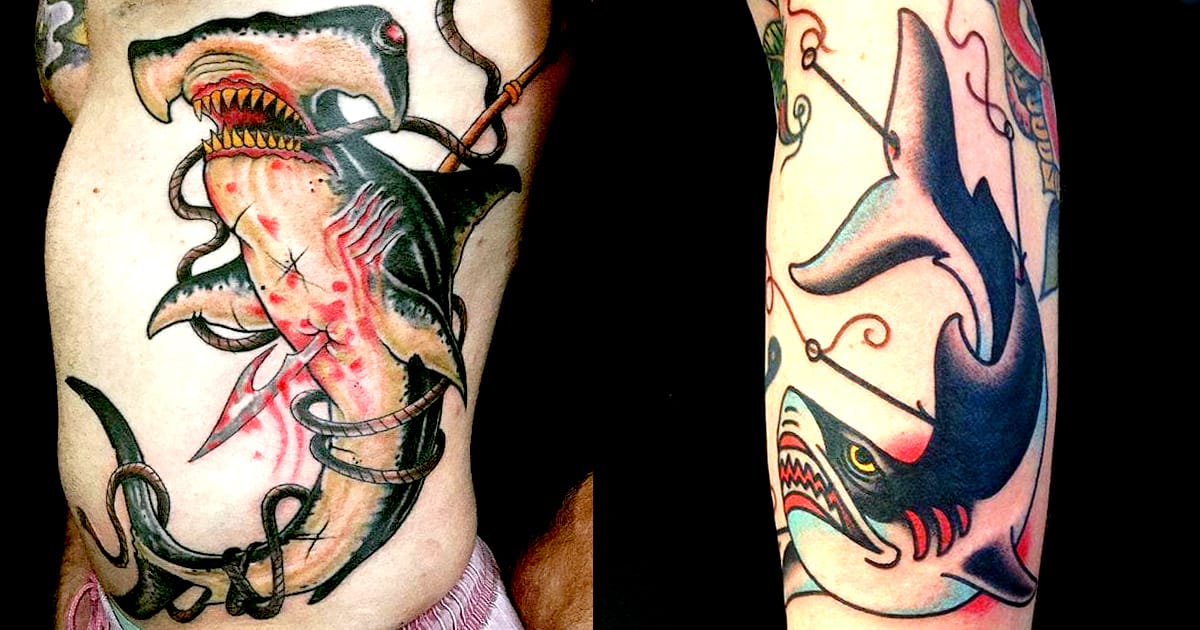
Mark of the Barbed Harpoon
Mark of the Lonely Albatross

Stain of Filth

Monday, June 19, 2017

GLOG Class: Noise Wizard

I've gotten to play a few sessions with +Arnold K. from over at Goblin Punch recently and it has been great. My first character died so I am rolling up a new one, a Noise Wizard specifically. Arnold hadn't translated the class into his GLOG format yet, so I offered to do it for him! (Pretty much all of this post was written by Arnold, I just converted everything).

Noise Wizard

Restriction: Instrument Casting

Noise wizards can only cast spells if they have their instrument in hand and are making a lot of noise with it, and yes that means they can't really sneak effectively while casting. The instrument can be anything (1d6 instruments: 1) penny whistle 2) bongo drum 3) nyckelharpa 4) tambourine 5) hurdy gurdy 6) tuba), but once it is chosen you cannot cast spells with any other instrument.

Perks:

Countersong: A noise wizard can attempt to fight noise with louder noise. In order to do so they must ready an action to make a lot of noise to drown out the incoming noise (for example: command spells, harpy's songs, advice that you'll never make as a musician). This requires a strength check if you are playing a percussion instrument, a dexterity check if playing a stringed instrument, and a constitution check if playing a wind instrument (this tests if they bang loud enough/ strum fast enough/ blow hard enough). 

Subtle Ear: Noise wizards also have a really good sense of hearing (for now). They are twice as likely to succeed at listening at a door.

Spell List:

  1. Sawtooth noise
  2. Accompaniment
  3. Stupid mouth
  4. Song of death/Song of life
  5. Gaping noise
  6. Brown noise
  7. Comprehend speech
  8. God ear
  9. Deafen
  10. Song of captivation
  11. Song of silence
  12. Rapturous noise

Legendary Spells:

14. Face melting solo

Mishaps:

  1. Gain 1 trauma
  2. Take 1d6 damage
  3. Random mutation for 1d6 rounds, then make a save; permanent if you fail. 
  4. For the rest of the day you cannot hear anything that could also hear you.
  5. Deaf for 1d6 rounds
  6. You loose control, the music takes over, for 1d6 rounds you just make a lot of noise and everyone in the area must make a wisdom check to concentrate on what they are doing, other wise they must clap their hands over their ears and do nothing for the duration.

Dooms:

Noise wizards' dooms are a mix between finally making it big on the Plane of Music and going deaf, just like Beethoven did.
  1. You are invited to play a concert on the Plane of Music, a gate of sound opens and you are compelled to enter it and play, its your big chance! Your companions are stuck with your physical body which is feverishly playing your instrument until you return after 24 hours. Most noise wizards will have warned their companions of this eventuality. When you back to you are 0 HP from exhaustion and have a hat full of 3d6 silver. You can no longer hear laughter or screams.
  2. The Celestial Conductor has come for you, they saw you on the Plane of Music and simply must have you. They want you to join the Obsequious Orchestra and play for the Authority until judgement day (or at least until he leaves his tea party). You have to fight them to remain on this plane, but if you win you can never hear the words of a pious man again nor the whisper of a lover, and when judgement comes you wont hear the bells tolling and you'll miss out on paradise.
  3. You've gone completely deaf beyond magical means of healing. All of your spells now have 1-in-6 chance to fail, growing by 1 for each month of life after this. But you can still hear the music, it haunts you...
The best way to defeat your ultimate doom is to travel to Heaven and finish your fight with the Celestial Conductor and take their baton. Only this will return your hearing, and you'll have a baton with which to command the Obsequious Orchestra with.

Alternatively you go to Hell can find a Satan and challenge them to a music duel. Your instrument against their flaming fiddle. If you win the Satan will live in your head and hear for you, telling your brain everything they hear exactly as they hear it (probably).


Spell Descriptions:

Accompaniment:
R: 0
T: Self
D: [dice]*hour
There is an invisible orchestra following you everywhere you go.  They play constantly, loudly, and appropriately.  They play ominous music during ominous moments, sexy music during sex, etc.  Additionally, they will accompany you if you play your instrument, making your performance extra awesome and giving listeners a -1*[dice] penalty on any saving throws made to resist your magical music.

Brown Noise
R: 20'
T: All creatures
D: 0
All who hear this discordant arpeggio must save immediately or shit their pants.  This is accompanied by intestinal distress that prevents them from doing anything for the next [dice] turns except move.  Obviously, this only works on targets capable of shitting themselves.  Creatures who have heard the brown noise before get +4 on this save.

If at least 2 casting dice are invested this may optionally be projected as a 50' cone.

Comprehend speech
R: 0
T: Self
D: [dice]*hour
This allows you to comprehend any language you hear, and respond verbally.  No effect on written language.  This is not real understanding, just a temporary translator-thing.

Deafen
R: 50'
T: 1 creature
D: permanent or [dice]*hour
If the target fails a save, it goes deaf.  This is a curse, not a physical affect.  If this spell is reversed, it has three uses.  First, it can be used to cure magical (cursed) deafness.  Secondly, it can be used to temporarily grant hearing to things that cannot normally hear (such as golems), which incidentally makes them susceptible to sound-based magic for 1 hour.  Thirdly, if it is used on a creature than can already hear, noises will loom large and inescapable in their minds, making them better able to enjoy music, as well as giving them a -1*[dice] penalty to save against sound-based magic for the duration.  No matter how this spell is used, unwilling targets get a save.

Face melting solo
R: 20'
T: Everything
D: Concentration
Does [sum] fire damage and on each subsequent turn the damage increases by +1d6 and repeats (this stacks). If more than 4 dice are invested this can instead be cast as a 50' cone.

Gaping noise
R: 20'
T: Everything
D: 0
All containers and portals are opened, as long as those things aren't locked or tightly secured (tied shut with rope counts as tightly secured).  This has no effect on things such as belts, but it does affect pockets, luggage, zippers, doors, windows, and portcullises.  This spell cannot open minds.  If 2 casting dice are invested it also opens locks (including things like shackles), and if 3 dice are invested it triggers all traps in the area.

God ear
R: 0
T: Self
D: [dice]*minute
Your sense of hearing expands to godlike proportions.  You can hear muffins being digested in your belly.  You can hear moss growing on the other side of a stone wall.  It's all very disorienting, which is why you're helpless for the duration.

Beginning with near things and then moving outwards, your DM will describe [dice]*d6 interesting sounds, such as a goblin's dice clattering in the next room, followed by the a derro's mad muttering in the room beyond that.  The effect is barely comprehensible to mortal ears, however, and it is always possible that a sound might be missed in the tumult (and also because sometimes your DM will forget that there is a waterwheel in room 36, so be cool).

Rapturous noise
R: 20'
T: All creatures
D: 0
Everyone who fails a save is overcome by ecstasy for [sum] rounds.  While suffering from orgasmic pleasure, creatures cannot take any directly harmful actions, such as attacking with a weapon or casting a disabling spell, nor can they speak anything that isn't complimentary or pleasant.  Affected creatures could still pull a lever or run for help, though, since that is not directly harmful.  Creatures who have heard the Rapturous Noise before get +4 to their save.  If at least 3 dice are invested its effects can optionally be projected as a 50' cone.

Sawtooth Noise
R: 20'
T: All creatures
D: 0
Everyone takes [dice]*1d8 slashing damage, save for half.  Creatures who have heard the Sawtooth Noise before get +4 to their save.  If this spell has at least 2 casting dice invested in it it can optionally be projected as a 50' cone.

Song of captivation
R: 50'
T: [sum] targeted creatures
D: Concentration
Creatures that you select will turn their undivided attention to you for 1 round.  If they fail a save, their attention will remain on you for as long as you play, and will not take any actions except to listen quietly.  They get +4 to this save if there is combat or clear hostility in the situation.  This spell does not make them any less alert, it just makes them look in your direction and pay attention to you.  Regardless, the spell is broken as soon as something obviously suspicious or important happens. They will not move from their spots.  If you at least 2 casting dice targets will follow you for as long as you continue playing while remaining in their midst (no running off ahead--you must stay surrounded).

Song of death/Song of life
R: 50'
T: [sum] targeted creatures
D: Concentration
When cast as Song of Death creatures that you select take [dice] damage per turn, no save.  Undead creatures are instead healed by this song.

When cast as Song of Life creatures that you select heal [dice] damage per turn.  However this spell cannot heal pre-existing wounds, so if you were at half HP when the song started, you will not heal above that.  Additionally, anyone listening to this song is protected against death magic and level drain, and gets +2*[dice] to save against such things.  If this spell targets undead creatures, they instead take [dice] damage per turn, no save.  If at least 2 casting dice are invested targets get an additional+2*[dice] to save against death effects and level drain.

Song of silence
R: 10'*[dice]
T: Everything
D: Concentration
You play anti-music, generating anti-sound.  This cancels out all sounds within range.

Stupid mouth
R: 50'
T: 1 creature
D: 1 minute*[dice]
If the target fails a save, it will be unable to speak except in the worst way possible.  Every phrase will be misspoken, every intent subverted.  They will insult the most important person in the room in an offhand way, speak the most embarrassing secrets (others' and their own), and generally be a colossal ass.  They always have the option of shutting up, however, and most people will indeed shut up as soon as they realize something is wrong with their mouth.  Spellcasters suffering from this spell will have a 50% chance of failing their spellcasting (the action fails, but they don't lose the spell—it's not a fumble).

If tat least 2 casting dice are invested the target will have no choice but to babble nonstop for the spell's duration, and an affected spellcaster will fail all of their spells.


The greatest and best song in the world
R: 50'
T: 1 creature
D: Concentration
No save. The caster and the target are locked in a duel, every round dealing [dice]*1d12 to the target and half damage to the caster each round. This damage is double when targeting demons.

One time use. If the caster survives they can continue to cast the spell, but only ever with a maximum of 2 casting dice invested, now called "Tribute to the greatest and best song in the world" and they will talk about that one time they cast it and how cool it was and how it really didn't sound much like this but you get the idea.

Saturday, June 10, 2017

Random God Generator, or Who Dat God?

Okay, so we have a nice simple system for simulating economics in Ánemos. It's easy. We have a random Spirit Generator, also easy. Let's create a system for another piece of the Weird Mythic Fantasy pie, the Gods.

This is a series of tables meant to flesh out the god of an island that your party may be visiting that you didn't have time to write out. These generation categories go in order of importance, and they are designed to also answer questions about the populous that worships them. Another design goal is to produce super weird results that will kick your brain stems out of creative inertia (at least that's the goal).

Some cools ideas are here too.

More Important:

Domain:

This is to distinguish the God from Spirits, their interests and scope of influence are simply very different. Think about it like the two tribes of Norse gods, the Vanir and the Aesir. The Vanir are more interested in the affairs of humans, the Aesir are manifestations of the forces of nature. Gods in Ánemos are concerned with human affairs: philosophy, drama, agriculture, writing, knowledge, etc. the Spirits on the other hand are the ID of the natural world.

(Borrowed some ideas from here)

Roll twice:

Taboos for the faithful:

Roll a few times on this, really as many as you need to make the religion sufficiently distinct. Some results may not make sense as written, for example: The Faithful...must always...buy or sell...birthdays...in the home. Thats okay. Re-rolls are encouraged.


Manifests As:

Now to create some flavor for the god, something you can tell your PCs to make them go "They worship a whaaat?"


Now you have a basic body plan and size, lets give the god some sort of strange detail, ideally based upon their domain. This is the time to throw in that weird trait you have been thinking of but never seems to fit, its a god, it can do what ever it wants! Below are some examples I thought up.


This may be helpful if you roll "mineral" as body plan

Boons:

Whats the point of having a god if you can't pray to them and they sometimes listen and do something crazy? Unfortunately (fortunately?) not all gods are created equal (might have something to do with the belief in them...). If the god can grant Moderate Boons, they can grant Minor Boons too of course. Try and stick with the domain of the god generated to give you some ideas. Think of this as a "power rating" of sorts, more powerful gods can grant greater boons.

Roll 2d6, drop the lowest.
(1-2) Minor Boon: Simple things, no heavy divine intervention here. Easing child birth (fertility domain), blessing the faithful with deep and restful sleep (sleep domain), wiping away painful memories (ignorance domain), giving a glimpse of the weather in the coming week (prophecy domain), etc.

(2-4) Moderate Boon: More significant intervention now, the faithful are truly lucky to be given one of these boons. Gifting a great week of feasts that strengthen and encourage the faithful (hedonism domain), favorable winds bring exotic traders (mercantilism domain), their long-eye spies an enemy form afar and warms the faithful (watchfulness domain), those that would wreak vengeance are given aid in the form of poisoned arrows (vengeance domain), etc.

(5-6) Major Boon: Fear ye all who oppose them, for their god is on their side... Direction on how to build a magical ship (travel domain), lending their strength to an army on the march (war domain), to hide their believers behind a bank of fog for a season to avoid their enemies (secrets domain), lending their deep intellect to aid in some great undertaking (science), etc.

Fanaticism rating:

Rolled randomly as a sliding scale, I want little islands of super fanatics and big islands of agnostics. This may indicate the "trajectory" the god and its believers are on, ie a "weak" god (one that can only grant minor boons) that has fanatic believers may in a few generations be able to start granting moderate boons as they wax in power.

This can also describe how strictly they follow the taboos of their religion.

Simply roll 1d10: 1 being casual/passive believers, 10 being fanatic believers.

Less Important:

Patron of this profession and this class:

The god you are generating should have people that tend to really like them. These are those people.
(The profession table I stole and altered from +Arnold K. from his GLOG system)

Roll once on each:


Favored Weapon:

I always liked how the gods in WotC's mythos always have a favored weapon, and that their clerics always have them. Its good flavor. This could also be used to deduce how this culture wages war.


Sacred Plant or Animal:

So you have a pretty good idea of what the god is all about, what are its two major symbols? These aren't critical, but I like the flavor of having a deity of being interested in a certain animal, so those animals just overrun the island because no one can touch them or something.

Here is a d100 animal table from here, reproduced with my fancy Excel color editing prowess and a d100 plant tables that I wrote (note on the plant table, it was really hard to choose a set of plants I felt were universally recognizable, throw anything out that doesn't fit in with your setting's ecology!).

Roll once on each.


Favors this trade good:

Roll on the trade table! As stated above, the gods' primary concern are civilized ones, so they tend to favor a specific good that their island produces. This generally gives respect to those that practice these trades as well.

Example God:

Alright, we have all the tools we need, lets walk through the steps and see what kind of god we get!
Domain: Peace, Justice
Taboos: The faithful must at dawn buy/sell feelings (anywhere).
Manifests as: Small, serpentine peacock
Boons: Minor
Fanaticism rating: Level 7 fanatics
Patron profession: Lumberjack
Patron class: Rogue
Favored weapon: Garrote
Sacred animal: Skunk
Sacred plant: Moss
Favored trade good: Alchemicals

This is the god Pagóni, Lady of the Serene Isle. Every morning her followers wake and weep or laugh or smile or frown or grimace or gawf or... into vials. They then take to the streets to barter and trade their emotions with one and other. Pagóni oversees this serenely, gentle floating on the morning sea breeze, her people once again safe from their own emotional burdens. All is ordered, everyone is calm and only feels what they paid for that morning. This is Pagóni's blessing, and her people love her for it.

Her temple is high on the Isle's mountain in a damp cave covered in moss with the music of water dully echoing on the soft walls. The woodsmen of  the Isle pray to her to be anointed with the musk of the sacred albino skunks, and their axe and saw strokes are sure and measured.

But all is not always well in the Serene Isle, and when enemies come to the Calm Folk, the footpads take to the night and strangle them gently in the dark, their callousness and hate and emotional flux is not welcome on the Serene Isle...

LIKE THIS BUT WITHOUT WINGS AND WITH A BEAK

Saturday, June 3, 2017

Throwing Meat on Bones: Designing Settlements

In my Ánemos game most of the party is from the same place, Nános. The founding principle of this campaign was to try out some of the ideas about romantic fantasy and long term adventures with months of domestic time that +Joseph Manola writes about at his excellent blog. A hugely important part of this is the players home, and in this campaign that's the Grandsire's Enclave (the analog for the home village in a vanilla RPG).

I have been working on some options for the party to make decisions about how to invest in their home while they are out adventuring (because they were kind of exiled for kind of inviting a practitioner of a Sun Cult to Nános and kind of murder the Grandsire with mirrors), so when they finally return home they will have a lot of cool options. I read a post a few weeks(months?) about building up your village and it was good... but of course when I started this post I couldn't find it so I wrote my own rules. Here is that original post form the superb +Mateo Diaz Torres over at gloomtrain.


There have been other hacks like this, and this is loosely modeled on those (specifically Pathfinder's Settlement mechanics introduced for the Kingmaker Adventure Path), but also on some spreadsheets I made for my Vindjord game a few years ago that were similarly intended, but the system was never used. Taking a cue from some of these hacks I am giving the Enclave stats like a character :
  • Military: Used when raising an army, or when doing auto-resolution of conflicts when the PCs are away or when withstanding an attack
  • Agriculture: Used to figure out the population cap of the Settlement
  • Culture: Used to see if the settlement is able to help a PC to research something, or used to see if the settlement and the party get any morale bonuses for that month
  • Trade: Used to figure out the monthly income as well as famous-ness of settlement
All of the buildings provide modifiers to these stats and some unlock abilities like ship building or increasing the max value of an item available for sale in the settlement. Many of the buildings might require a special artisan to run them, so if the party finds a talented smith in their travels they could invite them to set up shop in their Enclave.

So here is a table with some options that the PCs can invest in (assume that each building or improvement takes a month to build):

The filled in slots are what has been built at the start of play, consider doing the same with your own.

I have instituted a cyclical time constraint on the players, with roughly half the year being unsuitable for sea travel, and therefore adventuring (that's what you get with a world of islands and a monsoon season). The thought is they will return home for the Season of Storms and play house for a few months (of course through descriptive montage) and build up the Enclave, then go adventure again once the weather clears. My group is currently half way through their first Season of the Sun, so they haven't interacted with any of this yet.

I'll keep you all posted with what my group thinks!

The Math

So here is what I have cooked up, with examples from the Enclave (examples will make some more sense if you read this post about Automata)

  • All Settlment Stats start at 4. This base score increases as the population grows (every exponential increase), the minimum number of inhabitants for a settlement is only like 30-40.
    • The Enclave started at 36 (6^2), and the base score will increase to 6 once they hit 216 (6^3).
  • Stat bonuses use the standard 5e spread, so a score of 10 means a +0 bonus, and a score of 6 means a -2 bonus.
  • For a monthly settlement income roll 1d20+Trade Modifier, this determines how good trade was this month. Apply the adjusted rate to the basic rate (money/population) and add it to the coffers.
    • The rate  I am using is 10 money/Circle (units of 6 Automata)
    • I am not letting my PCs use the Enclave's income for themselves, they must reinvest in the community, until they have a glorious military coup. 
  • The total population possible (as opposed to the realized population, you should keep track of how many peasants die) should be calculated as r* Agriculture score. 
    • So the rate for the Enclave is the constant 5.166 (I back calculated this rate for my game based off of how many people I said live in the settlement from the first session). Meaning that at their current Agriculture score of 6 there can be a total of 5.166*6=31 Circles supported (with rounding of course).
  • At the beginning of each month roll a morale check for the settlement, 1d20+Culture bonus. The result determines if they are in good spirits and gives them a bonus to all other rolls for that month. Its hard to get anything done when there hasn't been a good feat lately or a new book at the library.
  • Culture bonuses are also used to see if any traveling artists/ musicians/ scientists/ alchemists/ etc stop by for a while and applied to PC research checks at home.
  • Military rolls are opposed 1d20+Military bonus checks, the magnitude of winning/losing determines how big the victory/defeat was. Should be super back of the envelope calculation to determine the invading force's bonus, and only used when the PCs are away.
That's all of the hard and fast math I have figured out so far, but it seems like its enough to run with it. I like that the town income is separate from the PC's but they can spring some of their own cash if they really want to build a better smithy so they can finally buy better weapons. I have also given the PCs a map of the island to draw on as they build it up so they have some more concrete idea of where the ranch will go, and just where to put the garden.


***Note: this really intended for lower level characters investing in their home town, it's not really intended to scale to a metropolis or domain level simulation. You absolutely should not do this with every place they visit, it's a waste of valuable DM planning time***

Tuesday, May 23, 2017

Plying the Seas for (Some) Adventure and (Mostly) Profit

"Hey kid, wanna buy some sheep?"
So I have a player in one of my Ánemos games that worships Oros, god of trade and mercantilism. Literally ever time they are in a port or meeting a random guy on the ocean he trys to make a business deal, its great. I didn't really have a good way to handle this at first, so I wrote up a random goods table, assigned each good a value per ton and a rarity and have been using it ever since. And since I wrote it I guess I could share it here, I even mentioned it in a post from months ago!

I use these by rolling on the d100 table when the party encounters a merchant ship (most of these are either common galleys (150 tons of cargo space) or trading cogs (300 tons of cargo space)) (ship stats here) to figure out what goods they have aboard. If you want to really systematize this you could roll a d100% to determine how full the trader's cargo hold is and roll on the goods table and the quantity per rarity table to fill up their hold to their current level, but I have found that that level of detail is often not super important.

I have found this table to be pretty useful for determining the primary industries of islands or even the domains that Gods and Spirits are interested in. So that's cool.

Random Good Table:
Livestock Head to Ton Conversion Rates
Quantity Per Rarity Rates
I also wrote a little calculator using Excel's random number generator to simulate a variable price when selling goods in market. The math is pretty simple, and it seems to work well:
Selling Price= Common Price*(1+x)
Where: x=(random value between -25% and +25%)/y
Where: y=1(if very rare), 2(if rare), 3(if uncommon), 4(if common) 
[I especially like that the rarity controls how big the price variation is. Common goods are only ever -6.25% to +6.25% above or below the common market price, they are more stable good because they are common. Rarer goods can have bigger swings in price, like in real life! Economics simulation tirade over]

Or you can just say fuck it, Connor you wrote a god damned math for D&D what the fuck, give me the math in a little calculator for fucks sake. Okay.

Tuesday, May 16, 2017

The Bard Colleges

This is the second of my follow up posts to this project, today's class is the Bard. The goal of this project is to create a "minigame" of sorts for each sub-class for D&D 5e that allows the character to grow in ways not directly tied to their level progression and that makes each sub-class feel unique and interesting.

College of Lore:

Original Idea: "Your mind is a well from which you can draw history and knowledge from the depths of the past. Your long study has given you an unrivaled grasp of Lore. For every lost secret that you unearth your knowledge deepens."

So the idea with this sub class is to be an searcher for Secrets, the better the Secret the more revelatory the discovery. Perhaps this is a more story/adventure based advancement than the other sub-classes, but I think its a fun way to make an investigative and lore driven bard. These are the kind of characters that want to delve deep into ruins of ancient civilizations so they can learn more about their plumbing. Not all Secrets are arcane and world shattering...

Secrets:
So as the Lore Searcher finds secrets they act like subtle Wish spells. The Bard discovers something in the dungeon they are delving in and the player gets to decide what exactly they discovered! I want the onus of this to fall on the player, not the DM, so its up to the player to declare when they are discovering a Secret, the DM just lets them know when they have delved and studied enough to merit a new Secret discovery. Below is an example, but this should be super fungible.

DM, ConBon: CWilly, as you are lowered down the shaft you start making out some inscriptions in the stone, you flickering lantern dimly illuminating them...

Player, CWilly: I holler up to the Barbarian, "STOP!!! This could be what I've been looking for! These look to be diagrams to the Ancient Yuan-Ti super weapons..."

ConBon: No they aren't dude, its just like a shaft leading down to the next level... Why would they put super weapon plans here?

CWilly: Okay, okay. Then they are graffiti from the Yuan-Ti's slaves, it says the name of their God-Ruler and that he was afraid of fire.

ConBon: Alright, that sounds good, but it'll be a while till you get another Secret, okay? The name of the God-Ruler was Issak the Cruel, and he was deathly afraid of fire...

In the example above the DM lets the player  have a say in defining the final boss of the Dungeon, giving him a weakness to fire. There is some negotiation involved, as there should be.


Not a wizard! A bard!

College of Valor:

Original Idea: "You thrill in the heat of battle, pounding a martial beat as you urge your allies on. You have taken to the sword as a duck to a pond. Keep track of every bardic inspiration die that is the difference between life and death for an ally or foe."

You've chosen a path of empowerment, a martial archetype for a musical/performance based class. There is a rich tradition of these kind of characters across cultures: the skald (warriors and storytellers), the samurai (meant to be masters of martial and sensitive arts), the knight (the chivliric ideal has knights that write poetry), etc.

The original idea was a little boring I think, and I have been playing a loosely Redwall based game recently, we sing a lot of songs, shout a lot of battle cries, and describe feasts often; its all been really fun. So the Bard under the tutelage of the College of Valor seeks out greater and greater conflicts to participate in so that they can write sagas about their exploits. Think of it like you get to play Homer writing the Odessy while its happening!

Sagas:
The Bard gets to write a new bad-ass song for each new scale of conflict they are embroiled in. A computational way to represent this would be CR (Challenge Rating), the metric that describes how much XP should be awarded for a combat encounter. There is all sorts of arcane maths behind this computation, so the leg work is done for us, we just get assign rewards for writing poems.

Of course to use these the player actually has to tell a story/sing a song/recite a poem! For example the Heroic Ode should be written for each party member you want to use it on, "Oh Scar-Faced Johnny, Slayer of Naga Queens and Terror of the Eastern Wastes, you story cannot end here...!", therefore each party member has to have done something Ode worthy for this to work. The format doesn't have to be these forms of course, this isn't some stupid creative writing class, let the player have some fun with it.


CRSaga Unlocked
0-4 (Amateur hour bub)Campfire Story
5-8 (Wow! You sound like some kind of hero!)Folk Song
9-12 (Hear anew the voice! O hear and listen!)Heroic Ode
13-16 (And so Hercules slayed the hydra...)Legendary Story
17-20 (Tell me, O Muse, of the man of many devices...)Epic Poem
21+ (YOU HAVE ACHIEVED APOTHEOSIS)Cult

Campfire Story: You can tell a Campfire Story of one of your Party's exploits while taking a long or short rest, this allows your allies to re-roll all 1's on their HD rolls when regaining health.

Folk Song: When you sing your Folk Song in public you get advantage on preform checks when trying to make money in down time

Heroic Ode: When an ally is making death saving throws you can take a full round action to recite their Heroic Ode to instantly stabilize them at 0 HP as long as you are within 30ft of them.

Legendary Story: During combat you can make begin to tell your Story, for every round that you recite your allies get +1 on attack/damage/saving throws (each party member chooses which one they want for the duration) for every round that you continuously tell the story, as a concentration spell up to 1 minute (can use Battle Magic while doing this), usable 1/week

Epic Poem: This is effectively a ritual spell (takes 10 minutes to cast) that can be used to cast any spell on any class's spell list lower than 6th level, and the epic poem must some how relate to the spell being cast. For example a Create Undead spell could go like this:
Facing to the northern clime,
Thrice he traced the Runic rhyme;
Thrice pronounced, in accents dread,
The thrilling verse that wakes the dead,
Till from out the hollow ground
Slowly breathed a sullen sound.

This is usable 1/week.

Cult: You have accumulated enough of a cultural impact that you now have a whole cult devoted to the contemplation of of your art and the mysteries contained within. When ever you come into a settlement that is a town or larger roll to see how big your following is here, using your Preform skill. Depending on the success of the role, your Cult could be very developed in a way to aid you. At the least you get a fan club most places you go.


Thoughts

I think the Secrets mechanic is especially interesting, giving the PC a way to color and change the world in creative ways. It gives some of the DM's agency to the player, which is fun. I haven't thought of a good way to standardize it, though I am not too worried.

I'm not totally satisfied with how tied to level advancement the Sagas mechanic is, but I think it makes some sense. That they have to recite their work makes it fun, hopefully. Perhaps encourages players to do some riskier things than they normally might, all because it would make a great story. And that is awesome.

Friday, March 3, 2017

Attack of the Cranes, or Re-skinning for Ánemos

I am getting ready to start a new campaign in Ánemos (weird Greek mythic fantasy) for some folks I've played with for a while but never DMed for, and I've decided to do some aesthetic touch ups for them. One of the things that has bothered me is that a lot of the stock standard D&D playable races don't fit well into the setting. The Greeks didn't have and dwarfs or halflings or gnomes or elves or druids. These are all products of Celtic/Germanic folklore, not Greco-Roman folklore.


But not really, for the most part I just re-skinned them for a more coherent aesthetic... or I got rid of them. I run my games in 5e D&D, so the following list is my replacement lore for the standard races, I didn't feel like any mechanical changes were important, except for introducing some new character creation tools, see the bottom of the post.

Humans:

Good ol' humans, they had those in Greece. No change.


Nymphs (Elves)(Heavily inspired by this post from WWCD?):

Nymphs are a seasonal race of Spirits who have gone dumb and weak, locked in a physical form. They begin life saturated and full of vitality, a barely restrained energy. As they approach their 100th joyous year they begin to change. Their skin and minds darken, becoming bitter and cruel. The light in their eyes goes out and they gather together to resent the world. But, as their 150th cursed year creeps on, the sunlight returns to them and the cycle begins anew. The timing is not exact, and Nymphs that cohabitate tend to fall into synchrony with each other.

Nymphs are flighty creatures with few ambitions other than to haunt their woods, stream, and beaches in peace. Though functionally immortal they aren't as concerned with death as one might assume. When an nymph eventually succumbs to some gruesome death from magical disease or a gutting, a new one springs up somewhere in the world where there are other nymphs, fully formed. Not even the Nymphs are entirely sure where they come from.


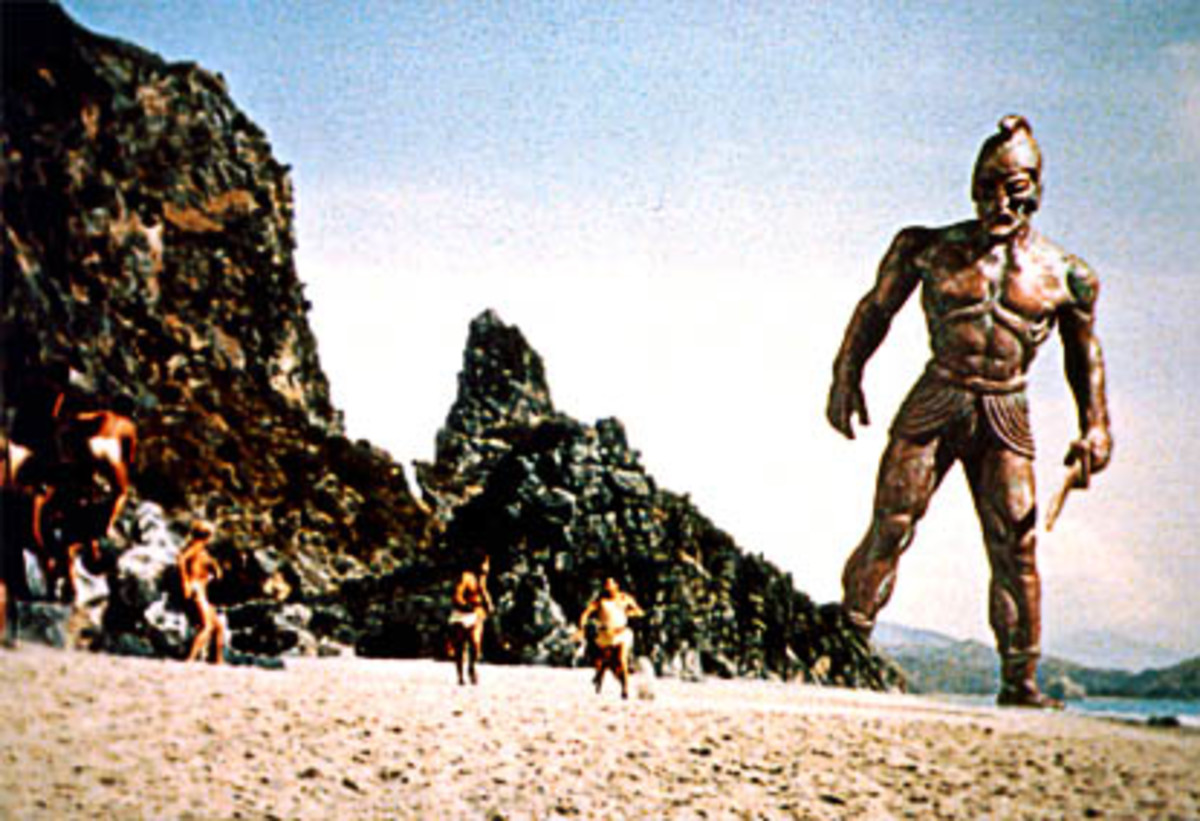
They are like Talos but smaller and self replicating

Automata (Dwarfs)(Also inspired by WWCD?):

Automaton is automaton.

Automata are genderless. This means they don't have sexual organs or reproduce as other living things do, they are made by their Parent. Making an automaton is a very personal experience for the Parent, it requires a safe place where the sculpting can take place. Here the Child automaton will take shape from metals and jewels and cloth and bone. Once finished a new full grown and fully mature automaton will be born, turn to its creator and exchange a nod of mutual respect. Since they don’t have sexual organs it also means instead of urinating they excrete through sweating. This explains their odor. Automata often eat gems and rare metals as a food replacement, and in fact they far prefer the taste of these to mundane food, perhaps due to their inorganic origins.

Occasionally the automaton is struck by an intensely artistic mood; a primal desire to create something beautiful and highly specific. The notion springs fully formed into their heads, the how’s and what’s of it, that this will go here and that will go there and on top we will menace it with spikes. Exactly what it will be isn't necessarily known, but hunches will evolve as the piece does. If the automaton does not complete their masterpiece by the time another mood strikes they will be blighted by melancholy. Until the next fey mood the automaton is tormented by the guilt of their failure, by the shapes and textures they could not realize. This manifests as a tangible malaise.


Don't mess with him. He'll eat out your eyes.

Pygmies (Gnomes):

No one knows where or when the pygmies came from. Where they raised up from the brute earth, now soil made flesh? Were they badgers gone smart and wily? Or perhaps they are long lost cousins of humans trapped in caves beneath an island of some cruel god? It doesn’t really matter, and all of those little people look the same to the taller races any way.

They have magnetic beards which help them choose mates and see in the darkness. Sculpting this facial hair indicates profession by the shape of their primary sensory organ and they are mostly blind in light (they only have cones in their eyes). These bearded little persons are fond of goats and are known to ride them into battle.

The most legendary pygmies have been locked in their glorious and eternal war with the cranes. They say a jealous goddess sent the filthy feathered beasts against the Pygmy Queens of Old for their great beauty and have warred ever since. And so they ply the tidal wetlands in flat bottomed canoes during nesting season to find and destroy crane nests. In turn any crane that sets its beedy eyes on a pygmy will go into a mindless rage until they pluck out the eyes of the pygmy or they are slain.


Demi-Gods tend to die pretty horribly


Demi-Gods (Aasimar):

The offspring of the many and varied gods, these mortals have a spark of the divine in their breasts and it shines through their faces. These rare individuals are born for lives of adventure and tragedy, for they are often cast out by their divine parents that fear that their children will usurp them.


From the stellar Matthew Adams


Demi-Daemons (Teiflings):

Counter to their bright and lovely cousins, these damn souls are the result of the unholy union between a Daemon and some poor mortal tricked or forced into the union. They wear their sin in their flesh.


Sunfolk (Dragonborn):

Some just call them lizard people, they lay out in the sun all day barely moving on islands that few would call habitable. They lick the morning dew off their scales and eat mostly seaweed and small fish. They form loose societies based around where one sun baths and many fights break out over this social hierarchy. When they can be roused from their lethargy to care about other races they are fierce warriors capable of belching forth the flames of the Sun itself.

*Note on Halfbreeds: Whether they are half-nymphs, half-pygmies, demi-gods or demi-daemons, all are mules. They are the byproducts of strange and taboo unions and should be shunned accordingly.

**Note: These are all of course loosely inspired by Greek myth, but most of the content of Greek myth have been drawn out and over used. So I am borrowing the aesthetic as a vehicle for the weird.

Character Creation and Goals

For this new campaign I am having my players try some things that I have been thinking about but have never gotten to see played out:
  • Rolling their stats in order (a la Joseph Manola) to create flawed/interesting characters, not well built ones
  • Having the whole party start as one race (a la Arnold K) to create a point of common origin and to really explore how these race's cultural implications play out
  • Starting without a class (the logical extreme of having certain classes unavailable at the start of a campaign), their defining features will be 5e's character backgrounds
  • Bringing a season for adventure and a season for being home for domestic issues and adventure prep into play (again, a la Joseph Manola) to change the pacing of the game
(Depending on which race my group decides to start play as I will make some "racial synergy" type abilities as Arnold describes in the post linked above)

I have done a similar re-skin some of the classes: wizard(s)= mágos (mági), druids (oak knower, Celtic) = drysgnós (oak knower, Greek), etc. Look forward to updates on how all of this is being executed and fleshed out in the coming weeks!

Sunday, February 5, 2017

Creatures of the Deep

My players met one of the biggest baddest creatures on my random encounter table last session, "the kraken" (not actually a kraken, just had that name in there as a placeholder for giant squid beast.). They handled it amazingly well by fleeing to the nearest island with a shallow reef to get away from it. They then convincing a Spirit to help them distract it so they could sail away, by making up a song and building a small shrine in praise of the Spirit.

Part of their roleplay discussion with the Spirit was about the nature of the kraken and what it feared. It came out that the kraken is locked in an eternal hunt with what was implied to be a legendary Kētos. Both prowl the Sea looking for the other. This got me thinking about creating simple movement rules for the Kētos and the "kraken" to map and keep track of their struggles against each other.

In the amazing Joseph Manola's post about the Triple Crown he describes three cosmically damned beings wandering the world. The PCs have to find and interact with these beings in order to retrieve the Triple Crown, a stunning example of his romantic fantasy philosophy to gaming. This got me thinking about how one might keep track of these wandering agents on a hexmap as a way for players to concretely get and use information about their quarry, and so these rules for wandering titanic sea creatures were born...

But First, Some Lore!

So we have two ancient sea creatures hunting each other. One is squid like, the other is "The Great One", an ambiguous large animal implied to be one of the Kētos. Since Kētos already exist as an identifiable group with my players, I want to distinguish this as another creature, and my random encounter table says it should be a "dragon turtle" what ever that really is. So we have a "kraken" and a "dragon turtle", lets write something more interesting than their generic D&D counter parts.

Like this...
...plus this and massive and old.
The Great One:
This massive sea turtle is the last of its kind. It once had mates, brothers and sisters, but that was an Age ago before the world changed and before its ancient enemy ripped them from fin to shell. This relic of the ancient ocean cruises the shallow waters of Ánemos with powerful strokes of its fins, grazing on kelp forests and fish when it is not taking long naps near islands. Often mistaken for a reef or a small island the people of Ánemos have many stories of the "island that awoke" or the "reef that lived".

When it catches the scent of its enemy in the water it rises in a flurry of activity, bent on entering a final battle with its ancient foe. This has happened many times before, each ending in a draw were they both flee to lick their wounds and fight another day.

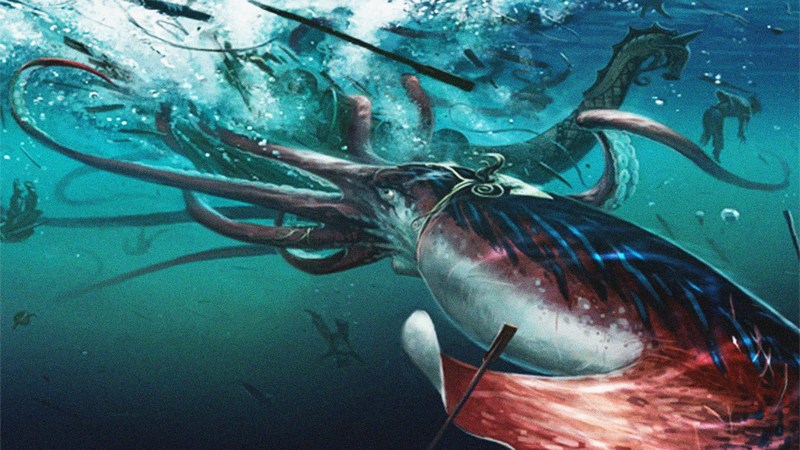
You know, classic kraken but....
...also horrifying gold worm beast.
The Tentacled Fiend: 
Resembling a giant squid or octopus in appendage only this fiend of the deep lays in wait in the deep ravines between the shelves of islands, letting its rubbery arms drift with the currents. Perhaps it slumbers, each tentacle with enough autonomy to grasp and wrestle whatever poor creature happens to graze it. Then the tentacle pulls the poor thing to the depths to its gaping maw, all with out the greater beast awakening. Few sailors have sighted the true beast, though the stories are many of the piece of drifting flesh that would rise up and drag men to their graves.

After its long months of quiet rest the Fiend again extricates itself from its deep crevasse in search of its ancient enemy, either in a deep-seated pattern of predator seeking natural prey, or ancient vengeance for broods lost to the fell beaks of a scavenging enemy.

Their "True" Nature

Legend has it that the Tentacled Fiend and the Great One are halves of the same whole. The Fiend is the incarnation of the terrors of the deep, the Great One the mildness of the shallows. They are the rent asunder Avatar of the Spirit of the Sea. Some say when they finally commit to it their final battle will be their reunion, and as they are locked in each others death grips their blood will mingle with the sea foam and the Spirit of the Sea will be whole as in the ancient world.

This must never be allowed to happen. As every channel, bay, reef, and shoal has a splinter of the greater Spirit, they are short sighted and self interested fragments. Would a unified Spirit of the Sea tolerate the presence of Civilization on her shores? Would she let people fish her bounty to eat her children? Could a man ever feel safe aboard a ship again? No, humanity would crumble underneath the fierce apathy of the Sea.

But these are just stories...

Tracking their Movements

So when the PCs encounter the Great One or the Tentacled Fiend on the random encounter table for the first time you start tracking their movements (or when they start caring, perhaps to hunt them or to commune with them). On your hex map they can move three hexes each week, rolling a 1d6 to determine their heading, discounting results that have them back tracking. They also have a 1 in 10 chance of settling down in a hex and "sleeping" for 1d6+2 weeks.

Information about their movements only reaches the PCs if they:
  • Enter civilized waters, there are sightings by trade/military ships
  • They encounter each other and engage in titanic combat, some poor fisher man is bound to see that
  • Get rolled on the random encounter table again
I like this system because its simple enough to keep track of, and should give the PCs enough info to track them, but still gives them an element of surprise with them showing up unexpectedly as random encounters. I'm implementing this system right now, so I'll report back with how it goes!