You may remember Treanets. That was half the story of magic tree people, dryads are the other half.
Yes, dryads are the "free flowing avatar of the id of a tree and forever tied to their groves." And yes, they are whimsy fucks.
But they also hold something within their coils that the treants rebel against, a true and abiding love for their home. Treants are born of agony and hardship, they survive a cataclysm and find it within themselves to (literally) uproot themselves and leave the place of their birth to make the best of their circumstances. They have cracks and scars in their bark, sun seared leaves and bundles of hard roots, but they wear their history and triumphs in their bark proudly.
Conversely dryads only ascend to consciousness when their grove reaches some level of abstract beauty in the eye of a passerby. Perhaps a maiden pure of heart and of taste wanders into a glade in the fever of spring to find just the right amount of flowers, lush grass, and shady sweetly blooming trees. She sighs and traipses on, and in her wake a dryad is born of the collective narcissism of the grove.
Once a dryad is born they immediately begin to manicure and cultivate their grove to reach even greater heights of beauty. They will obsessivly turn over every rock until they find its perfect face and orient it just so to go with the lilly line pool. They will prune their trees of dead wood so that the breeze can whisper through their crowns more sweetly. They will train squirrels and other woodland creatures to do cute things like frolic and sing.
Every time a sentient being passes through their grove the nymph will take careful notes on how they respond to their grooming. If the passerby seems unimpressed the nymph will confront them and interrogate them as to why they are not captivated by the (psuedo)natural beauty that the nymph strives for. In this way the nymph's concept of beauty grows and adapts to their audience, though the firmest stamp on their aesthetic remains the first observer's impression of the grove.
In this way dryad groves will reflect the society of their neighbors and the drifting standards of beauty, A grove in orcish lands will look very different from a grove in gnomish lands. A dryad born of the whimsy of a child playing make believe in a forest is very different from the bleak observation of beauty on a winters morning by a starving man.
The elves understand some of the mechanics of the dryad-aesthetic relationship and send their most tasteful landscape artists to hike around their lands and appreciate beauty in hopes that dryads are born with their tastes imprinted upon them, thus creating a dreamlike landscape of diligent dryads cultivating elvish ideals of beauty.
When traveling players may encounter an area of astounding beauty, the dryads grove.
Its center piece is:
1: A majestic and ancient tree
2: A quiet pool in a cool running stream
3: An open glade
4: A rock outcropping on a hill
5: A dell nearly hidden by shady trees
6: A waterfall
If the party is suitably impressed the dryad may appear and gloat, if they are unmoved it will appear and attempt to enchant them so as to get constructive criticism (though they take this very poorly). They are laughably easy to flatter, and are happy to share what they know about the locality. Their ultimate goal is to ensnare a suitably appreciative paramour to appreciate the loveliness of their grove. The bones of great heroes entranced by the dryad may fertilize her flower garden, and they are known to give artifacts of power to those that earn them as they have little use for magic swords and staves.
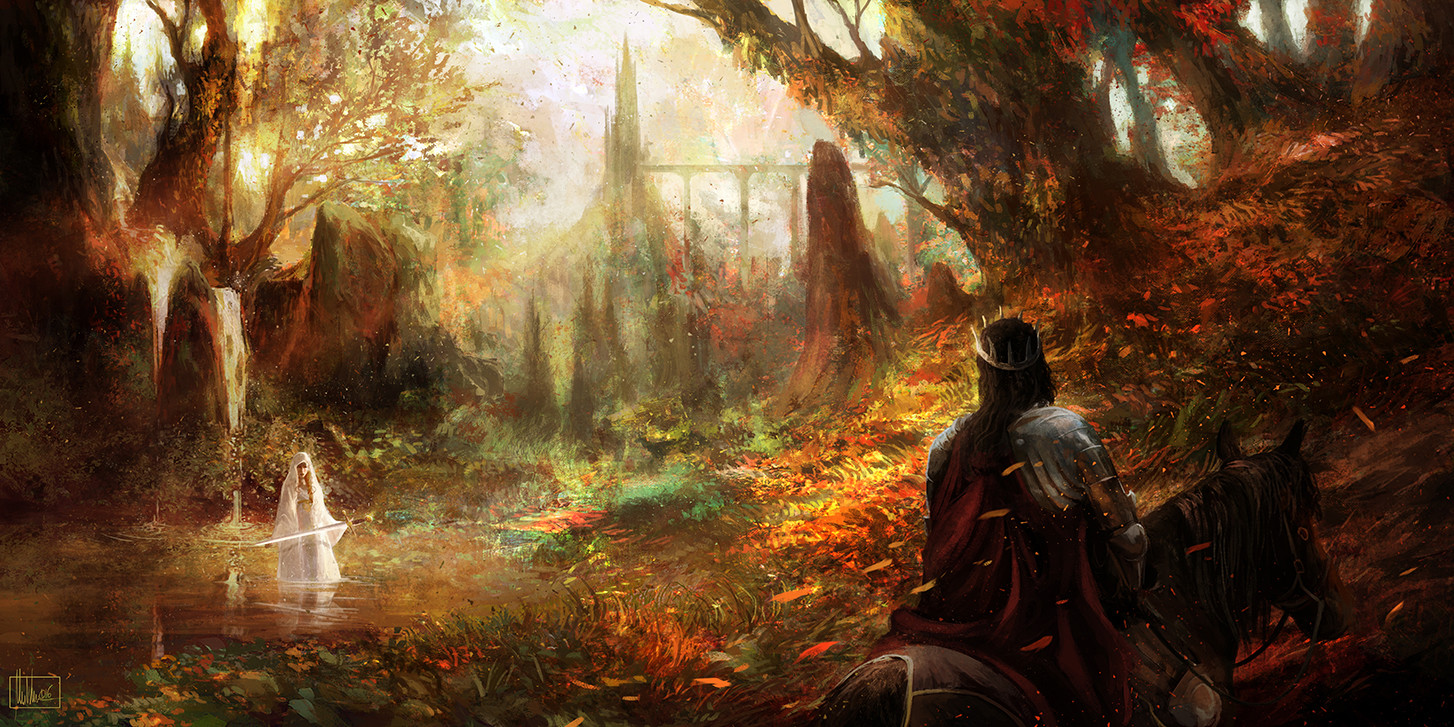
If you are lucky the dryad might have exactly what you need! Just make sure to compliment her pond. Source
If any part of their grove is threatened the dryad will call on it's animal allies to divert the threat. When truly incensed they become elemental avatars of rage, as they are effectively demi-gods of their grove, having absolute control of the limited geography.
If a dryad is killed or forcibly removed from their grove they will lay a curse upon their foe: to slowly turn to wood, (mechanically 1 Cha save per month or 1d4 Cha damage) but if they survive the curse for a year and a day the blight stops spreading. Their grove dies with them, any beauty is scorched and mutilated and it becomes an weeping sore of the homely upon the land.
The heart of a dryad is exceptionally valuable, wizards use them for spells and potions that affect perception of beauty. A fresh heart will sell for 5,000 gp, a dried heart will sell for 1,000 gp.
(Follow up on the dungeon hinted at in the Mangrove post. This is meant as a sketch of the broad concept, not a keyed dungeon.)
The crazed ecologists who study the Flowing Forest have long posited that at the center of it must be some great mystery. Its well recorded that the forest will "swim" against prevailing currents and winds, and it takes a proper monsoon to alter its path. Theories gain and loose favor, but a few have remained popular:
Its on the back of a truly massive crab, crawling slowly on the shallow ocean floor, maybe hoping to scrape off the forest on an island
At the center is a slumbering Spirit of life, restlessly riding its vine-y cradle over the sea, making it wander as its dreams shift
Most of the mass of the forest is sub-aqueous and so the important variable is deep ocean current, which are poorly understood
None of these are the right theory of course. If you survive the journey to the center of the forest you will find a great terraced valley, its bottom is a few hundred feet bellow sea level. The terraces are paved with great stones and look more like ancient gardens than jungle, the root-filtered fresh water trickles slowly down to the bottom. At the bottom a great clear pool steams, and the very top of a structure can be seen...
The whole place feels like this, but in a few hundred years when a jungle is growing on it
The Terraces:
These where gardens. Remnants of greenhouses and fountains are every where, and amongst the lush ruins on the top terrace a few final warning/warding shrines from the local Automata tribes rest, invoking their most vile imagery.
Hazards on the terraces include: feral plants, decaying architecture, insta-rot fungi, leeches, half functioning gardener constructs that WILL POT YOU, large still pools of lily pads that probably aren't hiding water snakes in them, terraced edges to descent on vines, balloon plants that accumulate hydrogen and explode easily, and giant sloth breeding grounds.
But you may find: potions of grow plant, half functioning gardener constructs that you can manipulate, exotic and potent plants from all over the world. Indeed the gardens themselves are a treasure trove in themselves to a trained botanist, the diversity and rarity of the flora is enough to bring a life time of rich research.
The Ziggurat
At the bottom of the terraced valley is a large steaming pool of water, no plants grow near its edges but at its center is a large square structure. Through the startlingly clear water you can see that it is a many leveled ziggurat. The water is very hot, but not quite boiling and there is a sharp mineral odor to the mists coming off the pool. Upon investigation the water is not only hot, but caustic and will dissolve organic materials after a few moments of immersion.
Once the party figures a way across the pool (boat that wont dissolve, parachute with hydrogen balloon plants from higher terrace, cooling the water some how, divert the water from flowing into it till it all evaporates) the real dungeon can begin.
Some things you might find in the Zigguart
At its heart is a sun. The party will see glimpses of it occasionally through thick glass windows and deep water, giving eerie illumination. They will find hints of it else where: in rooms dedicated to its maintenance and control with panels of inscribed glyphs that hint at their utility, in the flooded chambers soaked in near boiling and caustic water that will start to make them sick with radiation poisoning after a few hours in the dungeon, in the strange slimes and fungi that seem to grow abundantly around these leaks, and the slow perversion of flesh they will experience through mutation.
Deep at the base of the ziggurat, far below sea level, they will find the Torch. If they are clever they might even figure out that the Torch is siphoning the massive heat generated by the sun to solder shut fissures and faults in the sea bed. Perhaps they will understand that this Sun-Engine is literally keeping the world together. To keep the Torch at a steady distance from the bottom of the sea the entire structure expands and contracts like an accordion. This introduces a crushing hazard as well as a changing dungeon layout that may shift every time the party returns to it.
The central command room is locked, the party will have to find a way to bust in or find the secret to unlocking it. There is heavy machinery all around, perhaps they can use it for demolition? Once inside they will have to solve some sort of puzzle to figure out how to manipulate the Sun-Engine. There will be illusions/holograms of the builders of the Ziggurat There are a few possible outcomes:
Meltdown: The Engine has been in slow motion melt down for a few centuries at least, and the party wittingly or unwittingly brings about a run away acceleration to this process. The delicate fields that suspend the sun will start to break down; the improvised fresh water coolant system was already malfunctioning, but now no new water is reaching the core and the containment walls are melting. Run! The world will likely tear itself apart without the Engine to keep it together and perhaps usher in a new Age...or the End of all Ages.
Fix It: Through careful experimentation or dumb luck the party may figure out how to fix it. They can find out that the outflow of coolant is leaking badly, that the vegetation surrounding the Ziggurat is gunking up the mechanisms. If they fix it the Sun-Engine will start operating at peak efficiency again, the Torch will actually make headway in keeping the world together instead of fighting a slowly loosing battle to decay, and the Flowing Forest will be shed as the Ziggurat once again rides just above the waves with water intake pipes trailing behind as in the Days of Old.
No change: Through caution or awareness of their hubris the party can walk away and allow the Sun-Engine to continue to meltdown slowly. It will eventually fail, but at least the world continue for a few hundred years more...
Thoughts on the Inverted Ziggurat
Its a metaphor for a nuclear reactor. Built by some anonymous precursor civilization and abondened long ago, then rediscovered and haphazardly repaired by a more recent society. The terraced valley and gardens where built by the second comers as a way to keep the Sun-Engine cooled but when they abandoned it the radiation allowed the Flowing Forest to take root on the Garden Terrace edge until that was all that people knew of it.
When considered with the rest of Ánemos setting this is the first demonstration that world is a few Ages past a technologically advanced civilization and implies that its a post apocalyptic world, or at least a world fallen into decay and forgetfulness where the glories of the past are misunderstood and clouded (like the implied setting in the wonderful Ghibli film Castle in the Sky). I like this. It adds a dimension and depth to an otherwise gonzo-Greek-fantasy setting. I love fantasy that is secretly sci-fi. I also love romantic fantasy (the type that +Joseph Manola writes about here, and he makes some great points on ruins here) where the characters have the chance to have a meaningful effect on the world.
In this dungeon they are presented with a machine that literally keeps the world together and the three outcomes all are meaningful. They can play with fire and get burned with the world at stake. They can fix an ancient construct and perhaps start an age of re-disovery and healing. Or they can make the decision to find a way to love a more and more broken and shattered world.
Treants are trees that should have died a horrible death. Calamity has struck their grove and some animus has seen fit to not only let them survive but become something other than a tree. This is a rare occurrence, even the elves can't reliably awaken treants (though they will claim that thats because the tree wasn't ready yet).
When you stumble across a young treant they often are simply sitting and marveling at their articulating twig joints and the way the other side of that rock looks. It's not until they have weathered a few winters and the novelty has worn off that they begin to seek even more novel horizons. Old treants are prodigious walkers, often covering 30 miles in a day simply for the joy they find in the rhythmic creaking of their wood and the exotic crunches and tastes of distant soils beneath their root pads.
As treants age their forms grow more and more complex (think the incredibly complex and brushy crowns of old growth redwoods) through years of wear and variable climates. An ancient treant hardly looks like the tree it once was, with foreign moistures flowing through it's xylem and distant suns vivifying it's leaves. But they can never truly shrug off their origin, their morphology is plastic but their innermost rings will still tell of their ancient bondage in the place that they first grew.
Don't confuse them with dryads, they hate that. Dryads are the free flowing avatar of the id of a tree and forever tied to their groves. Treants are a wholly tree realized as a walking, talking, growing entity. Fuck dryads, those whimsy fucks.
If you want to generate a random treant use the table below:
(Gosh writing tables like this is fun) (It's also really hard for me to pick proto-typic/ universally recognizable trees. I was going to write about the habits of each of the 10 above, but then I thought that no one would give a hoot. So I didn't. Let me know if you give a hoot.)
This might be helpful for understanding their original biome.
How to use the above generator:
The tree type tells you some personality details of the treant (pines are hardy and drought tolerant, so a pine treant might be stubborn and resourceful).
The biome they grew up in is like the circumstances of their childhood, was it a hard lonely life (like the alpine) or an easy social life (like the rainforest)?
The events that lead to their awakening should be the dominant aesthetic descriptor after the tree type (a fire scarred treant bears those scars as cat faces).
And obviously what the treant wants should indicate their motives when encountered.
Thats for life
So is that (example of what bug kill can look like) (I took this picture!)
Treants and Wands
It is well established that the wood of a treant makes an exceptional wand. Perhaps some of their life force furthers the magic infused when created or maybe wizards just fetishize exotic materials when crafting their items of power. Regardless, the wands made from treant wood often share some personality traits with their parent. If the treant awakened in a fire the wand will be especially well suited to fire magics for example (but it also might be temperamental and brittle).
One of the greatest gifts a treant can give you is a length of their body to use as you see fit, thought they are notoriously hard to befriend.
Some wizards claim that once a wand is all used up you can soak it in water and then plant it in rich soil. If you are lucky and very nurturing it may root and leaf out again and a wyrwood tree will grow. Wyrwood is very useful, especially in the crafting of magical ships.
Megafauna are large animals. Examples include loins and tigers and bears (oh my), and for the most part in the modern day they are pretty severely limited to the African continent. There are still megafauna found elsewhere in the world, just simply not the levels that the fossil record indicates we should could seeing (for example most deer count as megafauna, kangaroos count, bison count, cows count, cassowary count, etc). Megafauna are not only cool things to hunt and see on safari, but they also do some very import ecological work. There is super interesting ecological restoration work going on trying to reintroduce megafauna to areas they have gone extinct in to restore some semblance of a healthy (according to a historic standard) ecosystem.
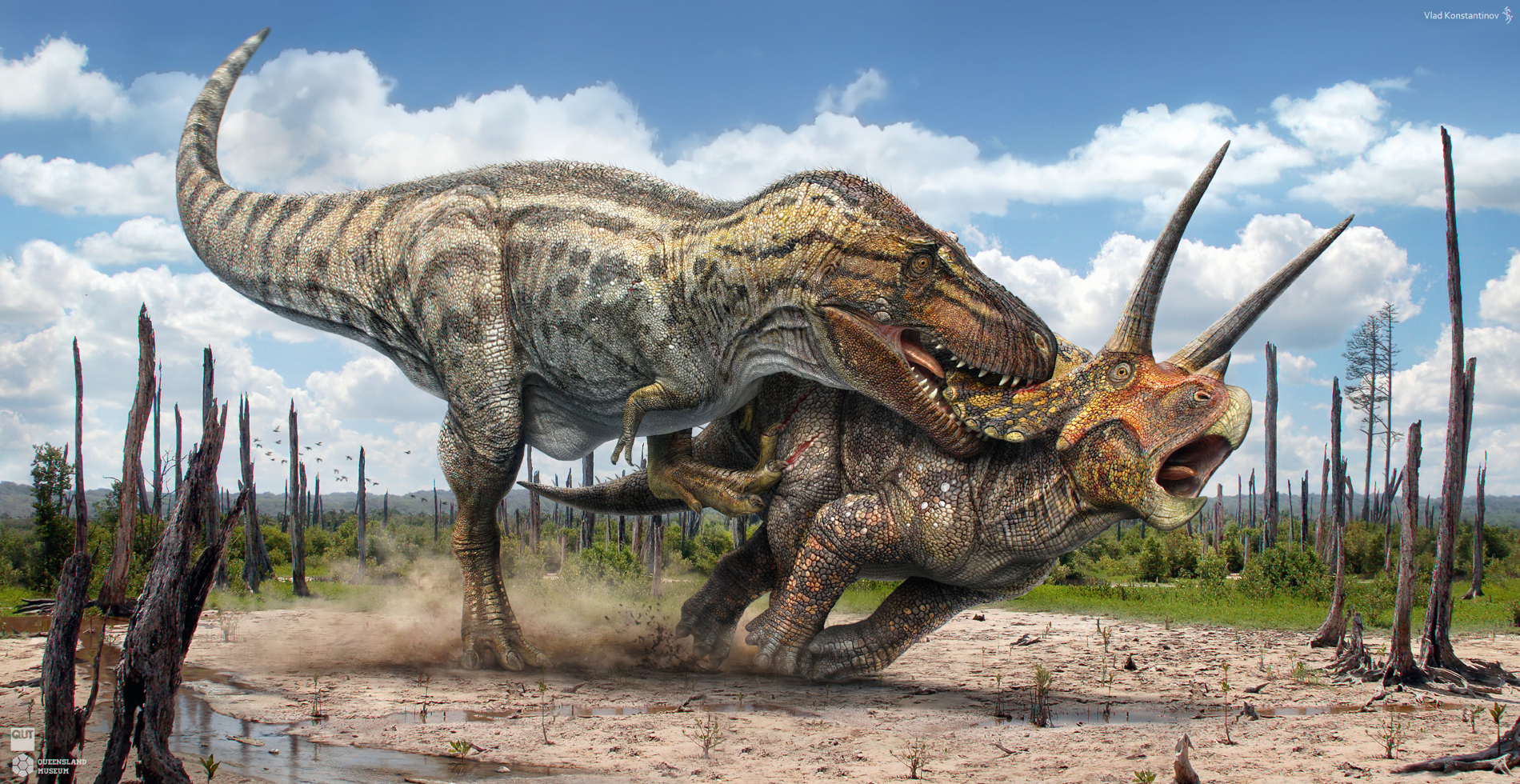
There is an interestingly high levels of representation of dinosaurs in D&D. The AD&D Monstrous Manual has 28 entries, the 3.5 edition Monster Manual has 5 entries (but many many more in the next 4 Monster Manuals), 4th edition has none (weird...), and 5th edition has 6 entries. All of them that have dinosaurs have the Tyrannosaurus Rex and the Triceratops listed, which doesn't surprised me as they seem to be the most commonly recognized dinosaurs out there.
While having the stats for your favorite dinosaur is great if you want to run a anachronistic primal game what I would like to argue for is a more geologically recent cast of beasts. Ones that our lizard brains (no pun intended...) remember hunting or hiding from. There is an uncanny familiarity of the megafauna of the last geological epoch, because humans actually co-existed (and hunted and ate and ran from and...) with all of these animals, unlike dinosaurs. There is of course the classic wooly mammoth, or the saber toothed tiger, or the giant ground sloth. But there is a huge diversity of other fauna to tap into and explore.
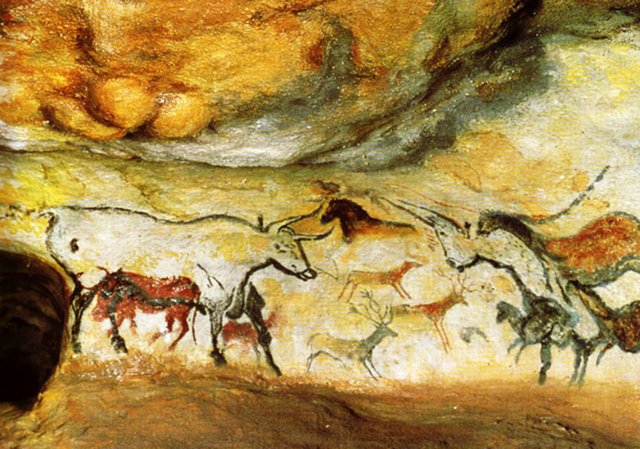
Cave paintings found in the Lascaux Caves of France depicting megafauna from ~17,000 years ago
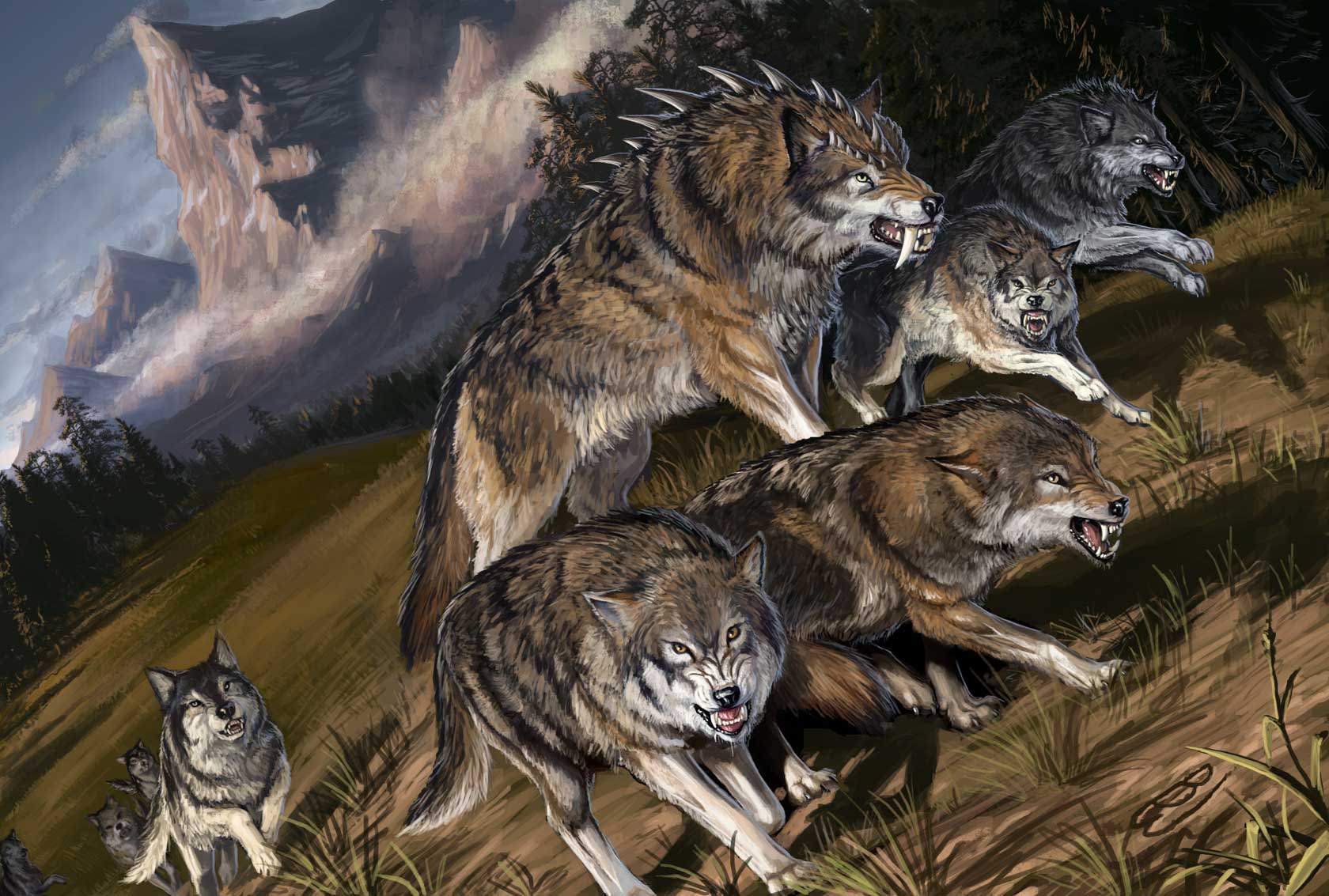
There was an attempt, at least to my eyes, to introduce the concept of megafauna into D&D terms with the advent of "dire" animals. Don't get me wrong, I love dire animals in D&D, but I think that just taking a currently living animal and making it bigger just doesn't take that much imagination. For example I suspect the whole trend was started by the real life dire wolf, a larger and more muscled close relative of the wolf (Canis lupus). But even this prehistoric example is way cooler! They are like giant crosses between hyenas and wolves, not just big wolves that have spikes growing out of them... or something.
Dire wolf, Canis dirus
WHY DOES IT HAVE SPIKES??? (to be fair it would be cool if we explored Dire Animals as having messed up metabolisms that leave calcium deposits all over the body that look like armor plates/spikes/tusks/etc and other weird metabolic relics, but no, we just get spiky wolves)
So for your gaming pleasure here is an (seriously incomplete) list of Pleistocene megafauna and some recommended stat blocks to borrow (most of them don't need their own), as well as some interpretations of their ecology for making them more interesting:
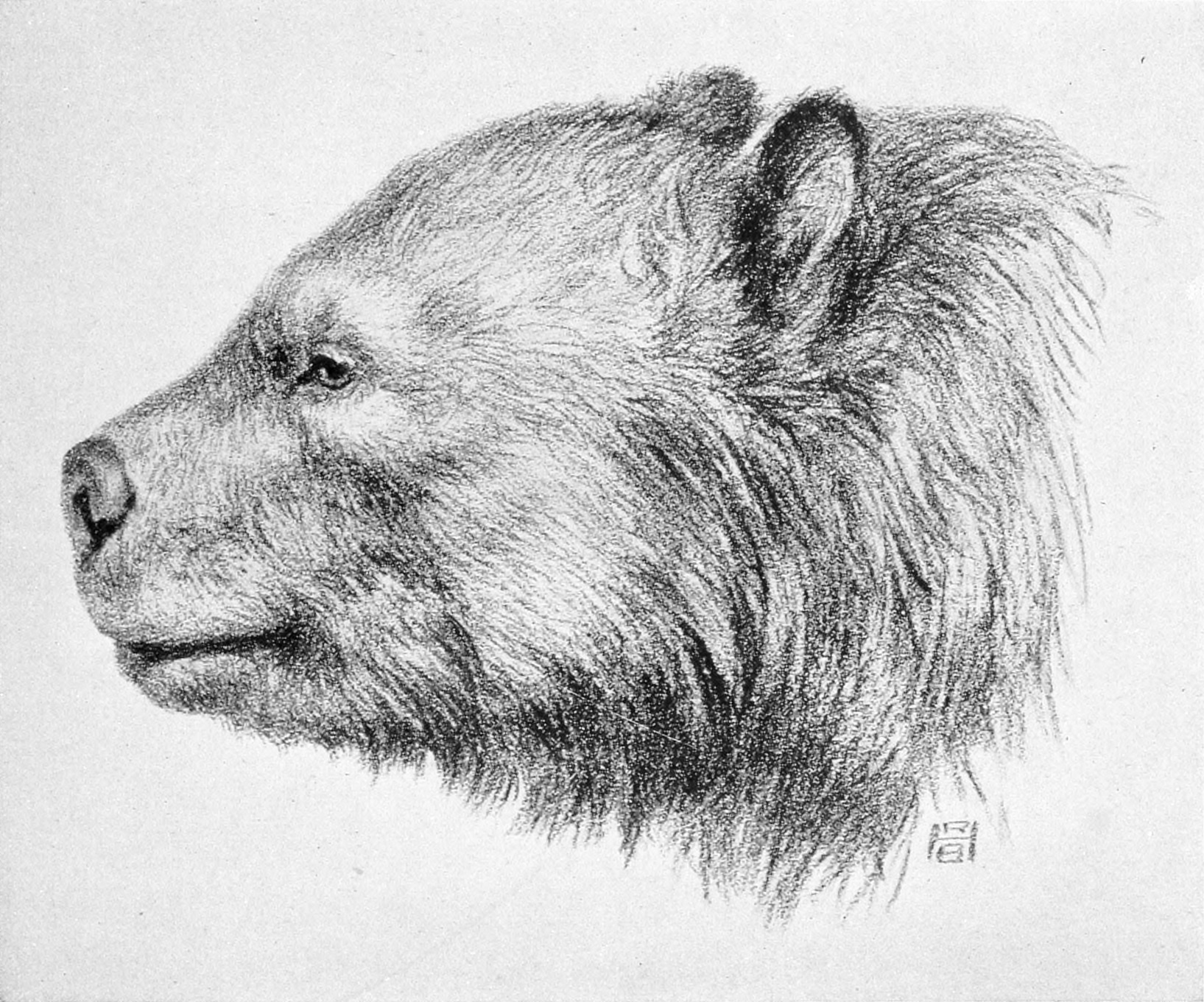
Arctodus simus, Short Faced Bear Stats as: 8HD Polar Bear, 5eMM pg 334 (60ft movement, no swim speed) Ecology and Quirks: With its long legs and sharp teeth the Short Faced Bear is a fast and brutal carnivore, they run down large herbivores and frightening off smaller predators (this is the original interpretation of their fossils, more modern studies conclude they are opportunistic omnivores, but that's boring). Unlike their small cousins Short Faced Bears are very poor climbers and can often be foiled by climbing a tree.
Castoroides ohioensis, Giant Beaver Stats as: Giant Boar, 5eMM pg 323 (20ft walking speed, 50ft swim speed no charge, tusk is bite attack, gets tail slap: +5 to hit 10ftx5ft area, 3d6+3 bludgeoning and knocks foes prone (Str/Dex Save DC14)) Ecology and Quirks: Stupid and huge compared to their smaller relatives, the Giant Beaver is an excellent swimmer and grazes the rivers banks and wetlands like bison graze the prairie. Their migratory patterns are erratic and they will descend upon settlements in droves in the winter months eating away at wooden buildings and crops alike. Their pelts are highly prized.
Aiolornis incredibilis, Giant Condor Stats as: Giant Eagle. 5eMM pg 324 (on a successful talon attack the foe is grappled, DC 14 Str/Dex to break free, half fly speed while grappling, can grapple medium and smaller) Ecology and Quirks: A lord of carrion birds, the Giant Condor is the largest flying bird known. With a massive beak and weighing more than 60lbs they could easily fight off most other scavengers and smaller predators. Their favorite tactic is to swoop down and carry away foes, then drop them from a great height.
Aepyornis maximus, Elephant Bird Stats as: Allosaurus, 5eMM pg 79 (60ft move speed, no pounce, gets an claw attack against any creature in its path if it runs in a straight line for more than 40ft) Ecology and Quirks: The largest bird to ever live, the Elephant Bird is tall, fast, and has a wicked beak. Its favorite tactic is to do a series of charges at any foes and closing in to finish them with its beak when they are weak. Its eggs are highly prized, one could feed a whole adventuring party for a day or two. If they think their nests are being threatened they will flee straight to them, ignoring all dangers... and pit traps.
Megaloceros giganteus, Irish Elk Stats as: Giant Elk, 5eMM pg325 Ecology and Quirks: The male Irish Elk are the only ones that will fight you. The females are huge, sure, but the males are over sexed, their huge antlers are for two things: impressing the cows, and fucking up anyone that gets in their way. There is of course an easy way to deal with them, simply rush into the nearest thicket of willow and the low and dense branches will keep them from following.
Paraceratherium transouralicum, The Near Horn Beast Stats as: Elephant, 5eMM pg322 (12HD) Ecology and Quirks: A lumbering hulk, the Near Horn Beast wanders the world is search of the ultimate: the next yummy leaf. No tree too tall, no shrub too low, no grass too bitter, and no predator big enough. The Near Horn Beast wanders on. They could perhaps be tamed, taught to be ridden, but the amount of forage an individual would need it a serious logistic challenge. Due to their massive size their legs are fragile, and even a small jump and stumble might fracture their bones.
As I note above, many of these don't need their own stat block, but that doesn't mean they should just be interchangeable big beasties! This is why included some notes on their ecology and quirks, make them falvorful and interesting damn it. You might consider thinking about them this way.
Oh familiar old friend, embraced in the dark of night, fighting tooth and claw
Primordial enemy, Now just dust and memory. There is no treachery
Every Season of Storms it moves, surging miles across the shallow Sea. The wind and currents drives loose sediment into it's maw, trapping the particles and making the water shallow...and habitable. It's miles across, not quite an island, but not quite just a drift of living wood either.
As the Season ends brave sailors approach with axes and torches to beat back the creeping green death. They have little success, the movement of this motile forest is dictated by the currents and winds. Some have tried, with varying success, appeasing the Spirits of nearby channels to divert the forest to their neighbors and avoid the doom that flows across the Sea.
Sometimes the Flowing Forest runs into an island. It is wrapped in a verdant embrace, and the creatures that call the Flowing Forest home set foot on terra firma for the first time in seasons. Sometimes these islands are inhabited, and those that survive that Season of the Sun and Fear tell harrowing stories of sighting brachiating predators hunting through the canopy, sinieous avians darting between the many loops of root and brach, and dark shapes in the waters beneath the trees...
Adventuring in the Flowing Forest
So there is a horrible massive tumbleweed forest that floats around the world and people hate it. So your players should totally have to go to the center of it to find lost artifact X.
As you pierce deeper into the forest the water is purified by the defense systems of the trees, eventually becoming freshwater. This creates three distinct zones within the Flowing Forest: Saltwater, Brackish, and Freshwater. Each band has a distinct set of tree species, wildlife, and challenges for an adventuring party. Each band takes about a day of travel (8 hours of unhindered movement) to pierce through, and my random encounter tables below assumes 4 two hour chunks of travel with one roll for each chunk and time for a one hour short rest. (I should write a post about how I handle wilderness travel...)
Green: Saltwater Zone, Blue: Brackish Zone, Orange: Freshwater Zone
Same as above, but the Flowing Forest is embracing an island
The Saltwater Zone:
Here on the outer edge of the forest waves and winds are still important factors, forcing open rips in the knot of roots and stems. Is pretty easy to navigate through, the trees are not super dense, the water is deep, and you might be able to catch a breeze to help propel you on your way. A few small groups of adaptedAutomata live in this outer edge of the Forest (they have lost their walking speed but have an equal climb speed). But this does not mean that it is devoid of danger...
Travel Notes: You can travel through this zone in a rowboat with relative ease if you stay to the channels and openings through the trees. If traveling through the trees out of a boat you must make a DC 12 Acrobatics check to move at half your base land speed. If you have a climb speed you may move normally through the trees at your full climb speed. Random Encounters and Hazards: 2d4
2) Hunting group of Automata natives, they are wary of outsiders but will trade with you and give advice about how to survive the Forest. They warn you to stay away from their settlements.
3) You catch an errant breeze that propels you deeper into the Flowing Forest, double movement speed for this chunk of travel (only effects boat travel, re-roll otherwise)
4) You come upon a wreck of a vessel tangled in the trees. Find 1d6+1 rations and roll on your favorite random treasure table
5) You disturb some salt encrusted pneumatophore roots who explosively eject their crystalline casing, 1d4+1 salt spear attacks at everyone in the party, (+4 to attack, 1d12 damage)
6) There are dark shapes in the water, and they are jostling your boat! A gam of 1d4+1 sharks are hunting (stats as Hunter Shark, 5e MM pg330), make a DC12 Acrobatics check to keep from falling in the water and maybe they will go away...
7) The tides turn and make traveling deeper into the forest difficult, half movement speed for this chunk of travel (only effects boat travel, re-roll otherwise)
8) You stumble upon an Automata settlement, made of woven dwellings in the branches of the trees above the high-water mark. They are very protective and the party gets -2 to all checks to try to parlay with them.
Don't pneumatophore roots look like they should have a sheath of explosive salt on them? I think so.
Beware what lurks underneath the water...
The Brackish Zone:
There are no longer any obvious paths through the trees. Each sluggish wave bumps your craft up against a web of roots. The trees are denser, the water is shallower, and the air is still and cloying. Insects are a true enemy, and there are chilling calls of strange birds and the horrible buzzing of insects echoing through the trees. The Automata tend to stay away from here, preferring the more open outer reaches.
Travel Notes: Travel through this zone is difficult. You can remain in your row boat and travel at half speed if you pass a DC 16 Survival/Sailing Check. If traveling through the trees you must make a DC 14 Acrobatics check to move at half your base land speed. If you have a climb speed you may move normally through the trees at your full climb speed.
Because travel through here character consumer double rations and double water to stay fit, if they don't get enough of either they begin to accumulate fatigue.
Random Encounters and Hazards: 2d4
2) Hunting group of Automata natives, they are wary of outsiders but will trade with you and give advice about how to survive the Forest. They warn you that travel deeper into the Forest is very dangerous and even they do not go much deeper than this zone.
3) You come upon a strangely woven mat of branches and roots, decorated with the hides of poisonous frogs, the skulls and feathers of serpent birds, and caked in red mud. It seems to be warning or shrine built by the Automata, if offerings are left the party receives Bless as the spell for the rest of the day, if they desecrate it or disturb it they receive Bane as the spell.
4) A flock of serpent birds bursts out of the trees with a chorus of screams and claw at the party as they flyby! They wheel about and ready another charge... 2d4+2 serpent birds (stats as Pseudodragon, 5eMM pg 254; no limited telepathy, size small, 4HD)
5) As you make your way through to forest you grab a branch and... (DC 14 Dex Save) On success: narrowly avoid grabbing a poisonous tree frog; On failure: grab a poisonous tree frog and take 2d6 poison damage and have the poisoned condition for the rest of this travelling chunk, making travel difficult
6) You disturb a hive of fire honey bees! 1d4 swarms of hornets well out of the hive (stats as swarm of wasps, 5eMM pg 338) Once defeated the hive can be ransacked for 1d3 applications of fire honey, which lends fire resistance for a chunk of travel when applied as a salve or gives 2d4+2 temporary HP for a chunck of travel when eaten.
7) The tides turn and make traveling deeper into the forest difficult, half movement speed for this chunk of travel (only effects boat travel, re-roll otherwise)
8) You stumble upon a random thing in the Forest: 1d3
As the tides turn you see deep in the mud submerged hull of an ancient wreck, somehow wormed deep into this zone, what could be in it?
A small structure suspended in the canopy, does someone live up there?
Massive flowers that lull the smellers to sleep (DC 12 Wisdom save against sleep, on failure nap for the chunk of travel and awake as if had a full nights rest, cannot be awoken), roll again to see what else happens while they sleep.
Totally a serpent bird. But like wayyyy longer.
And they are super agile and can fly no problem through tiny holes like this goshawk
The Freshwater Zone:
As you enter the heart of the Forest all but the foolhardy abandon their boats, though there are freshwater creeks flowing through the mats of vegetation. Here there is almost solid ground now... but every time you trust it or turn your attention away from it you fall into mud and muck. You basically have to climb from root to root to avoid the mud, but the branches are thick and low overhead. There is now abundant if muddy freshwater to refill water skins with.
Travel Notes: Travel through this zone is exceptionally difficult. Its extremely difficult to remain in your row boat, you get stuck in the roots/mud if you fail a DC 18 Survival/Sailing Check, otherwise are able to move at half speed. If traveling through the trees you must make a DC 14 Acrobatics check to move at half your base land speed, every failure drops you in waist deep mud. If you have a climb speed you may move normally through the trees at half your full climb speed unless you make a DC 12 strength check to smash through the dense canopy.
Because travel through here character consumer double rations and double water to stay fit, if they don't get enough of either they begin to accumulate fatigue. There is now abundant if muddy freshwater to refill water skins with, especially if they can figure out a clever way to filter the water.
Random Encounters and Hazards: 2d4
2) Massive flowers that lull the smellers to sleep (DC 12 Wisdom save against sleep, on failure nap for the chunk of travel and awake as if had a full nights rest, cannot be awoken), roll again to see what else happens while they sleep.
3) As you pick your way through the trees suddenly you see them, green-grey furred animals draped in the foliage, massive bodies heaving with calm breath, foot long claws twitching as they dream of ripping apart sweet fruits and sweeter flesh... You've found a female giant sloth sleeping warren! 1d4+1 (stats as giant ape, 5eMM pg 323, 8HD)
4) There is a small grove of fruiting mangroves here! Their boughs are heavy with large juicy fruit, and in the mud their are piles of sickly sweet fermenting fruit. Insects buzz happily around. Fresh fruit makes an excellent ration and there is more that the party can carry, and the fermented fruit juice might make an excellent accelerant for a flame...
5) As you make your way through to forest you grab a branch and... (DC 14 Dex Save) On success: narrowly avoid grabbing a poisonous tree frog; On failure: grab a poisonous tree frog and take 2d6 poison damage and have the poisoned condition for the rest of this travelling chunk, making travel difficult.
6) You hear a crashing through the trees and as the swinging shape bursts into view it bellows a deep yawp. This giant sloth looks inquisitive, and very big... A male giant sloth (stats as giant ape, 5eMM pg 323) has found the party as it hunts for: 1d4
A female
Fruit
The tallest tree it can find to nap in
A protein rich meal...
7) A flock of serpent birds bursts out of the trees with a chorus of screams and claw at the party as they flyby! They wheel about and ready another charge... 2d4+2 serpent birds (stats as Pseudodragon, 5eMM pg 254; no limited telepathy, size small, 4HD)
8) The nests of a group of serpent birds with 1d6+1 eggs and lined with shiny things they have found (roll on your favorite random treasure generator).
The giant sloth...
...the stuff of nightmares.
Other Thoughts on the Flowing Forest:
If your party comes up with clever solutions to the hazards and challenges of travel through the Flowing Forest reward them!
Examples:
They learn to wear gloves so as to avoid the poison tree frogs, turn that entry in the table to simple easy travel.
They are a party of sufficiently high level druids and they all turn into monkeys, so of course they swing easily into the heart of the forest!
They just fireball the shit out of the trees they could probably boat more easily deeper into the forest.
The intent is to make the forest a challenge, but not impassable. Once you are aware of the dangers you can find solutions to them. Think about this great scene from the Princess Bride:
Travel is and should be difficult, but that also means that it falls to the DM to create an appropriately enticing reason to want to pierce the heart of this hated forest. Here are some ideas though:
The center of the forest is the Big Dungeon that the Big Artifact is in. Probably a massive inverted ziggurat with dramatic waterfalls coursing down the terraced sides to a freshwater lake, at the center of which is the tip of a another ziggurat and the party has to descend its flooded levels and figure out what brought about the ruin of this once mighty empire and steal its shit... or something.
A wilderness survival episode of shipwreck on hard mode. They could make a sweet raft.
Could be a good location to hunt for rare medicinal plants.
Could be tasked with destroying/ diverting the Forest to protect an island. What binds it together? Some wickedly powerful Spirit?
What I like about this wilderness is that it uses things that real mangroves do (form bands based on salinity tolerance, expel salt through their roots, house many various fish in their roots) and cool things about various animals (like the goshawk flying through forest canopies as shown above, some birds really do collect shiny things for their nests, giant sloths existed (but they were not ferocious omnivores), poisonous tree frogs are real and tiny and deadly) as a jumping off point for interesting wilderness travel. Ecology is rad, and reading a little bit about it definitely is a wellspring of ideas.
*Also when this post was in its draft stages this post came out also about mangrove wilderness travel!*
"Now I am not arguing that I want to have D&D accurately simulate or describe forest ecology, I don't think that's especially interesting. What I am arguing for is a more complex look at nature oriented races/classes..."
That's not strictly true. I have thought about integrating the principles of forest management/ecology into the way forests are depicted in my games. This is my first attempt at making forest ecology gameable, if you want to skip the ecology lesson look for the next post!
Principles of Forest Ecology:
To better understand forests lets discuss briefly their ecology. Ecology is the study of a of system living things and their relations to themselves and their the non-living environment. Below are some examples of each.
Abiotic Factors: inorganic soil characteristics, water availability, temperature variability, light availability, slope aspect, etc
Biotic Factors/Interactions: Trees competing for light in a forest canopy, plants using allelopathy (chemical warfare) to inhibit competition, birds dispersing seeds, beavers biting down trees, wolves influencing grazing patterns of deer that eat regenerating trees, etc
When considering these factors that influence a tree through time we can begin to look at the "natural history" of a species. A good example of why this temporal consideration is useful is the dispersal patterns of tree species we find today in North America. Due to the retreat and advance of species through the periods of glacial and interglacial in the Pleistocene epoch some tree species can be mapped back in time as they reclaim historic ranges that up until (geologically) recently have been covered in glaciers.
These diagrams are good examples of how we think about forest migration, they are worth enlarging!
I love reading about natural history, its like the saga of a tree species. I'll write about it some time
All of this information helps us understand what conditions a species is tolerant of and how they cope with the unique challenges of their environments.
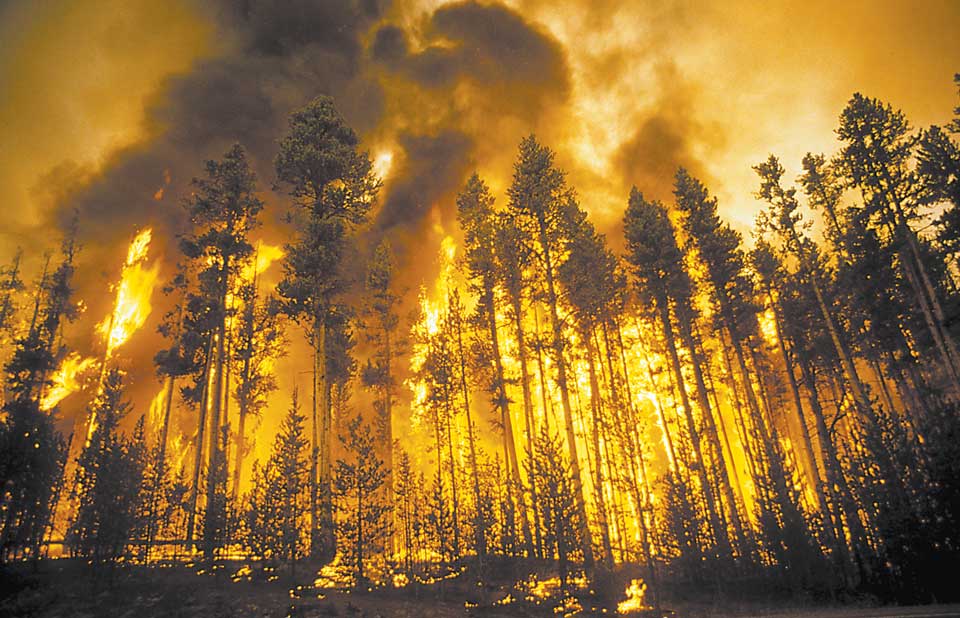
Disturbance ecology is the study of how ecosystems interact with disturbances. Wild fire is an easily recognized example of a disturbance; but wind throw, flooding, ice storms, land slides, out of season freezes, insect infestations, and fungal pathogens are also examples of forest disturbances. These are the challenges that forests are presented with and adapted to.
The lodgepole pine forests of the northern Midwestern states in the US are dependent on a high severity (i.e. high mortality) but very long return interval (~100-200 year) fire regime to reproduce, their cones wont open without the heat! The wetter forests of the northeast US are used to wind throw and ice storm events that kill single/small groups of trees to open gaps in the forest canopy. The examples are endlessly variable.
This was appropriate in 1988, but the subsequent fires are killing all of the regenerating trees because the fire return interval was too short. Give it another hundred years and it would be ready (ecologically) to burn again. This is a great example of why a changing climate is such a challenge to manage for.
This is also normal/appropriate. Larger and older trees are blown over and clear space for regeneration.
One of the primary objectives of a forester is to emulate the natural disturbance regime of a forest system. Ideally a forester is able to harvest (and therefore manage!) in a way that the forest they are taking care of is capable of reacting to and reforesting after. In the examples above this means that long cycle clear cut systems may be appropriate choices in the midwest, while single tree or group selection methods are more appropriate in the northeast.
Mangroves: A Super Bad Ass Forest
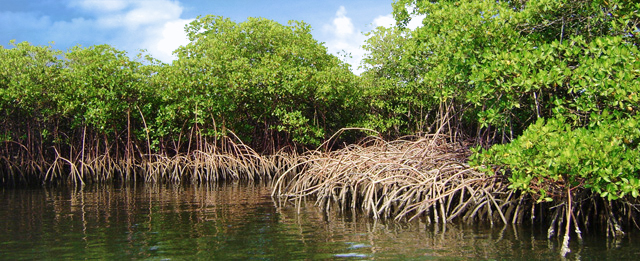
Mangroves are super bad ass trees. They grow in the intertidal zones of coasts from about 25 degrees south to 25 degrees north (tropical and sub-tropical latitudes). They are super bad ass because of their roots. They can filter out saltwater and withstand anaerobic conditions. They have floating seeds that can travel for hundreds of miles and root on a new continent.
Here is their natural range
The primary constraint on mangrove distribution is salinity. They can't compete effectively with species in freshwater riparian zones because they have invested too much in a biology that lets them withstand some intense stresses. This helps explain their species distribution in the brackish zone of estuaries, some species can withstand more salt than others and will form bands of species as you head inland and the water becomes less brackish.
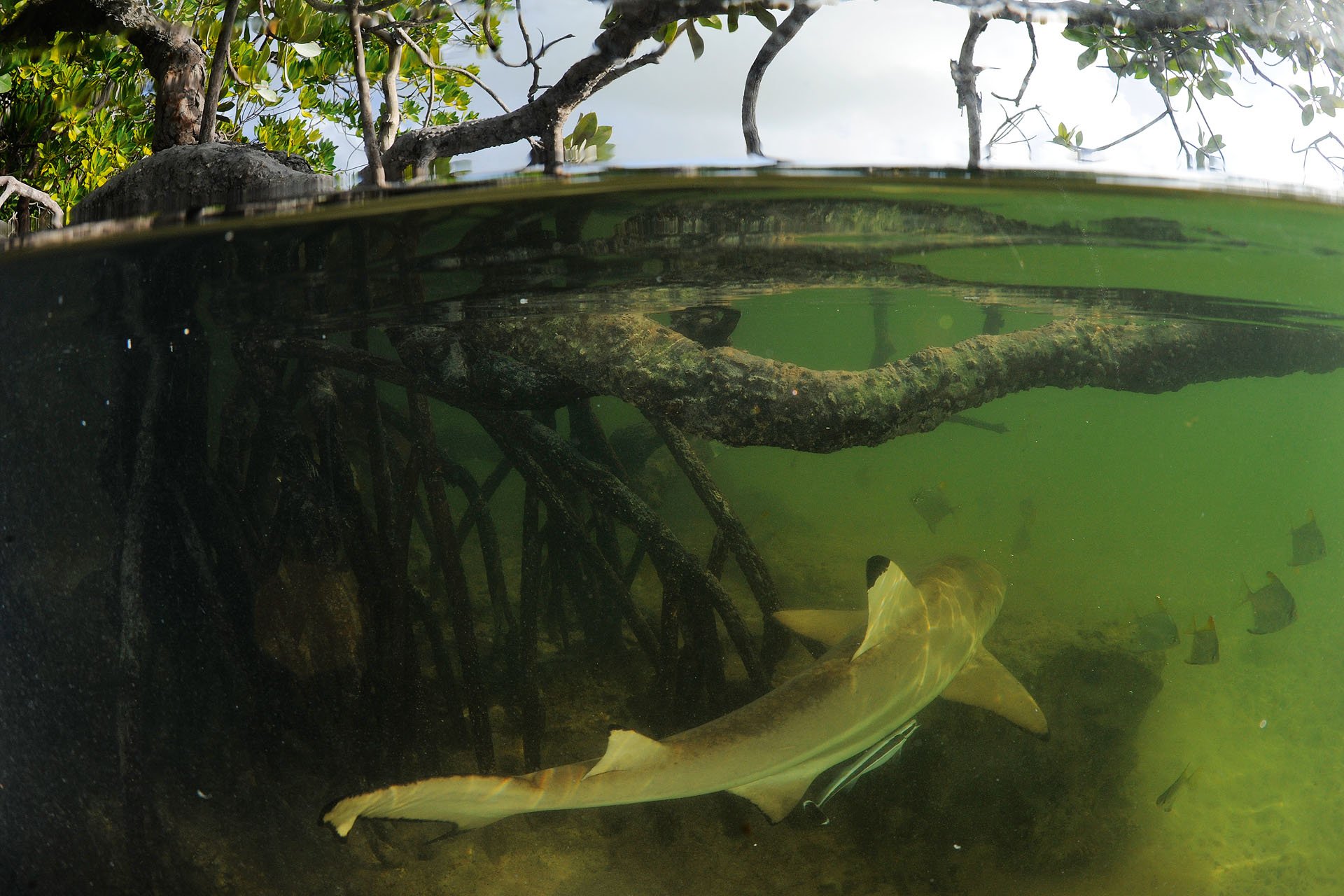
Here are some pictures:
So now we know all of these things about mangrove forests, lets make them a horrible place to visit for your players in the follow up post!
Some say that the Psári grow even too large for the islands, and they flee their deep channels in favor for the Deep. Here in the wide ocean they can grow into even greater monsters of the sea, the mythical Kētos.
Kētos are so large it is said they carry whole reefs on their backs as they slowly wander the world. They can trail miles of kelp behind them that is rooted in their thick hide, and that a mere flick of their massive fins could send any ship flying through the air and then into the depths. Only the foolish and the mad sail in the Deep, so these reports are rarely given credence.
Sometimes, the giants of the deep oceans wander into the shallow Sea around Ánemos. They are strange and deformed leviathans, often with whole ecological communities clinging to their bulk. They can only comfortably navigate the deepest channels, though in such shallow water they often get lost and irritable, they will likely lash out in fear and frustration...
Their Strange Ecologies
Kētos types (1d6):
1: Coral Reef: Coral has grown in the hide of the Kētos and shelters many animals... Inhabitants will protect the Kētos if attacked, -10 ft of movement +2 AC
All of those little fish are going to come out and fight you
2: Kelp Forest: Kelp creates an entangling cloud slowing ships in 50 ft radius around Kētos, -10 ft of movement
3: Mollusc Armor: Mussels, oysters and clams armor the Kētos and make their tails more deadly, +4 AC and 10d8+12 bludgeoning damage with tail smash
Just ready to cutsmash the shit out of you
4: Mangrove Forest: A mangrove forest grows on this Kētos's back sharing sugars and proteins between them; cannot dive, heals 10 HP per round, -20 ft of movement
Like this, but rooted on the back of a massive fish
5: Sea grass prairie: A living green fur covers these Kētos, and grazing their backs are territorial dire dugongs. Dire dugongs will fight for their pastures.
But giant and sucking off your face
6: Merfolk nomad settlement: The merfolk have settled this Kētos, serving as both home and mount. They are the traders of the undersea world slowly plying the depths between merfolk settlements.
Thoughts
The Kētos is the like final form of the Psári, they should be really scary and more of an environment than a creature. It should also be really hard to kill them (unless of course you land on their backs, get in their ears and stab their brains or something, but who knows what weird creatures make their homes beneath the flesh of a leviathan?) They should be so tough and scary I am not even going to give you a stat block.
Think about the bad ass wizard who lives in a lair made of living trees in a mangrove forest on the back of a Kētos prowling the deep channels around the world, mind controlling his pet/island/home to steer. I wanna meet him.
If your players ever get a few ships and hire a large crew of competent harpooners it's conceivable that they could kill one traditionally. Boy oh boy, all that lard would fetch a hefty price...
So I wrote some posts on sailing. Now you get a post on sailing and hunting magic whales for profit and fun and adventure.
The Ecology of the Psári
Psári (the Greek word for fish) are the great leviathans of the shallow seas of Ánemos. Indeed they are the foundation of all sea life according to the merefolk, when you can convince them to talk about serious matters for a little while. The merefolk also call them the fish that never stops growing and the dicks of the sea, but we don't listen to merefolk too carefully.
They are born small, lithe and silver in broods of hundreds born out of their mothers secret egg den. When this young they flit around the reefs in schools of thousands eating plankton and algae, and many other fish eat the Psári at this stage and few survive to adolescence.
Once they are large enough the Psári leave the reefs for the deeper waters of the channels between islands and reef shelves. This is where they begin to be the hunters, eating fish that once hunted them. At this point they are long and their tails are powerful, their silver flesh has given way to stony scales of grey.
They look kind of like this
As adults the Psári are massive, more than eighty feet long, and the undisputed kings of the islands. They have lost their speed in favor for massive strength, and many lesser fish follow behind the adult Psári in hopes of cleaning off their algae crusted scales or getting a morsel of some unfortunate prey the Psári have killed.
At this size the Psári are too large to support themselves through purely carnivorous activities, their diets begin to shift towards their infant food of plankton and algae. This change in diet is accompanied by a change in the structure of their teeth, becoming proto-baleen, capable of both filtering plankton and rending meat.
Example of proto-baleen teeth in leopard seals
Hunting Psári
Its like this, but the fish is bigger and you boat is worse and its really hot.
Okay, so your PCs are convinced that they want to go on a Psári hunt and earn some cash. If they are low level they wont have a boat, so they will have to sign on with a Psári hunting boat (they are called Psaróvarka). The PCs will have to haggle for thier lays of the profit at the end of the voyage, the captain would get something like 1/17th, the firstmate 1/22nd, a harpooner 1/75th, a smith 1/100th, and a crewman 1/140th. Martial characters should be able to convince the captain and first mate of their ability with a harpoon relatively easily, though magical or skillful characters might have a tougher time proving their worth.
Psaróvarka take a while, like a a few weeks to a few months. So its probably best to present the voyage as a montage of sorts, with the hunt being the main piece of action. When the PCs are traveling on their own their is also a chance that they will encounter a pod of Psári, as per my random sea encounter table, at which point they can choose to try for a kill. (Incidentally, Psári also sometimes hunt ships when especially hungry, or in heat, or hurt, or defending a kill, or...)
Unlike ship-ship naval combat Psári hunting takes place at the standard rate and scale, because the hunters are in row boats with harpoons. Treat harpoons like javelins, but when they hit they have lines attached to tow the boat along as the Psári bleeds and fights. Every round make a strength check for the Psári to see if it can snap the lines, getting harder the more lines there are.
Adolescent Psári: Huge beast, unaligned AC: 14 (silver scales) HP: 115(10d12+50) Speed: swim 50 feet Ability Scores: STR 23, DEX 14, CON 21, INT 3, WIS 10, CHA 8 Saves: STR: +6, DEX +2, CON +8, WIS +3 Perception: +3, Passive 13 Multiattack: The Adolescent Psári makes two attacks, one bite and one tail smash. Bite: +8 to hit, 5ft reach, one target, 2d10+6 piercing damage. Tail smash: +8 to hit, 10ft reach, one target and ship, 3d12+6 bludgeoning damage Adult Psári: Gargantum beast, unaligned AC: 16 (scales of stone) HP: 216(16d12+112) Speed: swim 30 feet Ability Scores: STR 27, DEX 8, CON 24, INT 6, WIS 12, CHA 8 Saves: STR: +9, DEX -1, CON +12, WIS +6 Perception: +6, Passive 16 Bite: +13 to hit, 10ft reach, one target, 4d12+8 piercing damage. Tail smash: +13 to hit, 20ft reach, one target and ship, 10d6+8 bludgeoning damage
Selling Psári
Everyone in Ánemos is at least mostly pescetarian, and Psári is the biggest and best fish to catch. There is a vibrant trade of their parts, and most cities will have a fish market near the docks selling Psári parts. Even smaller settlements will get together and buy a few tons of Psári carcass annually to feed them through the year.
Fish Market!
Not only is their meat and blubber used for cooking and heating, but their bones have wonderful flexibility and strength and they are used in many tools and weapons. Their scales are strong and do not rust in the salty spray of the ocean, leading many to make pieces of armor out of them. Their massive hearts are the most valuable of all, prized for their use in rituals and alchemy.















.jpg)


