Showing posts with label Myths Legends Folklore and Old Traditions. Show all posts

Tuesday, November 24, 2020

Greek Mythic Fantasy on the Rise

 In the last few months I've seen a few new cultural items with a strong focus on Greek Mythic Fantasy, here is a review of a few I have encountered.

Video Game: Hades


Let me start by saying at the date of publishing I have ~120 hours of game time in this game which I bought in early access in 2019. It has since come out of early access and is gaining some wide spread popularity.

Description: Hades is a roguelike RPG where you play as the son of Hades, Zagreus, as you try and escape the realm of the dead to find out the truth of your family history. Aiding you in your escape are many of the Olympic gods: Zeus, Poseidon, Artemis, and many more. The Olympic gods lend you some of their powers so you can smash up the guardians of Hades and escape.

Thoughts: The setting of the game is compelling and provides adequate framing for the roguelike structure, especially if you are a mythology nerd like me, but the real stand out is the game play. Everything feels very tight and responsive, there are enough combinations of weapons and god given boons to make each run exiting. I would have loved to see more gods in the game (especially Hephaestus!), but the diversity already included is great. As with all Super Giant games the art direction is sublime.

Final Score: 9/10, a really great game

Western Animation: Blood of Zeus


Description: Set in fantasy Ancient Greece, the Netflix series focuses on the story of a new hero, Heron, the son of Zeus and a mortal queen and his half-brother who has been tainted by eating the flesh of a dead Titan. Heron teams up with an Amazon warrior and some capable rouges to help the gods stop a second war with the Titans.

Thoughts: Produced by the same studio to create the excellent Castlevania animated Netflix series, I had pretty high expectations for this show that were frankly not met. While the art style looks similar I didn't find any of the punchy combat animation I loved so much in Castlevania, and while the premise of the story is fine I didn't find it that compelling. It is always fun seeing interpretations of Greek myth on screen, but that is about all that I found engaging.

Final Score: 5/10, its a quick watch with some cheesy fun

D&D 5th Edition Source Book: Mythic Odysseys of Theros


Description: Wizards of the Coast owns Dungeons and Dragons as well as Magic the Gathering, and this is the second cross over book published for D&D 5e from their Magic settings (the first being Guild Master's Guide to Ravnica). The book is meant to "serve as an example of how to take inspiration from real-world mythology and adapt it into a world built from the ground up for fantasy adventures" a goal I myself have tried to accomplish in this blog.

There are new races and sub-class options for characters, as well as optional mechanics for characters to have a more mythic origin. There is a chapter dedicated to the pantheon of the setting where each god is given some myths, a set of beliefs and observances of their followers, and some examples of how characters might gain or loose their favor. The next chapter includes a world map of Theros with some lengthy descriptions of each city state/civilization. After that is a chapter focusing on adventure design in the setting, framed around the champions/villains of each god described in the earlier chapter as well as some encounter tables and small dungeon maps. There is also an example adventure included in this section, No Silent Secret, to demonstrate some of the principles described. The final two chapters are dedicated to magical items and artifacts, and some mythic bestiary stat blocks. 

Thoughts: I played a little bit of Magic the Gathering back in the day but I never encountered the Theros setting, so that might have something to do with why I feel so lukewarmly towards this book. There is a lot of fluff text here dedicated to retelling Greek myths in a slightly different way, and I mean a lot. I understand the necessity, but is seems like wasted space. All this new mythos does is create homework for the DM and players to get a common background in the setting when most groups already likely have at least some impression of Greek myths. To get the most value out of the set dressing I would take each location or myth and put them in a table for easier use while playing, because who really cares about the major landmarks around the Sparta clone city-state?

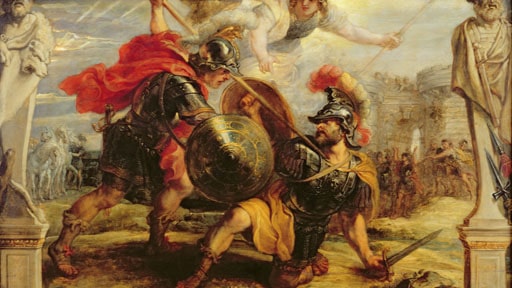
Because of the origin in Magic the Gathering there is a lot of art included in the book, most of it in a kind of "psychedelic cosmos" style, the image above is a good example. There is an in setting reason for this (the gods live in Nyx, a realm of dreams in the night sky), but a lot of the art feels a touch too dramatic for me. I do like the art included in setting chapter, there are some great city/land scape pieces.

There are a few new races included, but many of them have been published before in other 5e books so that is disappointing. The new sub-classes and backgrounds are flavorful, but there are only three.

I like the piety mechanics introduced for the gods, it seems like a good frame work for PCs to interact with very powerful gods, though in my own setting I prefer to keep my gods small. I can see myself using the stat blocks of the mythic beasts at the end of the book as well as the magic items, those are always useful. 

Final Score: 4/10, a lot of wasted effort on a setting that is not doing anything compelling with the source material. The mechanics provided are okay, but that's about it.

Saturday, May 20, 2017

Some Thoughts On: Story Telling, the Novel and the Epic, Oral Traditions, and their Roles in TTRPGs

A Brief History of the Novel and Storytelling

Novels are a relatively modern form of storytelling. Since the inception of language stories had been told orally, then suddenly the story became fixed in written word by an author with a very small audience who was assumed to be reading it individually or listening to it being read. This presupposed audiences that could read, means of producing copies of a text, and the cultural onus to create them. The novel appears in a few different places and times: in 17th century Europe with the publishing of Don Quixote, in 11th century Japan with the writing of The Tale of Genji, and even some Greek and Roman prose narratives being called precursors to novels.

Don Quixote, by Scott Gustafson

This contrasts with the oral traditions that is inherently mutable from Teller to Listener, and between tellings from the same Teller. It was this tradition that gave us the Poetic and Prose Eddas, to the Iliad and the Odyssey, and the Ramayana and the Mahabharata (though each of these works are of course know through the written incarnations, not an intact oral history). Works of similar tone or content or form where also composed as a piece of written narrative poetry, a good example is Dante's Divine Comedy (perhaps the first great trilogy). Many of these classic epics come in the form of verse, with the Prose Edda being the glaring exception.

Illustrations to The Elder Edda by Boris Zaborikhin

I listen to a podcast, Myths and Legends, and the host Jason Weiser made an interesting point in a recent episode about Paul Bunyan. He retells myths and legends (duh), but in his retelling he edits for clarity and elaborates as he sees fit. He asserts, rightly so I think, that this is very much a part of the traditions that these stories were forged in. The epics listed above would be very strange to the audience they were originally told to, sometimes written hundreds of years after they where being told and often with heavily editorializing by the transcriber to make them a cohesive narrative (for example the Iliad) or to sanitize and Christianize them ( for example the Poetic Edda and the Prose Edda). These are bizarre static stories of a time and place far removed at the time of writing, not composed works like a novel.

Aren't we as roleplayers participating in a modern oral tradition through roleplaying? Right now I am running a two groups in the same setting with no over lap in players, and in the retelling of the aspects there is drift/editorial adjustment between the groups as the encounter similar situations/locations/challenges. These are exactly the kind of adjustments that a story teller would make to improve each retelling and to tailor it to their audiences.

Roleplaying Games as Story Telling

When describing D&D to people I usually fall back onto the analogy of a novel. The players are the main characters in the story, the DM/GM/Referee is everyone and everything else. "You get to play Frodo and the Fellowship of the Ring!" I tell them.  Yes there are dice. Yes, some people use a board and little figurines. But those things aren't the point (not necessarily, there are beautiful and deep sub-hobbies around the crafting and enjoyment of gaming artifacts; just look at all of the gaming table or dice tower designs on the web, miniature painting, or novelty chocolate dice). The point is to get together with your friends and collaboratively tell a story.

***Thats at least what I tell people. I have seen mummers of contention about this explanation, though only second hand, that we can't play out stories, its only a story if we tell people about it after! I've never seen a convincing argument for this, so if you have some counter points I'd love to see see them.***

It seems to me that pretty damn near EVERY TTRPG game I have played or that I can think of the essential elements of the story. So I'll use some classic examples of D&D modules and other games to demonstrate:
  • Characters: Duh, we literally call them that most of the time. Whether they are Player Characters or Non-Player Characters, they are still characters. No example needed really, characters are ubiquitous
  • Setting: The place where the events of the game happen. People produce setting documents for their players to orient them to how weird their version of fantasy medieval Europe is. This can be exhaustive (I'm looking at you Greyhawk) or sparse (I'm looking at you Keep on the Borderlands). 
  • Plot: This is the arc of the narrative, with the beginning (Adventuring around the small hamlet of Hommlet) the middle (Delving into the Temple of Elemental Evil) and end (Visiting the Elemental Nodes to get the key to defeating Zuggtmoy). There is progression and escalating tensions
  • Conflict: The reason the characters are involved at all, the tension to be resolved (Delving into the Tomb of Horrors to destroy the demi-lich Acererak) (to stop the horde of Hobgoblins bearing the Red Hand of Doom). 
  • Resolution: Through playing resolution is achieved, even if that results in character death or unexpected outcomes, at least the game went somewhere.

To the Matter at Hand

So my question is this: do the stories generated through table top role playing games really most closely resemble novels? Can we play out other forms of narrative, like an epic poem? I've seen some very good arguments that the OSR school of thought encourages a more picaresque style of narrative with roguish motivations, so other genres and scales of narrative interest are obviously viable.

I suppose what I want to get at is this: can we explore wider genres with broader scopes of ambition than the novel? Can we play the heroes and gods of Myth and not just characters of Mythic Fantasy? Can we use these games as a vehicle for a modern oral tradition? Is D&D and its many children the system we want? Or is a more narrative focused system like Hillfolk or Skulduggery (both of which are well described here) better suited?

I don't know, but I sure think we should try. Let us set our sites on the horizons and venture into realms that we haven't been to yet. Let is push the limits. Let us engage in an ancient tradition and tell our own epics. D&D may not be the vehicle, though this does seem the realm of epic level play (something I have never seen done well). Let us look for an alternative because old stories deserve to be told, not just read and new stories deserve to be explored, not just dreamed.

Saturn by Peter Paul Rubens; don't you want to play in a game where you can eat your divine spawn to keep them from over throwing you?
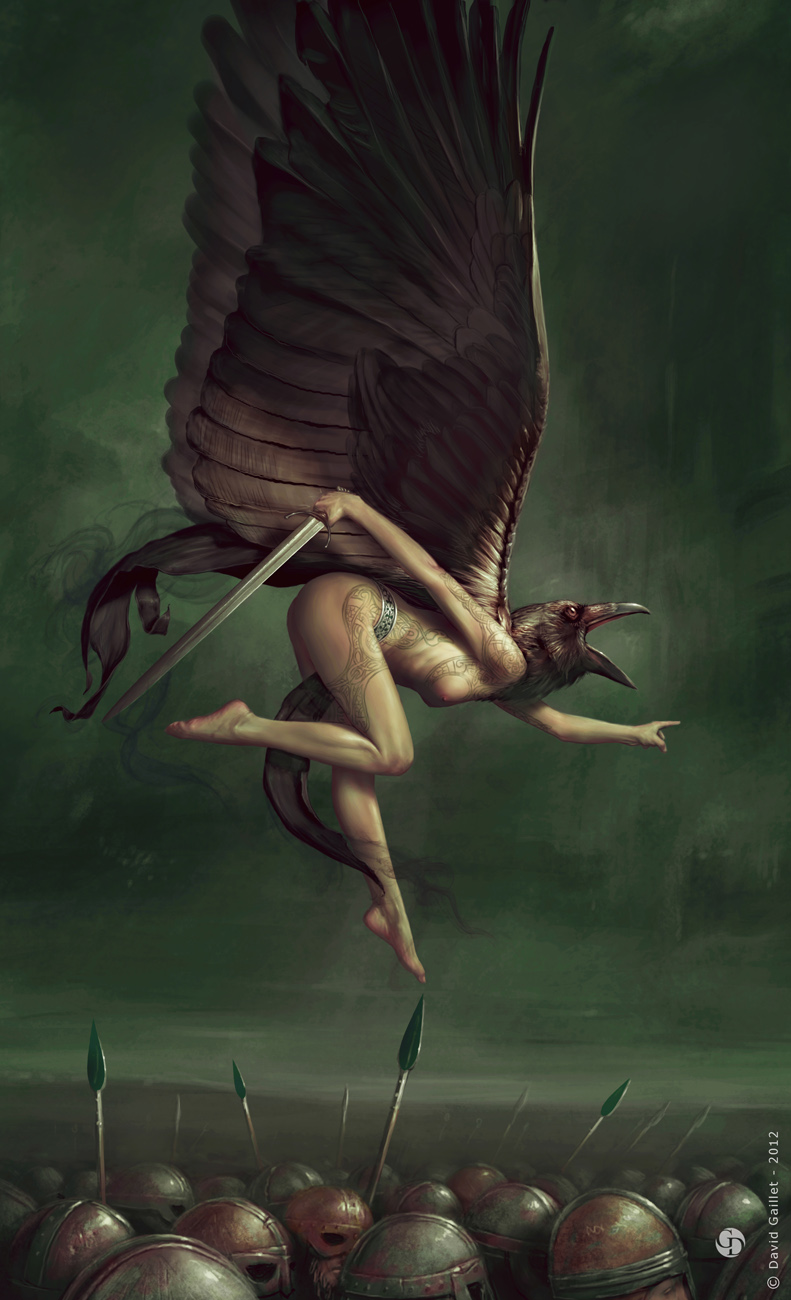
Source, lets play more games with the Morrigan as a character!
Source, or Morgoth!

Saturday, March 11, 2017

Volo's Guide: A Reviant (Review/Rant) about Firbolg

The newest published book by Wizards of the Coast (WotC) for 5th Edition Dungeons and Dragons is "Volo's Guide to Monsters", it takes a anthropological look at six classic DnD monsters in its first chapter, a summary of monstrous player race options, and then some classic style monster manual entries for new monsters.

I'm going to write some more of these Reviants on some other parts of the book later, but today I'd like to talk about one of the "new" playable races: the Firbolg.

A People's History of Firbolg

The Firbolg makes its first entry into the D&D-sphere in the AD&D "Monster Manual II", and they are consistently presented as a sub-race of reclusive hunter gatherer giants through 3.5 Edition. Come Volo's guide they are introduced to a new generation of roleplayers as a race of nature loving fey related humanoids.

The Firbolg entry caught my eye on my first skim through because of where we get the name of the Firbolg: from Celtic myth. This is the race that inhabits Éire before the Gods of Celtic myth (the Tuatha Dé Danann) migrate to the island and whom they fight for dominion of the island on the Magh Tuireadh, the Plain of Towers (which is a super bad ass name). These are two of six mythic races said to have inhabited Ireland at different times with waves of invasions and exoduses. The Firbolg here are described as a race of giants who themselves migrated to Ireland from Greece, though they are given little other description. Their name may directly translate to "bag men", with fir=man and bolg=bag or belly.

Why did the writers find and use the Firbolg in the First Edition Monster Manual II? I'm not sure, but based on the texts their interpretation seems at least some what coherent. In the same boat are the Fomorians, a monstrous race of giants from under the sea/underground also from Celtic myth; they are also relatively well translated into an early D&D monster.

Firbolg as depicted in T. W. Rolleston's "Myths & Legends of the Celtic Race"

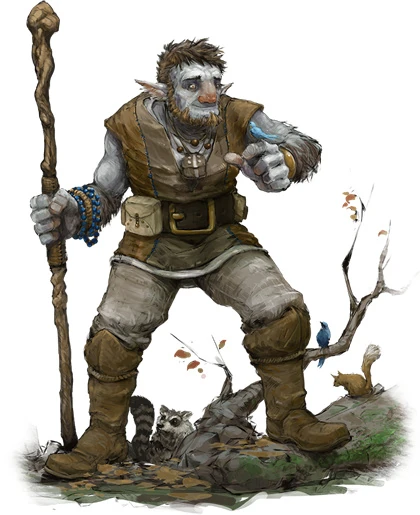
From the Monster Manual II, AD&D

Their description from AD&D's Monster Manual II:
"Of the minor races of giantkind, the firbolg is the most powerful. They are cautious, crafty, and have considerable magical power. They have learned to distrust (and fear) humans, and will be found only in remote and wild places...
...These human-looking giants will not always greet strangers with open arms, but usually firbolgs will not try to kill them (unless given provocation, of course). They do, however, enjoy appearing as little people and duping humans out of their treasure."

From the Monster Manual II, 3.5 Edition

Their description from 3.5 Edition's Monster Manual II:
"Firbolgs are reclusive giants who tend to avoid contact with humanoid races and even other kinds of giants. Unlike some of the more brutish giant kin, firbolgs do not depend heavily on raiding for subsistence, nor do they rely solely on force to resolve problems.
A firbolg looks like a 10-foot-tall human and weighs more than 800 pounds. Its skin is a fleshy pink color, and it can have hair of almost any shade, although blond and red are the most common.A firbolg of either gender wears its hair long, and the typical male sports a great, thick beard."

Annnnd in Volo's Guide to Monsters, 5th Edition

Their description from Volo's Guide:
"Firbolg tribes cloister in remote forest strongholds, preferring to spend their days in quiet harmony with the woods. When provoked, firbolgs demonstrate formidable skills with weapons and druidic magic.
Firbolgs love nothing more than a peaceful day spent among the trees of an old forest. They see forests as sacred places, representing the heart of the world and monuments to the durability of life.
In their role as caretakers, firbolgs live off the land while striving to remain in balance with nature. Their methods reflect common sense and remarkable resourcefulness. During a bountiful summer, they store away excess nuts, fruit, and berries. When winter arrives, they scatter everything they can spare to ensure the animals of the wood survive until springtime.
...Firbolgs who become druids serve as stronghold leaders. With every action the tribe takes, the druids weigh not only the group's needs, but the effect each action will have on the forest and the rest of the natural world. Firbolg tribes would rather go hungry than strain the land during a famine.
As caretakers of the land, firbolgs prefer to remain out of sight and out of mind. They don't try to dominate nature, but rather seek to ensure that it prospers and survives according to its own laws.
Firbolgs use their magic to keep their presence in a forest secret. This approach allows them to avoid the politics and struggles of elves, humans, and ores. Such events concern the firbolgs only when the events affect the forest.
Even in the face of an intrusion, firbolgs prefer a subtle, gentle approach to prevent damage to their territory. They employ their magic to make the forest an unappealing place to explore by temporarily diverting springs, driving away game, stealing critical tools, and altering trails to leave hunting or lumber parties hopelessly lost. The firbolgs' presence is marked by an absence of animals and a strange quiet, as if the forest wishes to avoid attracting attention to itself. The faster travelers decide to move on, the better.
If these tactics fail, the firbolgs take more direct action. Their observations of a settlement determine what happens next. If the outsiders seem peaceful, the firbolgs approach and gently ask them to leave, even offering food and other supplies to aid their departure. If those who insist on remaining respect nature, take only what they need, and live in harmony with the wood, firbolgs explore the possibility of friendship with them, as long as the outsiders vow to safeguard the forest. If the settlers clearly display evil intentions, however, the firbolgs martial their strength and magic for a single overwhelming attack."

Firbolg as a Case Example of the Shitty Way Folklore is Diluted and "Nature" is Depicted in D&D

So other than being much more verbose than is probably necessary, the above quoted text from Volo's Guide highlights some things that bother me about the depictions of certain themes and ideas in D&D: creatures from folklore and nature/ecology.

So I write about different folklore on this blog. I don't think it is bad or not creative or appropriative (necessarily) to borrow ideas from many traditions and use them as inspiration. What bothers me is when the kernel of weird genius gets lots in the sanitizing process of writing RPG material. My preferred format is a candid presentation of the source material and then an interpretation and application to RPGs, like when I wrote about the Blue Men of Minch or adventures based around Scottish wedding traditions. Its like citing your sources, just tell us who came up with this thing so that we can interpret as we see fit.

While I don't really mind the first two experts above, I don't think they are especially interesting either. Sure its not far off from how Firbolg are presented in legend, but you could have also just called them Forest Giants or something and changed nothing else but the name. The whole point of invoking an obscure reference to some myth is because that myth is interesting and awesome and you want to ride that thunder a little. In a way this is part of how these stories and ideas are continuing to breath and grow through time, as they did in their original incarnation as oral traditions. Don't settle for sanitary boring corporate crap, let them breath.

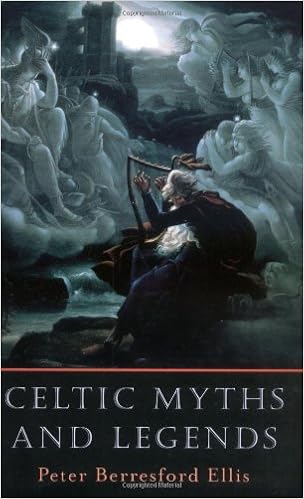
Get yourself a copy of this book if you can, I highly recommend it to the novice (like myself) with an interest in Celtic myth

Now to the part that really gets my goat. I am a forester by profession, a field of applied ecology focused on the management of forest ecosystems. Its hard to read the passage from Volo's Guide above because my eyes keep rolling.

Forests, like all ecological systems, are dynamic. There is no harmony. There is no peace. There is only a shifting and flowing equilibrium that experiences flux at the whim of weather, climate, fire, wind, geologic events that occurred epochs ago, interactions with wildlife, and intervention by humans. The fir, a shade tolerant group of trees, does not take its place in the forest canopy for granted. Given the chance it would, and does, shade out its shade intolerant competitors the pines.

Now I am not arguing that I want to have D&D accurately simulate or describe forest ecology, I don't think that's especially interesting. What I am arguing for is a more complex look at nature oriented races/classes. Arnold K does a wonderful job of taking this complexity and nuance to a useful place with his re-imagining of Druids.
Oo, this druid is EVIL because he likes fire! Fire isn't part of a healthy forest landscape in some regions of seasonal rainfall!

In summary: Nature, like folklore, is depicted in a reductionist way in most published D&D material. That's bad, because nature is an absolute font of inspiration that should be taken at face value and not romanticized or sanitized.


**Disclaimer: I like Volo's Guide, I really do. Its a cool new way to look at monsters and is actually breaking ground with its first chapter instead of keeping the formula of creating endless Monster Manual iterations with more and more generic monsters.**

Friday, March 3, 2017

Attack of the Cranes, or Re-skinning for Ánemos

I am getting ready to start a new campaign in Ánemos (weird Greek mythic fantasy) for some folks I've played with for a while but never DMed for, and I've decided to do some aesthetic touch ups for them. One of the things that has bothered me is that a lot of the stock standard D&D playable races don't fit well into the setting. The Greeks didn't have and dwarfs or halflings or gnomes or elves or druids. These are all products of Celtic/Germanic folklore, not Greco-Roman folklore.


But not really, for the most part I just re-skinned them for a more coherent aesthetic... or I got rid of them. I run my games in 5e D&D, so the following list is my replacement lore for the standard races, I didn't feel like any mechanical changes were important, except for introducing some new character creation tools, see the bottom of the post.

Humans:

Good ol' humans, they had those in Greece. No change.


Nymphs (Elves)(Heavily inspired by this post from WWCD?):

Nymphs are a seasonal race of Spirits who have gone dumb and weak, locked in a physical form. They begin life saturated and full of vitality, a barely restrained energy. As they approach their 100th joyous year they begin to change. Their skin and minds darken, becoming bitter and cruel. The light in their eyes goes out and they gather together to resent the world. But, as their 150th cursed year creeps on, the sunlight returns to them and the cycle begins anew. The timing is not exact, and Nymphs that cohabitate tend to fall into synchrony with each other.

Nymphs are flighty creatures with few ambitions other than to haunt their woods, stream, and beaches in peace. Though functionally immortal they aren't as concerned with death as one might assume. When an nymph eventually succumbs to some gruesome death from magical disease or a gutting, a new one springs up somewhere in the world where there are other nymphs, fully formed. Not even the Nymphs are entirely sure where they come from.


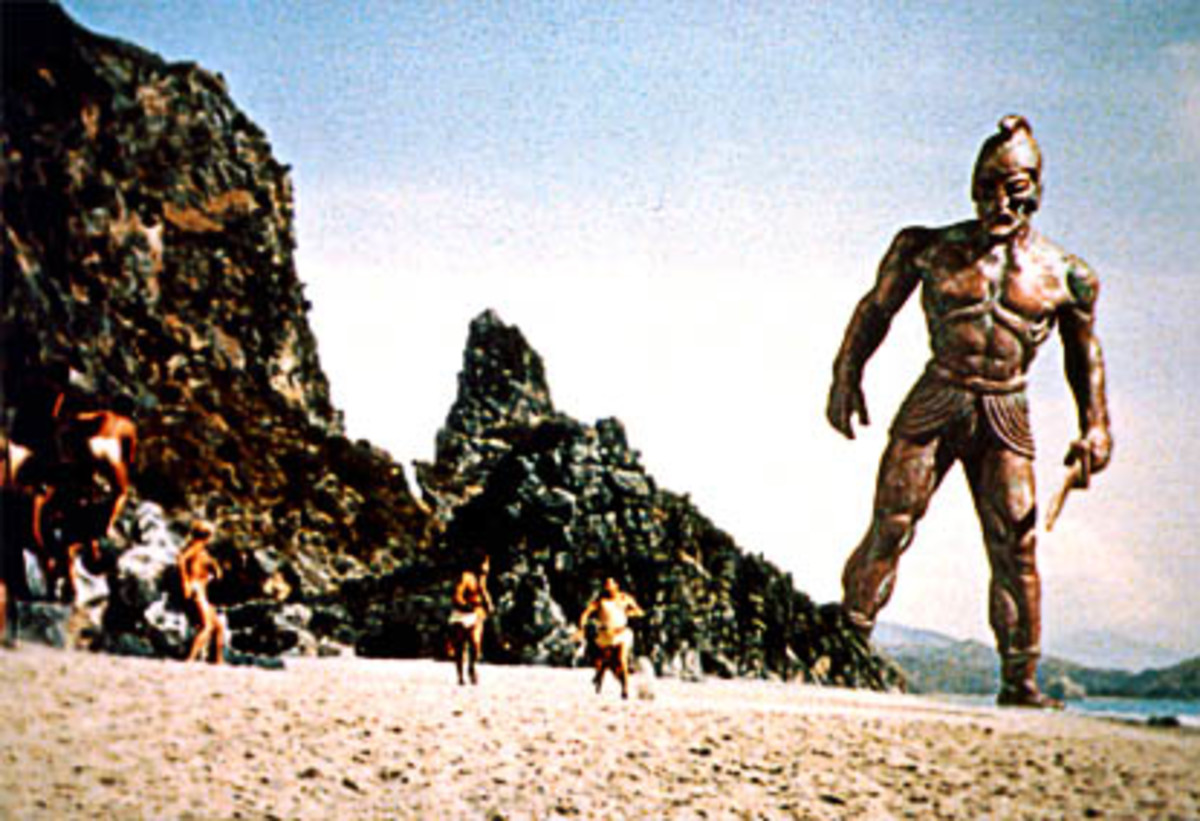
They are like Talos but smaller and self replicating

Automata (Dwarfs)(Also inspired by WWCD?):

Automaton is automaton.

Automata are genderless. This means they don't have sexual organs or reproduce as other living things do, they are made by their Parent. Making an automaton is a very personal experience for the Parent, it requires a safe place where the sculpting can take place. Here the Child automaton will take shape from metals and jewels and cloth and bone. Once finished a new full grown and fully mature automaton will be born, turn to its creator and exchange a nod of mutual respect. Since they don’t have sexual organs it also means instead of urinating they excrete through sweating. This explains their odor. Automata often eat gems and rare metals as a food replacement, and in fact they far prefer the taste of these to mundane food, perhaps due to their inorganic origins.

Occasionally the automaton is struck by an intensely artistic mood; a primal desire to create something beautiful and highly specific. The notion springs fully formed into their heads, the how’s and what’s of it, that this will go here and that will go there and on top we will menace it with spikes. Exactly what it will be isn't necessarily known, but hunches will evolve as the piece does. If the automaton does not complete their masterpiece by the time another mood strikes they will be blighted by melancholy. Until the next fey mood the automaton is tormented by the guilt of their failure, by the shapes and textures they could not realize. This manifests as a tangible malaise.


Don't mess with him. He'll eat out your eyes.

Pygmies (Gnomes):

No one knows where or when the pygmies came from. Where they raised up from the brute earth, now soil made flesh? Were they badgers gone smart and wily? Or perhaps they are long lost cousins of humans trapped in caves beneath an island of some cruel god? It doesn’t really matter, and all of those little people look the same to the taller races any way.

They have magnetic beards which help them choose mates and see in the darkness. Sculpting this facial hair indicates profession by the shape of their primary sensory organ and they are mostly blind in light (they only have cones in their eyes). These bearded little persons are fond of goats and are known to ride them into battle.

The most legendary pygmies have been locked in their glorious and eternal war with the cranes. They say a jealous goddess sent the filthy feathered beasts against the Pygmy Queens of Old for their great beauty and have warred ever since. And so they ply the tidal wetlands in flat bottomed canoes during nesting season to find and destroy crane nests. In turn any crane that sets its beedy eyes on a pygmy will go into a mindless rage until they pluck out the eyes of the pygmy or they are slain.


Demi-Gods tend to die pretty horribly


Demi-Gods (Aasimar):

The offspring of the many and varied gods, these mortals have a spark of the divine in their breasts and it shines through their faces. These rare individuals are born for lives of adventure and tragedy, for they are often cast out by their divine parents that fear that their children will usurp them.


From the stellar Matthew Adams


Demi-Daemons (Teiflings):

Counter to their bright and lovely cousins, these damn souls are the result of the unholy union between a Daemon and some poor mortal tricked or forced into the union. They wear their sin in their flesh.


Sunfolk (Dragonborn):

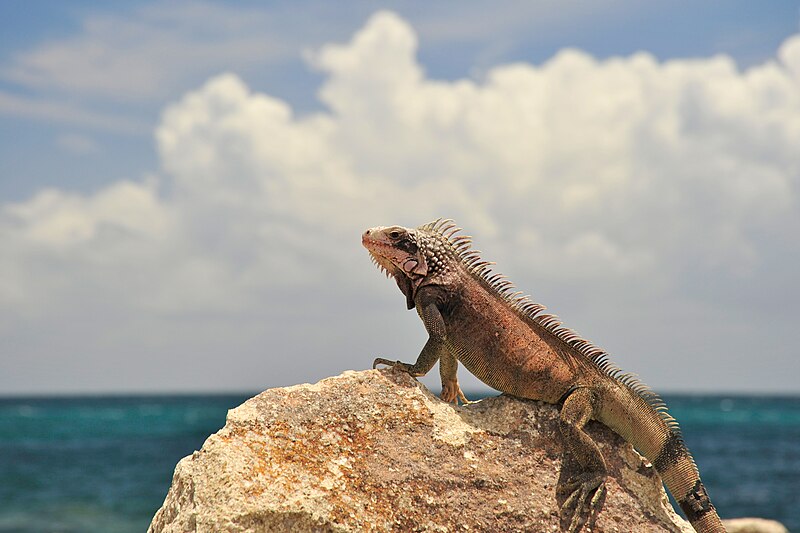
Some just call them lizard people, they lay out in the sun all day barely moving on islands that few would call habitable. They lick the morning dew off their scales and eat mostly seaweed and small fish. They form loose societies based around where one sun baths and many fights break out over this social hierarchy. When they can be roused from their lethargy to care about other races they are fierce warriors capable of belching forth the flames of the Sun itself.

*Note on Halfbreeds: Whether they are half-nymphs, half-pygmies, demi-gods or demi-daemons, all are mules. They are the byproducts of strange and taboo unions and should be shunned accordingly.

**Note: These are all of course loosely inspired by Greek myth, but most of the content of Greek myth have been drawn out and over used. So I am borrowing the aesthetic as a vehicle for the weird.

Character Creation and Goals

For this new campaign I am having my players try some things that I have been thinking about but have never gotten to see played out:
  • Rolling their stats in order (a la Joseph Manola) to create flawed/interesting characters, not well built ones
  • Having the whole party start as one race (a la Arnold K) to create a point of common origin and to really explore how these race's cultural implications play out
  • Starting without a class (the logical extreme of having certain classes unavailable at the start of a campaign), their defining features will be 5e's character backgrounds
  • Bringing a season for adventure and a season for being home for domestic issues and adventure prep into play (again, a la Joseph Manola) to change the pacing of the game
(Depending on which race my group decides to start play as I will make some "racial synergy" type abilities as Arnold describes in the post linked above)

I have done a similar re-skin some of the classes: wizard(s)= mágos (mági), druids (oak knower, Celtic) = drysgnós (oak knower, Greek), etc. Look forward to updates on how all of this is being executed and fleshed out in the coming weeks!

Saturday, January 21, 2017

Scottish Wedding Traditions

I was listening to the radio while driving for work (both things I do often), and there was this interview with crime novelist Catriona McPherson about her newest novel "Reek of Red Herrings", the latest in her series of murder novels. It was a nice interview, but what caught my attention was her attention to the peculiar wedding traditions of the Banffshire coast in Scotland, of which I had never heard.

Some juicy bits from the cold, grassy hills of Scotland:
  • The men fish all year so they hold all of their weddings at the same time as a community around Christmas time
  • Weddings last a week and there is a different event/activity every day
  • Generally they do a "handfasting" (a ceremony where the groom/bride's hands are tied together) as a pre-wedding, these aren't binding if they can't have kids, so they try out the marrige first by trying to have a kid. If the bride gets pregnant they get married, if not they court others.
  • The blackening of the bride, as the groom nails his bride's colors to his mast this makes her interesting to demons and other malevolent fey, so she has nasty stuff poured over her (rotten eggs in cabbage water for example) to dissuade them from taking her


So to just to throw out some ideas of how to use these:
  • The party shelters on an island from a storm, they get roped in as part of a wedding party in exchange for shelter. But! Body parts of one of the many grooms are found in fish barrels. Who done it? They have a week of weird traditions to deal with to solve the mystery before everyone goes back to fishing!
  • An ancient murder victim is found preserved in a peat bog, seemingly confirming that dear great-great-great-great-grandpa really was murdered, not just lost in the bog! Old tensions boiling over after the body is found, and the long dormant blood feud is renewed. Soon brides are killing their grooms and grannies are poisoning their grandchildren from the other side of the village feud! Can you solve the ancient murder and smooth the tensions in the village? Maybe a marriage would help!
  • The PCs badly misinterpret the social situation and they all get married! (Not unlike that Firefly episode...)
  • Actual demons and cruel fey want to take away the bride, have to fight them off while the really long and intricate wedding ceremony goes on.


Monday, October 24, 2016

Rhyme Battles

Myths Have the Best Weird Shit

Lately I have been listening to the wonderful "Myths and Legends" podcast while driving or doing computer work. One thing that is in every episode is a monster of the week, usually very weird and obscure folkloric creatures and spirits from across the world. As I listen I have been trying to jot down the good and juicy bits, as any good DM scavenges.

Folklore and myth have always been my main inspirations, especially the super raw/original stuff (Brothers Grimm, not Disney), and this a wonderful way to go through a large catalog of material that is already digested and usable.


The Blue Men of Minch

A group of mythological mermen that haunt the channel between the mainland of Scotland and the Outer Hebrides islands, they hunt ships in bad weather and swim like dolphins. But get this, before they get to attack their leader shouts out two lines of verse and the master of the ship must try and answer with two lines that rhyme. If the captain cannot keep rhyming the Blue Men get to sink the ship.

The classic exchange goes like this:
Blue Chief: Man of the black cap what do you say As your proud ship cleaves the brine? 
Skipper: My speedy ship takes the shortest way And I'll follow you line by line 
Blue Chief: My men are eager, my men are ready To drag you below the waves 
Skipper: My ship is speedy, my ship is steady If it sank, it would wreck your caves.
So basically you can save your ship from being attacked by mermen if you beat their chief in a rap battle. That's awesome and gameable.
"Oooooooooh, you got served"

The Merfolk and the Origins of Poetry

(Largely prompted by Arnold K's post on mermaids and giving monsters conflicting/complex motives)

In Ages past there was a lonely island rising out of Ánemos' Sea, little more than a spire of craggy stone. A man and his wife were sailing by, when their small sloop was scuttled on some shallow reefs. Crying out in anguish they clung to the rocks as the surf beat around them and they hear a small but clear voice answer their cries. "Hold your breath and dive beneath the waves! Trust me, I will shelter you in my caves!" The man and his wife did as they were told and dove, finding themselves in calm water and a large cave that they had not seen.

And so Várdana, the Queen of Poetry, was born along with her first believers deliverance. Though the island was small and rugged, Várdana protected her children and saw that they prospered by learning to work with the long flexible stalks of Nunu and how to build on the rugged cliffs of the island.

Centuries past and Várdana's children had made a home on the small island.They practiced poetry and prayer in the same breath, and she sent her children into the world to soften the speech of Ánemos. These wondering poet/priests became know as the Várdini, and they wore their gift of poetry upon their robes stitched into the very fabric. Everything they said was in perfect rhyming couplet, and they spread far and wide gathering the great stories and histories of the world.

A particularly beautiful Vardini came upon the Mageocracy of the Mágos-King of Histria. She was welcomed into his court and asked to recited for them. She told them many stories that night, but the King only wanted to bed her. She spurned him and fled his island, and in a wrath the Mágos-King of Histria flew as a great pelican to the island of Várdana and scooped it up with his great bill and flew high into the sky where he dropped the island and all of its inhabitants into the Vardic Chanel.

As a dying gift to her children Várdana changed them into the Merfolk we know today. To honor their dead mother they are still the best poets in Ánemos and their capital city still lies in the deepest stretch of the Vardic Chanel. Their sisters, the Vardini are now a homeless sect of clerics to a dead God, and they still wander the world reciting poetry, but now they also spread hope for the common man and subvert cruel governments and wizards alike.

In summary:
Merfolk are the best poets ever and they want to wreck your ship, so you have to rap battle them for it.