Showing posts with label Verse. Show all posts

Tuesday, May 16, 2017

The Bard Colleges

This is the second of my follow up posts to this project, today's class is the Bard. The goal of this project is to create a "minigame" of sorts for each sub-class for D&D 5e that allows the character to grow in ways not directly tied to their level progression and that makes each sub-class feel unique and interesting.

College of Lore:

Original Idea: "Your mind is a well from which you can draw history and knowledge from the depths of the past. Your long study has given you an unrivaled grasp of Lore. For every lost secret that you unearth your knowledge deepens."

So the idea with this sub class is to be an searcher for Secrets, the better the Secret the more revelatory the discovery. Perhaps this is a more story/adventure based advancement than the other sub-classes, but I think its a fun way to make an investigative and lore driven bard. These are the kind of characters that want to delve deep into ruins of ancient civilizations so they can learn more about their plumbing. Not all Secrets are arcane and world shattering...

Secrets:
So as the Lore Searcher finds secrets they act like subtle Wish spells. The Bard discovers something in the dungeon they are delving in and the player gets to decide what exactly they discovered! I want the onus of this to fall on the player, not the DM, so its up to the player to declare when they are discovering a Secret, the DM just lets them know when they have delved and studied enough to merit a new Secret discovery. Below is an example, but this should be super fungible.

DM, ConBon: CWilly, as you are lowered down the shaft you start making out some inscriptions in the stone, you flickering lantern dimly illuminating them...

Player, CWilly: I holler up to the Barbarian, "STOP!!! This could be what I've been looking for! These look to be diagrams to the Ancient Yuan-Ti super weapons..."

ConBon: No they aren't dude, its just like a shaft leading down to the next level... Why would they put super weapon plans here?

CWilly: Okay, okay. Then they are graffiti from the Yuan-Ti's slaves, it says the name of their God-Ruler and that he was afraid of fire.

ConBon: Alright, that sounds good, but it'll be a while till you get another Secret, okay? The name of the God-Ruler was Issak the Cruel, and he was deathly afraid of fire...

In the example above the DM lets the player  have a say in defining the final boss of the Dungeon, giving him a weakness to fire. There is some negotiation involved, as there should be.


Not a wizard! A bard!

College of Valor:

Original Idea: "You thrill in the heat of battle, pounding a martial beat as you urge your allies on. You have taken to the sword as a duck to a pond. Keep track of every bardic inspiration die that is the difference between life and death for an ally or foe."

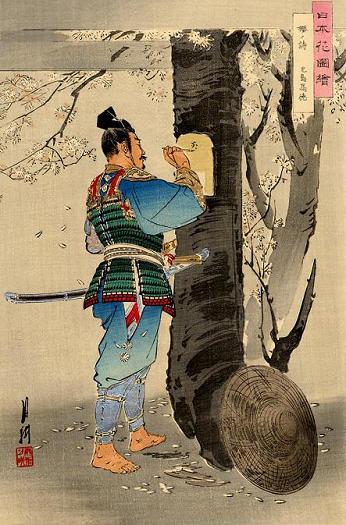
You've chosen a path of empowerment, a martial archetype for a musical/performance based class. There is a rich tradition of these kind of characters across cultures: the skald (warriors and storytellers), the samurai (meant to be masters of martial and sensitive arts), the knight (the chivliric ideal has knights that write poetry), etc.

The original idea was a little boring I think, and I have been playing a loosely Redwall based game recently, we sing a lot of songs, shout a lot of battle cries, and describe feasts often; its all been really fun. So the Bard under the tutelage of the College of Valor seeks out greater and greater conflicts to participate in so that they can write sagas about their exploits. Think of it like you get to play Homer writing the Odessy while its happening!

Sagas:
The Bard gets to write a new bad-ass song for each new scale of conflict they are embroiled in. A computational way to represent this would be CR (Challenge Rating), the metric that describes how much XP should be awarded for a combat encounter. There is all sorts of arcane maths behind this computation, so the leg work is done for us, we just get assign rewards for writing poems.

Of course to use these the player actually has to tell a story/sing a song/recite a poem! For example the Heroic Ode should be written for each party member you want to use it on, "Oh Scar-Faced Johnny, Slayer of Naga Queens and Terror of the Eastern Wastes, you story cannot end here...!", therefore each party member has to have done something Ode worthy for this to work. The format doesn't have to be these forms of course, this isn't some stupid creative writing class, let the player have some fun with it.


CRSaga Unlocked
0-4 (Amateur hour bub)Campfire Story
5-8 (Wow! You sound like some kind of hero!)Folk Song
9-12 (Hear anew the voice! O hear and listen!)Heroic Ode
13-16 (And so Hercules slayed the hydra...)Legendary Story
17-20 (Tell me, O Muse, of the man of many devices...)Epic Poem
21+ (YOU HAVE ACHIEVED APOTHEOSIS)Cult

Campfire Story: You can tell a Campfire Story of one of your Party's exploits while taking a long or short rest, this allows your allies to re-roll all 1's on their HD rolls when regaining health.

Folk Song: When you sing your Folk Song in public you get advantage on preform checks when trying to make money in down time

Heroic Ode: When an ally is making death saving throws you can take a full round action to recite their Heroic Ode to instantly stabilize them at 0 HP as long as you are within 30ft of them.

Legendary Story: During combat you can make begin to tell your Story, for every round that you recite your allies get +1 on attack/damage/saving throws (each party member chooses which one they want for the duration) for every round that you continuously tell the story, as a concentration spell up to 1 minute (can use Battle Magic while doing this), usable 1/week

Epic Poem: This is effectively a ritual spell (takes 10 minutes to cast) that can be used to cast any spell on any class's spell list lower than 6th level, and the epic poem must some how relate to the spell being cast. For example a Create Undead spell could go like this:
Facing to the northern clime,
Thrice he traced the Runic rhyme;
Thrice pronounced, in accents dread,
The thrilling verse that wakes the dead,
Till from out the hollow ground
Slowly breathed a sullen sound.

This is usable 1/week.

Cult: You have accumulated enough of a cultural impact that you now have a whole cult devoted to the contemplation of of your art and the mysteries contained within. When ever you come into a settlement that is a town or larger roll to see how big your following is here, using your Preform skill. Depending on the success of the role, your Cult could be very developed in a way to aid you. At the least you get a fan club most places you go.


Thoughts

I think the Secrets mechanic is especially interesting, giving the PC a way to color and change the world in creative ways. It gives some of the DM's agency to the player, which is fun. I haven't thought of a good way to standardize it, though I am not too worried.

I'm not totally satisfied with how tied to level advancement the Sagas mechanic is, but I think it makes some sense. That they have to recite their work makes it fun, hopefully. Perhaps encourages players to do some riskier things than they normally might, all because it would make a great story. And that is awesome.

Saturday, April 22, 2017

Game Ideas from Poetry: Stopping by Woods on a Snowy Evening

Whose woods these are I think I know.
His house is in the village though;
He will not see me stopping here
To watch his woods fill up with snow.
My little horse must think it queer
To stop without a farmhouse near
Between the woods and frozen lake
The darkest evening of the year.
He gives his harness bells a shake
To ask if there is some mistake.
The only other sound’s the sweep
Of easy wind and downy flake.
The woods are lovely, dark and deep,
But I have promises to keep,
And miles to go before I sleep,
And miles to go before I sleep.

I love this poem by Robert Frost, its simple and clean and evocative. Its been snowing here a lot this winter and I have been going on some hikes through the woods while it comes down. Its very peaceful, and Robert captures that solitary longing to watch this little sliver of the world. So when life gives you poems, make D&D.

Let us ask the question, what if the narrator gives in to the lovely, dark and deep woods? He hops off of his cart into the snow, and he trudges into the forest on the darkest night of the year.

This makes for a great set up to be captured/seduced by the servants of the Queen of Winter and be forced/enticed to celebrate with her and her court as her reign begins for the season. Perhaps he is thus cursed to return to her Court every Winter Solstice and dance with the holly men and the evergreen women, to drink the blood of the feast swine, breath the smoke of the cedar offerings, and wear the wreath.

That's the one night a year he feels alive. And every other night he lays awake, thinking of the smokey hall lit by ruddy flames, his body writhing with half remembered pleasure and tormented by cultural inhibitions. He returns to the dark woods. Year after year.

I would want it to be an adventure like "Over the Garden Wall", an excellent single season TV show from Cartoon Network. Check it out:

What I think "Over the Garden Wall" did well was a sense of dissociation and familiarity at the same time. But instead of kids wandering a weird Victorian era forest land, you are a group on late 19th century New Englanders haunted by the chains of your Protestant upbringings and the pagan blood memories of the Yule Tide. Every session is the night of the Winter Solstice, in between each session a year passes and the bacchanalian revelers age and grow weaker and more tortured. Kind of like a fucked up pagan Narnia.


Saturday, November 19, 2016

Pale Crowns of Fire

Facing to the northern clime,
Thrice he traced the Runic rhyme;
Thrice pronounced, in accents dread,
The thrilling verse that wakes the dead,
Till from out the hollow ground
Slowly breathed a sullen sound.

The Nekros Archanis

In the misty reaches beyond Chalcis there is said to be an island that is ruled by the Dead Kings, the Nekros Archanis. Only seen in shafts of moonlight on a foggy night, their island Keep glows with malice and the flicker of pale fires on the battlements.

In Chalcis this story is told of the Dead Kings...: Long ago the Dead Kings where mere necromancers, ruling a small empire of detritus and rot. They would descend on their foes under the cover of Wyrfog to harvest the living for their own lifeless ranks and petty squabbles between each other.

But after a hundred years of living in fear of the Dead Kings the wise mages of Chalcis had discovered the secret to calling the winds to their biding, dispelling the Wyrfog of their undead foes. And there was a reprieve from their dread reevings, and the living could repel them when they did come.

But the Nekros Archanis would not be foiled. They unleashed a new terror on the land weapons of pale fire to use their foe's Sun against them. Their blades only grew in dread with the light of the Sun, and none were safe from their cold grasp. And for another hundred years of darkness the Nekros Archanis' rule spread and grew in dark splendor.

In this desperate hour the living people of Chalcis struck a deal with the Spirit of the Moon. For a year and a day they built a magnificent temple to the Spirit of the Moon on the peak of the Mons Lunae while singing the Moon's praises. After this year of Praise, a year and a day were spent pouring barrel after barrel of wine over the Altar to the Moon in its new temple to appease its thirst. After this year of Revelry, a year and a day past and with each high-tide 29 innocents, one for each day in the lunar cycle, were bound bellow the high-tide mark to be sacrificed to the Moon.

The terms of the deal fulfilled the Spirit of the Moon banished the Nekros Archanis to another Realm. The deal was not finished though, for a father released his young daughter on the last night of the ritual to save her from drowning, and so their domain intersects with ours on foggy and moonlit nights and then they are able to still haunt the lives of the living.

You can enter one of their Towers of the Moon if you wish traveler, and you can barter with them for their Pale Fire. They accept many payments, especially blood and favors in the lands of the living. But be cautious, for the Nekros Archanis are always looking for weakness in the veil between their Realm and ours, and many souls have been the unwitting servants of their machinations twords their freedom...


Pale Fire

If you find the Dead Kings perhaps they will give you a weapon of Pale Fire. Even though they ask for no payment, the price is high. In order to wield a weapon of Pale Fire you must step foot into the Realm of Undeath, or else it will surely kill you.

Pale fire does not emit light, it reflects it. As the light around them increases in intensity they too grow bright, so the brightest flame of Pale Fire is in the light of a bright sunny day.

Light Intensity
Effect
No Light
No Effect
Dim Light
1d6 Necrotic Damage
Bright Light
2d6 Necrotic Damage+ Life Steal
Dim Sun
1d10 Necrotic Damage
Full Sun
2d10 Necrotic Damage+ Life Steal

Life Steal: A weapon with this property heals the wielder when the get a critical hit with it, dealing an extra 2d8 necrotic damage and healing them for the same amount.

Weapons of Pale Fire must be wielded by creatures of the Undead Type. If wielded by a living creature they must make a Constitution save (DC 16) every morning at dawn or take 1d6 Constitution damage for and receive no healing benefit from anything other than magical healing. If their Constitution reaches 0, they die and rise as an Undead compelled to serve the Nekros Archanis.

So give your Undead BBEG a weapon of Pale Fire. It will pose the dilemma of fighting it in the Darkness or the Light, and give some nice cursed loot to the PCs!

Monday, October 24, 2016

Rhyme Battles

Myths Have the Best Weird Shit

Lately I have been listening to the wonderful "Myths and Legends" podcast while driving or doing computer work. One thing that is in every episode is a monster of the week, usually very weird and obscure folkloric creatures and spirits from across the world. As I listen I have been trying to jot down the good and juicy bits, as any good DM scavenges.

Folklore and myth have always been my main inspirations, especially the super raw/original stuff (Brothers Grimm, not Disney), and this a wonderful way to go through a large catalog of material that is already digested and usable.


The Blue Men of Minch

A group of mythological mermen that haunt the channel between the mainland of Scotland and the Outer Hebrides islands, they hunt ships in bad weather and swim like dolphins. But get this, before they get to attack their leader shouts out two lines of verse and the master of the ship must try and answer with two lines that rhyme. If the captain cannot keep rhyming the Blue Men get to sink the ship.

The classic exchange goes like this:
Blue Chief: Man of the black cap what do you say As your proud ship cleaves the brine? 
Skipper: My speedy ship takes the shortest way And I'll follow you line by line 
Blue Chief: My men are eager, my men are ready To drag you below the waves 
Skipper: My ship is speedy, my ship is steady If it sank, it would wreck your caves.
So basically you can save your ship from being attacked by mermen if you beat their chief in a rap battle. That's awesome and gameable.
"Oooooooooh, you got served"

The Merfolk and the Origins of Poetry

(Largely prompted by Arnold K's post on mermaids and giving monsters conflicting/complex motives)

In Ages past there was a lonely island rising out of Ánemos' Sea, little more than a spire of craggy stone. A man and his wife were sailing by, when their small sloop was scuttled on some shallow reefs. Crying out in anguish they clung to the rocks as the surf beat around them and they hear a small but clear voice answer their cries. "Hold your breath and dive beneath the waves! Trust me, I will shelter you in my caves!" The man and his wife did as they were told and dove, finding themselves in calm water and a large cave that they had not seen.

And so Várdana, the Queen of Poetry, was born along with her first believers deliverance. Though the island was small and rugged, Várdana protected her children and saw that they prospered by learning to work with the long flexible stalks of Nunu and how to build on the rugged cliffs of the island.

Centuries past and Várdana's children had made a home on the small island.They practiced poetry and prayer in the same breath, and she sent her children into the world to soften the speech of Ánemos. These wondering poet/priests became know as the Várdini, and they wore their gift of poetry upon their robes stitched into the very fabric. Everything they said was in perfect rhyming couplet, and they spread far and wide gathering the great stories and histories of the world.

A particularly beautiful Vardini came upon the Mageocracy of the Mágos-King of Histria. She was welcomed into his court and asked to recited for them. She told them many stories that night, but the King only wanted to bed her. She spurned him and fled his island, and in a wrath the Mágos-King of Histria flew as a great pelican to the island of Várdana and scooped it up with his great bill and flew high into the sky where he dropped the island and all of its inhabitants into the Vardic Chanel.

As a dying gift to her children Várdana changed them into the Merfolk we know today. To honor their dead mother they are still the best poets in Ánemos and their capital city still lies in the deepest stretch of the Vardic Chanel. Their sisters, the Vardini are now a homeless sect of clerics to a dead God, and they still wander the world reciting poetry, but now they also spread hope for the common man and subvert cruel governments and wizards alike.

In summary:
Merfolk are the best poets ever and they want to wreck your ship, so you have to rap battle them for it.