Showing posts with label Play Report. Show all posts

Saturday, February 25, 2017

Divinity as a Function of Belief; Geography as a Function of Divinity

In my current setting, Ánemos...

***Digression***

Ánemos (άνεμος) is Greek for wind (thanks google translate!). I have named my two most developed settings after the wind, Ánemos and Vindjord (which is literally wind-land from the Norwegian and Danish). I think it has to do with the landscapes I picture the PCs being in at the beginning of the writing process. Vinjord's aesthetic is strongly influenced by the amazing art from the Banner Saga.

Get it, love it, look at really beautiful game art.
For Vindjord I imagined stoic warriors and bearded wizards cresting a snowy hill, looking down on a green and untouched vale, wind dramatically tugging at their sweet cloaks...

And so too with Ánemos the Windswept Isles. I saw men and women in loose and airy clothes, jumping off a trireme onto a white beach below parched and scrubby cliffs with the ever present wind whispering across the azure sea...

***End digression***

... there is a funny medley of the idea of little gods and powerful nature spirits. I have been running games with one of my D&D groups in this setting since June or July, and as we have been exploring it together we have been flirting with some deep questions about the nature of divinity. One of my players is a demigod (using stats as an Aasimar), in the tradition of Greek mythic heroes like Hercules.

In the last session we played they met the closest thing to a "real" god in the setting, the God of Minoa. He revealed that the players had accidentally kidnapped (godnapped?) a god from a small but bustling smuggling isle just outside of the Minoan Republic's military control. This god was quietly locked away in depths of the Obsidian Bank's vault, presumably for decades.  As a result it is little better than a beast, barely capable of language and understanding. The God of Minoa, Minoa, revealed its nature to the party and hinted at some of the stuff below.

Minoa is basically Zeus. Definitely the most generic god ever. Tropes have their uses though. (I also love this video game)

Divinity as a Function of Belief:

Unintentionally borrowing the concept from Discworld (one of my players couldn't believe I hadn't read any of it), gods operate as a function of their believers faith. The do not exist in a vacuum, indeed it seems that they would not exist at all if they had no one to believe in them. In my myth about mermaids I flirted with the idea of the "birth" of a god: "And so Várdana, the Queen of Poetry, was born along with her first believers deliverance..."

It seems to me that the birth of a god needs three things in Ánemos:
  • A spiritually blank piece of land (more on that later)
  • People ready to become believers
  • Praise, or put another way, to be spoke into being (the animating breath, the same root word as Ánemos)
Using the story of Várdana as a template we can see the elements at work: a rocky little island in the storm struck sea devoid of spiritual inhabitants, desperate victims of a ship wreck looking for a savior, and their cries for deliverance. The result is that a goddess manifests to accept their praise.

Born with a clarity of purpose, sprung from a thought...
The beliefs of mortals in an immortal being are fickle, as the centuries grind by even dwarfs' and elves' attentions flow and warp. So is the birth of a god's personality tied to the passing interests of their believers? Is Várdana the god of poetry because her first believers had been writing shitty rhyming couplets the day before their ship wreck? Or did she only save the couple because they had the capacity for poetry in them, and being the god of poetry she would of course intervene?

The question boils down to this: do the gods of Ánemos have some animating spark of character that is immutable and is given the chance to flourish if believers are found OR are the gods mutable to the interest of their islands inhabitants? It is a chicken and egg argument that philosophers and theologians alike have argued about for the long history of the islands. Few even recognize that the gods change through time and history with the whims and beliefs of their followers.
...to drift and flow with the wandering hearts of their believers.

Geography as a Function of Divinity:

In Ánemos land is life, the ocean is a desert of salt. So the beings that are attributed with creating the many islands of the archipelago are of course revered as gods. There are countless islets in the wide Sea, and non-has yet been found that doesn't appear to have a the chance to have a god be born. Some of these spits of land have never had a thinking being set foot/paw/fin upon their shores and their gods are brute beasts of thought, really more the potential for a god than a god.

Introspective giant mushroom thing? Probably a god
Large islands do not necessarily beget large of powerful gods. For example the first god my PCs interacted with was Mother, on the remote frontier island of Voskó. The god manifests as a silent jackal headed pregnant woman, who slowly walks the island with her stave in hand, and where she does the jungle withers and green pasture springs up. The people call her simply Mother, and they drive their herds of sheep behind her in fresh pasture. The indigenous centaur population who have been in conflict with the human settlers for a few decades now worship her as their Shepherd.

The psyche's that molded Mother for centuries before the human settlers are centaurs, and while not city builders their needs demand open places and expanses of land to graze. So her island is large, her primary "function" is to beat back the creep of the dense forest to create fresh grazing areas. Similar function is desired by the new settlers, who are almost exclusively herders.  As such the geography is likely to remain intact who ever wins the war of colonization and attrition.

Voskó is a large island, but Mother/the Shepherd is a mute and inscrutable god. She is finite, she doesn't cure the sick or lay down holy doctrine, she just creates pasture. A human from the village has taken it upon himself to become her cleric, but has not had any success in securing her favor, perhaps because until then no one was interested in it. In a peace summit organized by the PCs the centaurs and humans successfully held her attention long enough to help ease tensions between centaur and sheep grazing rights by creating much more pasture. This was a jump in her nature, to answer the prayers of her believers, but still within the scope of her interest: pasture.

Chain Reaper? Totally a god too
The small god my PCs have taken from its home island is going to be the window through which they get to explore the mechanics of divinity. If they stay too long on a single island will their little godling cause a geological event (either consciously or not) to create a new land mass for his godhood to mount on? Perhaps the golding could kill and consume the godhead of the resident god, taking on some of their form. What happens to its original island, already little more than an atoll with less than a square mile of permanently dry land? Will it return to the Sea unless it returns or a new god claims it?
SPACE CENTAUR!!! (definitely a god)

Thoughts

I like these ideas because I am actually finding ways for my PCs to interact with them (which doesn't always happen with wacky ideas), and it gives them a lot of agency in literally shaping the world. Having a tangible effect on the very geography of the land is exiting, and the Spirit mechanics already give a good way to manipulate the ecology. This means that the PCs have the power to terraform (after a fashion), with the manipulation of belief in a god and the proper appeasement of the Spirits they could create island with ecologies that suit their needs. This has the potential to really change high level play when PCs begin to build their own domains.

I've already written a post on the birth of a god (which I discussed above) and an example of extreme Spirit deals, and these could be used as road maps to create quest for players. Wanna build a stronghold on an island? Cool! Find an uninhabited one, ship in some believers to sculpt the god, meet the Spirits and find out what they want in return for favorable conditions and create the island stronghold of your dreams! The converse could be happening, cults indoctrinating the public into new forms of belief in their god to shape the god's domains. Or rouge druids secretly out maneuvering the locals to bring ruin on the populous with the aid of the Spirits. 

Sunday, February 5, 2017

Creatures of the Deep

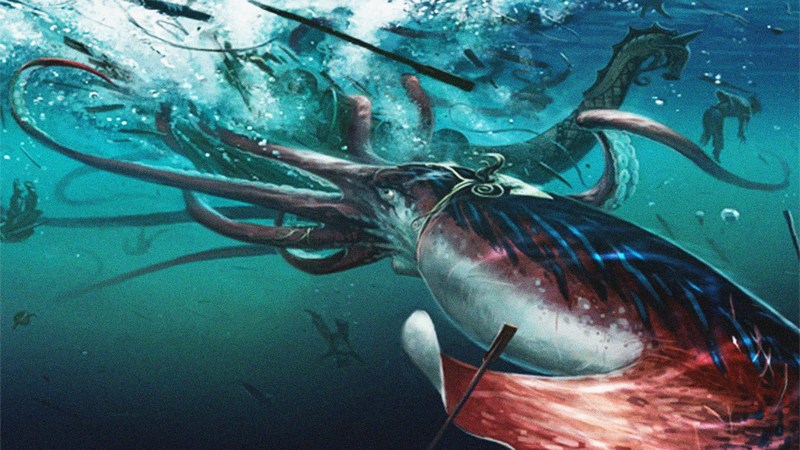
My players met one of the biggest baddest creatures on my random encounter table last session, "the kraken" (not actually a kraken, just had that name in there as a placeholder for giant squid beast.). They handled it amazingly well by fleeing to the nearest island with a shallow reef to get away from it. They then convincing a Spirit to help them distract it so they could sail away, by making up a song and building a small shrine in praise of the Spirit.

Part of their roleplay discussion with the Spirit was about the nature of the kraken and what it feared. It came out that the kraken is locked in an eternal hunt with what was implied to be a legendary Kētos. Both prowl the Sea looking for the other. This got me thinking about creating simple movement rules for the Kētos and the "kraken" to map and keep track of their struggles against each other.

In the amazing Joseph Manola's post about the Triple Crown he describes three cosmically damned beings wandering the world. The PCs have to find and interact with these beings in order to retrieve the Triple Crown, a stunning example of his romantic fantasy philosophy to gaming. This got me thinking about how one might keep track of these wandering agents on a hexmap as a way for players to concretely get and use information about their quarry, and so these rules for wandering titanic sea creatures were born...

But First, Some Lore!

So we have two ancient sea creatures hunting each other. One is squid like, the other is "The Great One", an ambiguous large animal implied to be one of the Kētos. Since Kētos already exist as an identifiable group with my players, I want to distinguish this as another creature, and my random encounter table says it should be a "dragon turtle" what ever that really is. So we have a "kraken" and a "dragon turtle", lets write something more interesting than their generic D&D counter parts.

Like this...
...plus this and massive and old.
The Great One:
This massive sea turtle is the last of its kind. It once had mates, brothers and sisters, but that was an Age ago before the world changed and before its ancient enemy ripped them from fin to shell. This relic of the ancient ocean cruises the shallow waters of Ánemos with powerful strokes of its fins, grazing on kelp forests and fish when it is not taking long naps near islands. Often mistaken for a reef or a small island the people of Ánemos have many stories of the "island that awoke" or the "reef that lived".

When it catches the scent of its enemy in the water it rises in a flurry of activity, bent on entering a final battle with its ancient foe. This has happened many times before, each ending in a draw were they both flee to lick their wounds and fight another day.

You know, classic kraken but....
...also horrifying gold worm beast.
The Tentacled Fiend: 
Resembling a giant squid or octopus in appendage only this fiend of the deep lays in wait in the deep ravines between the shelves of islands, letting its rubbery arms drift with the currents. Perhaps it slumbers, each tentacle with enough autonomy to grasp and wrestle whatever poor creature happens to graze it. Then the tentacle pulls the poor thing to the depths to its gaping maw, all with out the greater beast awakening. Few sailors have sighted the true beast, though the stories are many of the piece of drifting flesh that would rise up and drag men to their graves.

After its long months of quiet rest the Fiend again extricates itself from its deep crevasse in search of its ancient enemy, either in a deep-seated pattern of predator seeking natural prey, or ancient vengeance for broods lost to the fell beaks of a scavenging enemy.

Their "True" Nature

Legend has it that the Tentacled Fiend and the Great One are halves of the same whole. The Fiend is the incarnation of the terrors of the deep, the Great One the mildness of the shallows. They are the rent asunder Avatar of the Spirit of the Sea. Some say when they finally commit to it their final battle will be their reunion, and as they are locked in each others death grips their blood will mingle with the sea foam and the Spirit of the Sea will be whole as in the ancient world.

This must never be allowed to happen. As every channel, bay, reef, and shoal has a splinter of the greater Spirit, they are short sighted and self interested fragments. Would a unified Spirit of the Sea tolerate the presence of Civilization on her shores? Would she let people fish her bounty to eat her children? Could a man ever feel safe aboard a ship again? No, humanity would crumble underneath the fierce apathy of the Sea.

But these are just stories...

Tracking their Movements

So when the PCs encounter the Great One or the Tentacled Fiend on the random encounter table for the first time you start tracking their movements (or when they start caring, perhaps to hunt them or to commune with them). On your hex map they can move three hexes each week, rolling a 1d6 to determine their heading, discounting results that have them back tracking. They also have a 1 in 10 chance of settling down in a hex and "sleeping" for 1d6+2 weeks.

Information about their movements only reaches the PCs if they:
  • Enter civilized waters, there are sightings by trade/military ships
  • They encounter each other and engage in titanic combat, some poor fisher man is bound to see that
  • Get rolled on the random encounter table again
I like this system because its simple enough to keep track of, and should give the PCs enough info to track them, but still gives them an element of surprise with them showing up unexpectedly as random encounters. I'm implementing this system right now, so I'll report back with how it goes!


Saturday, January 28, 2017

The Lipimancer: Update

One of my players is playing a Lipimancer! And he is rocking it! So now I have to take my half baked idea and make it into a usable 5e sub-class.

Some quickly obvious problems arise from the original post:
  • It implies an infinite number of spells per day assuming you can find enough food
  • Having spells cost calories means that I have to figure out a way to equate relative cost of different spell levels
The simple solution is to use an already built in mechanic of the sorcerer class, sorcerer points, and keeping the spell casting system intact.

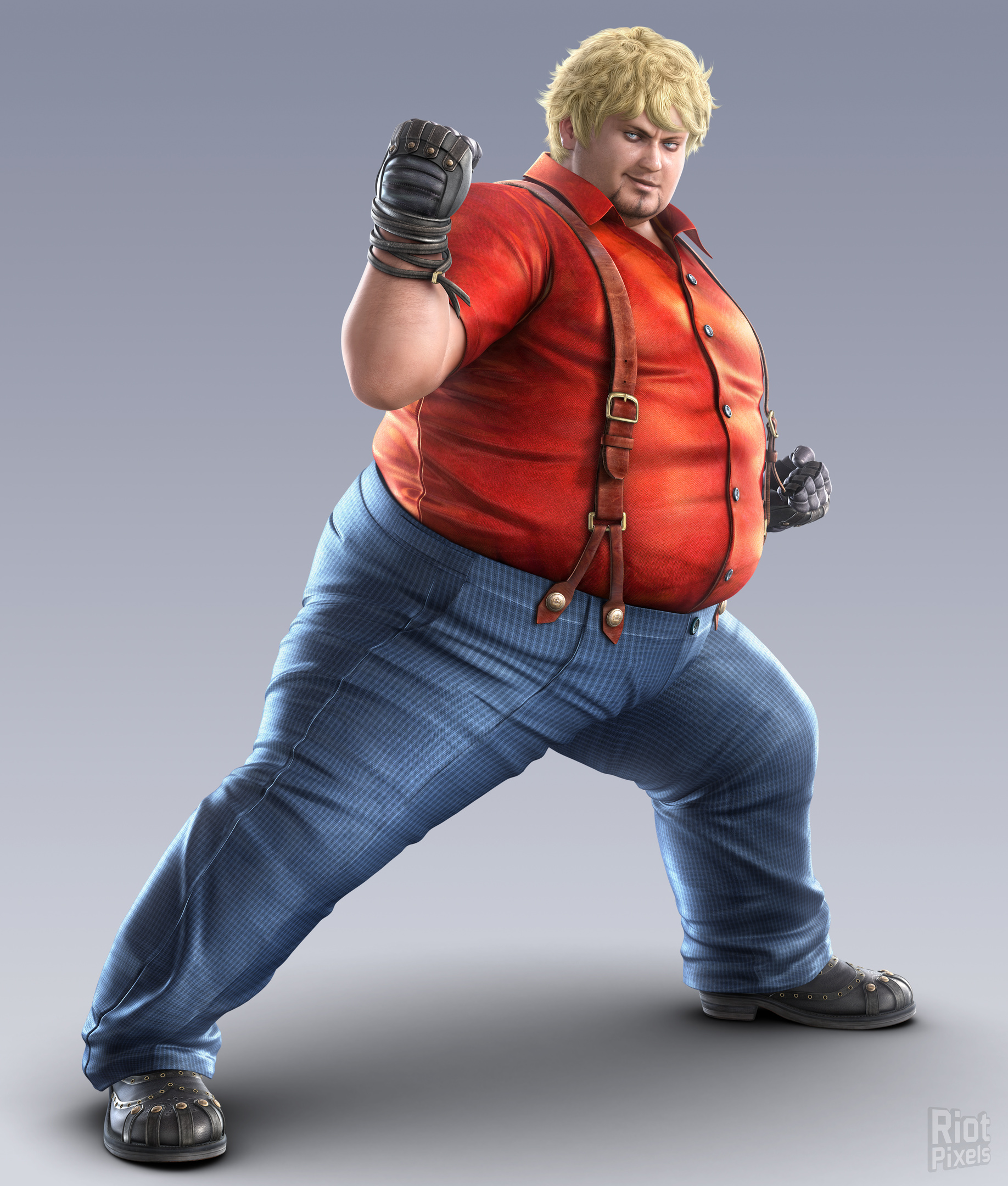
Invest in suspenders, you'll need them

The Lipimancer:

Regaining Spell Slots: When you take a long rest you regain all of your spell slots but it consumes all of your stored calories, AND unless you have full calories stored you only regain half of the number of spell slots per spell level, rounding down.

So a 4th level Lipimancer goes to sleep with only 10,000 stored calories she wakes up hungry (no calories stored) and with only 2 1st level spell slots and 1 2nd spell slot restored. Lipimancers are cranky in the morning if they are hungry.

Wellspring of Vitality: At 2nd level you learn how to tap into your bodies stored energies to augment your casting. 4,000 calories are equal to 1 sorcerer point, and unlike sorcery points you do not regain all of your calories at the end of a long rest, you have to eat to get them back. You can never have more calories stored than your current calorie cap (see table below).

Let the Fat Flow: You can translate your stored calories into magical energy and vice versa, either by spending calories to get spell slots refreshed or spending spell slots for more calories (but never more than your cap!), both are bonus actions. You cannot regain spell slots greater than 5th level using this ability.

Some Tables:
Level
Sorcery Points
Calorie Equvilent
1st
-
4,000
2nd
2
8,000
3rd
3
12,000
4th
4
16,000
5th
5
20,000
6th
6
24,000
7th
7
28,000
8th
8
32,000
9th
9
36,000
10th
10
40,000
11th
11
44,000
12th
12
48,000
13th
13
52,000
14th
14
56,000
15th
15
60,000
16th
16
64,000
17th
17
68,000
18th
18
72,000
19th
19
76,000
20th
20
80,000

Spell Slot
Level Regained
Sorcery
Point Cost
Calorie
Cost
1st
2
8,000
2nd
3
12,000
3rd
5
20,000
4th
6
24,000
5th
7
28,000

(I like this because it builds in a cap to the number of calories the Lipimancer has stored away to use for magic but leaves the spell casting system intact so that they can use them seamlessly with the sorcerer's class abilities, and I don't have to mess with fudged spell level equivalence)

Metamagic: At 3rd level you gain the Metamagic ability, as described in the PHB, except that you expend calories instead of sorcery points.

Spontaneous Lipid-Generation: At 20th level you regain 16,000 calories just by taking a light nap (a short rest). You must be asleep for this to work.

Suddenly giant chickens become the most desirable enemy to hunt.
Okay great, we've tweaked the sorcerer class enough to work as a Lipimancer, now lets make their sub-class abilities:

Way of the Fat Mage: At 1st level you gain access to your calorie pool, but only for use in determining spell slot replenishment. You also get all of the tweaks to the sorcerer class as described above. In addition you  the following spells to your learn able spell list:
Spell Level
Spell
Cantrip
Consume
1st
Emesis
2nd
Swallow Whole
3rd
Vortex of Excess
4th
Dimension of Flesh

Over Burn: At 6th level you can choose to spend more calories than you have stored, sending you into calorie debt. When you over draw this way you must make a DC 12+(1 per 4,000 calories expend bellow 0) Constitution save or fall unconscious and takes 1d6 Con damage. You can only be awoken if force fed enough food to get you back to positive calories, but the Con damage remains until magically restored or taking a week of downtime recovery and eating your full calories every day per point of Con damage.

So a 6th level Lipimancer has only 4,000 calories stored, but he really needs to cast one more 1st level spell. He expends the calories (8,000) to get the spell slot as a bonus action and then he rolls a DC 13 Constitution save. If he passes she acts normally, if she fails she falls into a low-energy coma state and take 1d6 Con damage. He can continue to over draw this way down to -24,000 calories (bottom cap mirrors top cap), at which point he falls into the coma state regardless, but she only takes Con damage if she fails her save.

14th Level: Leaving for player and I to work out.

18th Level:Leaving for player and I to work out.


Sunday, October 30, 2016

Military Hex Tactics and Squad Fighting Rules

Military Hex Tactics

Brief summary of why I decided to write these rules:

So my players wonder over to Apollonia, the largest Island State in Arsuf and seat of the Cheifsmoot. They were leaving the market when an announcement echoed around the city that the Drivas Clan had been found guilty of all charges and that they were expelled from the Cheifsmoot. This was meant as a brief insight for the PCs to see the political landscape in the area, but they decided to be ignorant foreigners and get involved with politics by saving some members of the now ex-Clan and spiriting them off of the island.

They fled with the Drivas to their home island and helped them prepare for the inevitable raids from other small Clans to come and claim their island. So I set up these rules to simulate island scale tactical defense and fast combat resolution if the PCs were not actually present.


We play online using roll20.net, it works pretty well. I use this kick ass island generator to create the island shape. It works really well cause you can draw over it on roll20.

Rules


  • Each round on battle map is 20 minutes.
  • Each division of soldiers has two scores: effective strength (a function of numbers and quality of combatants) and movement (usually 2)
  • Movement score can be used to: move (1), ready an ambush (1), pillage(full round, makes roads impassable), fortify against an attack (1), or attack (1).
  • Moving off of roads costs double movement but makes ambushes more effective.
  • Battles auto resolve unless PCs are there, in which case they can either choose to auto resolve with bonuses or to have the skirmish take place real time.
These worked really well I think, though there is the problem of having all of the players be involved in the decision making. Its a bit like five people sitting around playing the same Civ game and arguing about the next turn, but for one or two sessions it was pretty fun I think.

I wrote a spreadsheet up for the auto-resolution and it did a pretty good job I think. (Goodness, I love Excel.)

Squad Fighting Rules

I got to test these rules out the other night too, and I think it worked really well! Largely based on this post (from the excellent Joseph Manola) about crowd fighting. I used this when the PCs decided to fight in real time instead of auto resolving the combats.

The only trick is that I treated a squad (20-40 fighters) as one unit occupying a 20ft square space and getting to attack together. In a combat between two groups of about 100 combatants each this is way easier than just having hordes of little guys. They get three attacks per turn and move slowly. 

It looked just like this

It was a little annoying that I had control of both friendly and enemy squads with the PCs running around killing stuff, so I ended up rolling a lot of dice against myself which is never good.

I am going to continue to use this, but give the party just one squad as follower/NPC, much like the post from Joseph suggests, like the crew of their ship and have them control it in combat so I don't have to roll as much.

Play Report: Naval Combat

The other night I got to try out some of my new and shiny rules for naval combat.

It went okay, here are some notes from my players and myself:

  • Super fun idea
  • Movement worked out okay eventually, its hard to simulate momentum and slow turning.
  • Ships too hard to sink with ramming, I think I need to give them way less health and keep ramming damage very high.
  • Hard for every player to feel involved with the combat when there are many ships, better if everyone captained their own ship.
  • Ships are still fucking tight, but hard for DnD to simulate large scale conflict, may steer players away from formal naval fights and more to like 1v1 ship duels with pirate ghosts.

Oh, also they got a ship! It's an unarmored Arsuf Longship of average make, they helped capture from a blood hungry Clan while helping their buddy Clan. Now they get to find a crew and assign a Captain and get some cargo and become traders cause who doesn't love trading simulations? (Gosh, thats a future post waiting to happen).